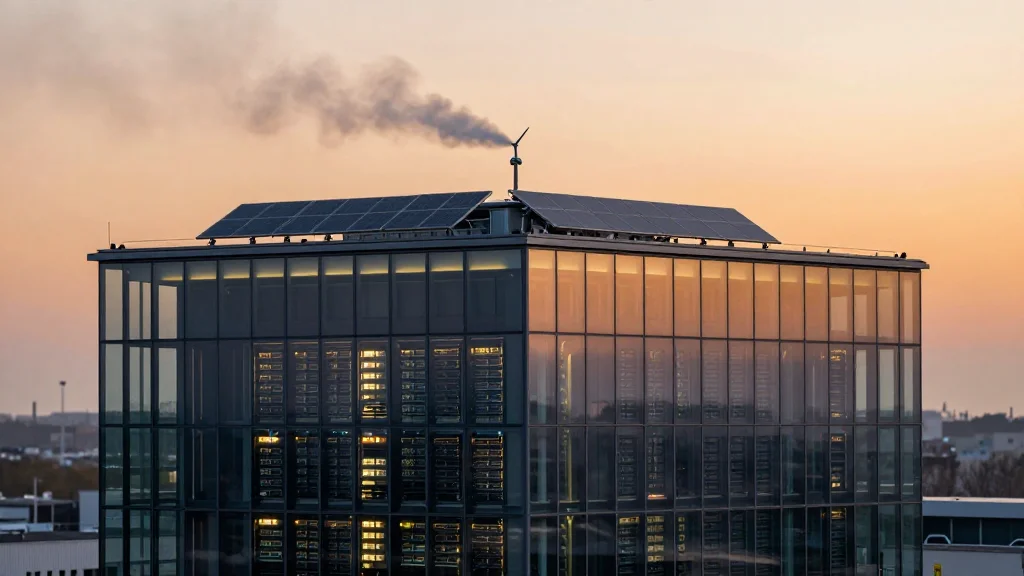
UN Report Shows Data Centers Use 448 TWh, Clarity AI Finds 76% Emissions Gap

Companies Mentioned
Why It Matters
The scale of data‑center electricity use now rivals that of entire nations, meaning any mismeasurement of emissions directly affects global climate‑risk assessments. Under‑reporting Scope 2 emissions obscures the true carbon intensity of AI workloads, potentially misleading investors, policymakers, and the public about progress toward net‑zero goals. If reporting standards tighten, data‑center operators may need to secure more location‑specific renewable contracts or invest in on‑site clean‑energy solutions, accelerating the shift toward greener compute. Conversely, failure to address the gap could erode trust in corporate sustainability claims and invite stricter regulation, slowing AI deployment and affecting the broader tech economy.
Key Takeaways
- •UN University report: 448 trillion watt‑hours electricity used by data centers in 2025, emitting 208 million tons CO₂.
- •AI workloads now account for ~20% of data‑center power, projected to rise to 40% by 2030.
- •Clarity AI finds Scope 2 emissions reported 76% lower than actual grid consumption, up from 41% in 2021.
- •Monterey Park, CA voters approve permanent data‑center ban with 86.3% support.
- •GHG Protocol revisions could force hourly, location‑specific emissions matching for future reporting.
Pulse Analysis
The convergence of a UN‑backed quantification of data‑center energy use and a private‑sector audit of emissions accounting creates a rare moment of clarity for climate‑tech investors. Historically, data‑center emissions have been a blind spot because the infrastructure is owned by a handful of hyperscalers that report under the market‑based method, which can mask real‑time grid carbon intensity. The 76% reporting gap identified by Clarity AI suggests that many firms are effectively double‑counting renewable credits, a practice that may become untenable as regulators tighten the GHG Protocol.
From a market perspective, the gap could re‑price the risk premium on AI‑focused hardware and services. Companies like Coherent Corp., which benefit from the AI boom, may see short‑term valuation lifts, but longer‑term investors will likely demand proof that the underlying power is sourced responsibly. The Monterey Park ban illustrates that local opposition can translate into tangible project delays, adding a geographic risk layer to the already complex supply chain.
Looking ahead, the next 12‑18 months will test whether policy makers can align global reporting standards with the rapid pace of AI‑driven compute expansion. If the revised GHG Protocol is adopted widely, firms will need to invest in granular energy‑management platforms, potentially spurring a new wave of climate‑tech startups focused on real‑time emissions tracking and renewable‑energy procurement. The sector’s ability to reconcile growth with transparency will determine whether data centers become a lever for decarbonization or a liability for the climate agenda.
UN Report Shows Data Centers Use 448 TWh, Clarity AI Finds 76% Emissions Gap
Comments
Want to join the conversation?
Loading comments...