Understanding U-Value: The Foundation of Energy-Efficient Envelopes
•March 3, 2026
0
Why It Matters
Accurate U‑Value calculations enable designers to meet energy codes, reduce operational costs, and improve occupant comfort, making them essential for sustainable building projects.
Key Takeaways
- •U‑Value measures heat flow per square meter per Kelvin.
- •Lower U‑Value indicates better insulation.
- •Calculate U‑Value as inverse of total thermal resistance.
- •Include interior/exterior surface resistances per climate zone.
- •Material thickness and conductivity determine each layer’s resistance.
Pulse Analysis
Understanding U‑Value is foundational for anyone involved in building design or retrofitting. As the metric that translates material properties into measurable heat loss, it directly influences a structure’s energy demand, carbon footprint, and indoor comfort. Regulators worldwide embed U‑Value thresholds in building codes, meaning that architects and engineers must quantify it early to avoid costly redesigns and ensure compliance with tightening efficiency standards.
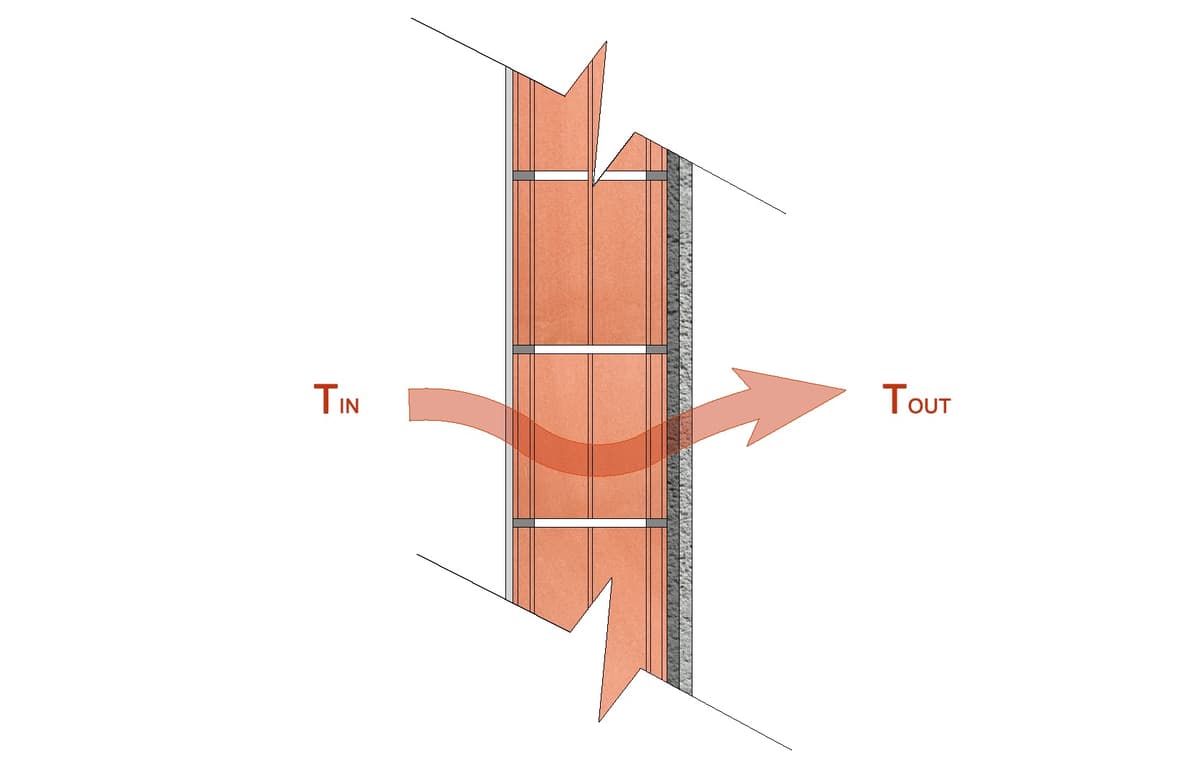
The calculation itself is straightforward yet nuanced. Total thermal resistance (Rₜ) sums interior surface resistance, exterior surface resistance, and the resistance of each construction layer, where each layer’s resistance equals its thickness divided by its thermal conductivity. This approach captures the cumulative effect of insulation, structural components, and even thermal bridges. Climate zones further adjust surface resistances, reflecting varying outdoor temperatures and wind exposure, so the same wall assembly can yield different U‑Values depending on location.
Practically, a lower U‑Value translates to reduced heating and cooling loads, enabling smaller HVAC systems and lower utility bills. Designers leverage this insight to select high‑performance insulation, optimize wall assemblies, and prioritize airtight detailing. In renovation projects, upgrading envelope components can achieve rapid energy savings, often qualifying for incentives. As digital simulation tools integrate U‑Value analysis, the industry moves toward predictive performance modeling, supporting net‑zero targets and resilient building strategies.
Understanding U-Value: The Foundation of Energy-Efficient Envelopes
0
Comments
Want to join the conversation?
Loading comments...