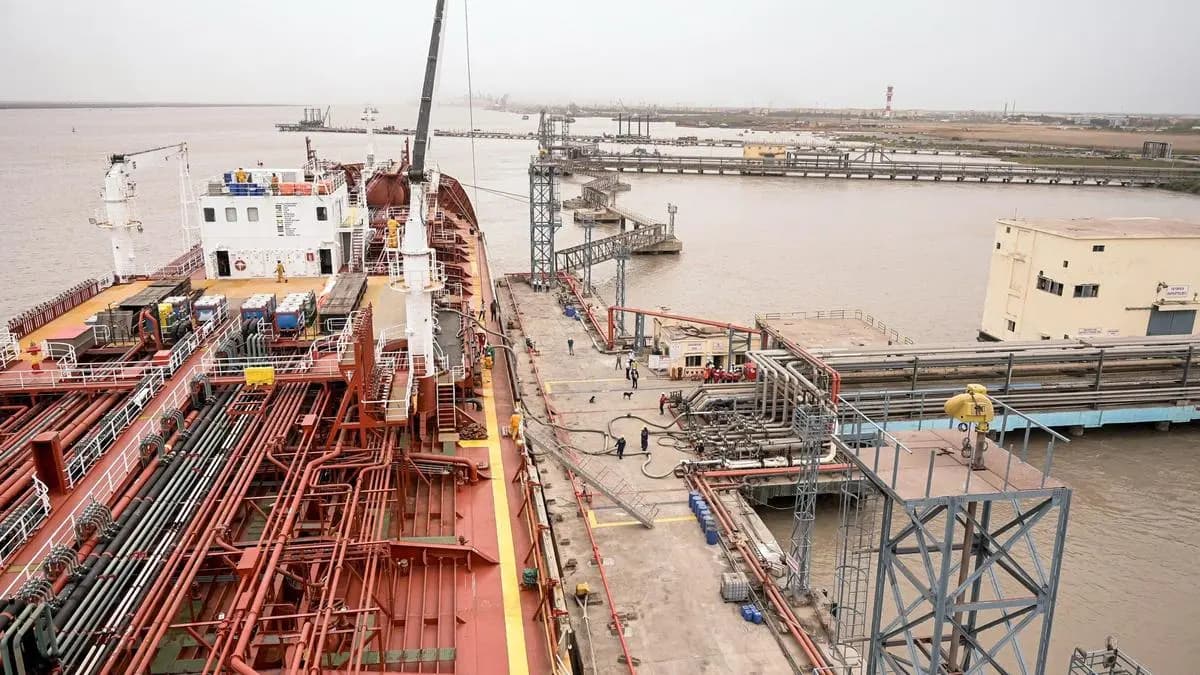
Unruly Shrub Fuels Kandla’s Eco Goals
Companies Mentioned
Why It Matters
Turning an ecological nuisance into a feedstock creates local jobs, reduces invasive species, and supplies the shipping corridor with greener fuel, accelerating India’s net‑zero maritime targets. The project demonstrates a scalable circular‑economy model that other ports can replicate.
Key Takeaways
- •Pilot bio‑methanol plant costs ~₹100 crore ($12 M) and targets 5 t/d output
- •Uses invasive Prosopis juliflora shrub, turning waste into low‑carbon fuel
- •Supports Kandla’s aim to become a methanol bunkering hub by 2030
- •First shore‑to‑ship methanol bunkering trial held April 2, 2026
- •Plans ₹3,500 crore ($422 M) e‑methanol plant for 1.5‑2 lakh t/yr
Pulse Analysis
India’s western coastline is grappling with Prosopis juliflora, an aggressive shrub that chokes native ecosystems and agricultural land. By channeling this waste into a bio‑methanol pilot at Kandla, the port authority is turning a liability into a revenue‑generating asset. The project, funded at roughly $12 million, showcases how low‑cost biomass can be gasified, conditioned, and catalytically converted into fuel‑grade methanol, a process that can be replicated with other residues such as peanut shells or sawdust. This approach not only curbs the spread of the invasive species but also creates a new supply chain for local collectors, injecting income into surrounding communities.
From a technical standpoint, the plant’s gasification stage operates at 700‑1,000 °C, producing syngas that is refined and combined with hydrogen to synthesize methanol at 200‑300 °C under high pressure. While the fuel is expected to be pricier than conventional methanol, it undercuts electro‑methanol, which relies on costly green hydrogen and captured CO₂. Economies of scale and process optimisation are projected to narrow the cost gap, making bio‑methanol an attractive bridge fuel for maritime operators seeking to meet IMO’s 2030 emissions targets without the steep price premium of fully synthetic alternatives.
Strategically, Kandla is leveraging the pilot to cement its role in the emerging methanol bunkering network that links Rotterdam, Singapore, and now India. The successful shore‑to‑ship trial in April 2026 demonstrated operational readiness, and a planned $422 million e‑methanol complex aims to deliver up to 200 kilotonnes annually by the late 2020s. As global shipping pivots toward low‑carbon fuels, Kandla’s dual‑track strategy—combining bio‑methanol from invasive biomass with larger‑scale e‑methanol—positions it as a resilient, diversified fuel hub capable of serving the growing fleet of methanol‑powered vessels.
Unruly shrub fuels Kandla’s eco goals
Comments
Want to join the conversation?
Loading comments...