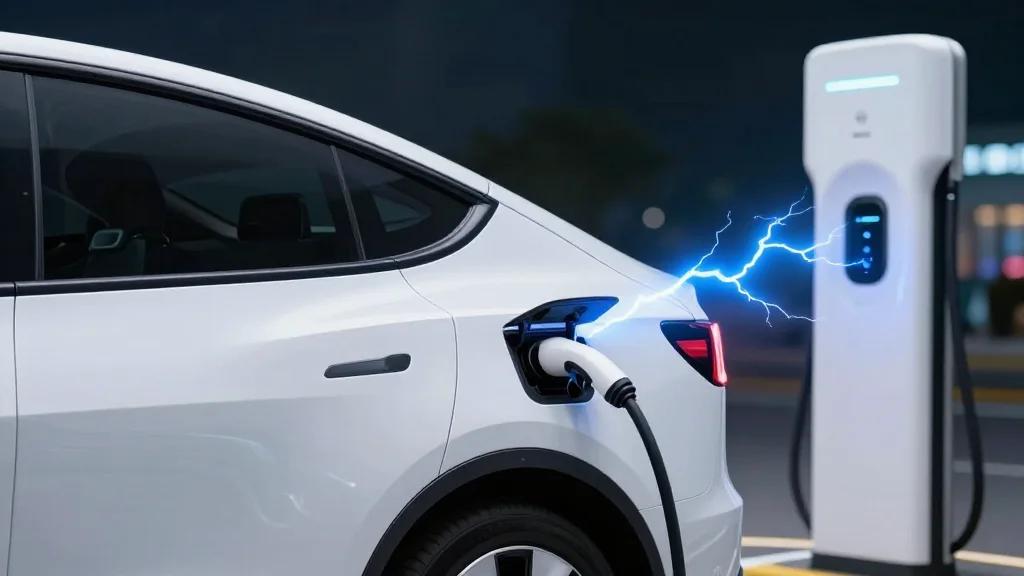
U.S.-China Battery Race Heats Up as CATL Unveils 5‑Minute 320‑Mile Battery

Companies Mentioned
Why It Matters
Fast‑charging batteries are a linchpin for the broader decarbonization agenda. A battery that can replenish an EV in five minutes removes one of the biggest barriers to mass adoption, making electric cars as convenient as gasoline vehicles. This, in turn, accelerates the shift away from fossil fuels, reduces transportation‑related emissions, and eases pressure on the power grid by enabling more flexible charging patterns. Beyond vehicles, ultra‑fast charging could transform grid‑scale storage, allowing utilities to buffer intermittent renewable generation more effectively. If the United States fails to keep pace, it risks ceding technological leadership, supply‑chain control, and economic benefits to China, reshaping the global climate‑tech landscape for decades.
Key Takeaways
- •CATL announced a lithium‑ion battery delivering 320 miles after a five‑minute charge, a claim made a year ago.
- •BYD Auto unveiled a similarly fast‑charging EV in March, underscoring China's rapid progress.
- •Daniel Turner criticized the Biden administration’s $1 trillion green‑energy spend as yielding limited battery results.
- •Experts Mark Mills and Brent Bennett note that battery chemistry is mature and improvements are typically 3‑5% per year.
- •U.S. policymakers face pressure to translate funding into comparable fast‑charging breakthroughs to maintain climate‑tech leadership.
Pulse Analysis
The CATL announcement is less a sudden breakthrough than a strategic signal that China is willing to leverage its state‑backed supply chain to push the envelope on performance metrics that matter to consumers. Historically, battery innovation has been incremental; the real value of a five‑minute charge lies in system‑level integration—thermal management, power electronics, and safety protocols—that have traditionally lagged behind raw energy density gains. The U.S. response, anchored in a trillion‑dollar budget, has been fragmented across federal agencies, research labs, and private consortia, diluting focus and slowing decision‑making.
From a market perspective, fast‑charging capability could become a differentiator that reshapes OEM competition. Automakers that can guarantee a five‑minute top‑up will likely capture premium market share, especially in regions where charging infrastructure is still nascent. This creates a feedback loop: higher demand drives more investment in ultra‑fast chargers, which in turn justifies further battery R&D. China’s early mover advantage could lock in standards and supply‑chain contracts, making it harder for U.S. firms to catch up without coordinated policy intervention.
Looking ahead, the United States must decide whether to double down on incremental chemistry improvements, gamble on solid‑state breakthroughs, or pursue a hybrid approach that includes aggressive public‑private partnerships aimed at scaling fast‑charge prototypes. The stakes are high: beyond vehicle sales, battery leadership translates into control over critical minerals, export revenues, and geopolitical influence in a world where energy storage underpins every clean‑energy transition. The next policy cycle will likely determine whether the U.S. can convert its financial muscle into a technological edge or watch the battery race slip further into Chinese hands.
U.S.-China Battery Race Heats Up as CATL Unveils 5‑Minute 320‑Mile Battery
Comments
Want to join the conversation?
Loading comments...