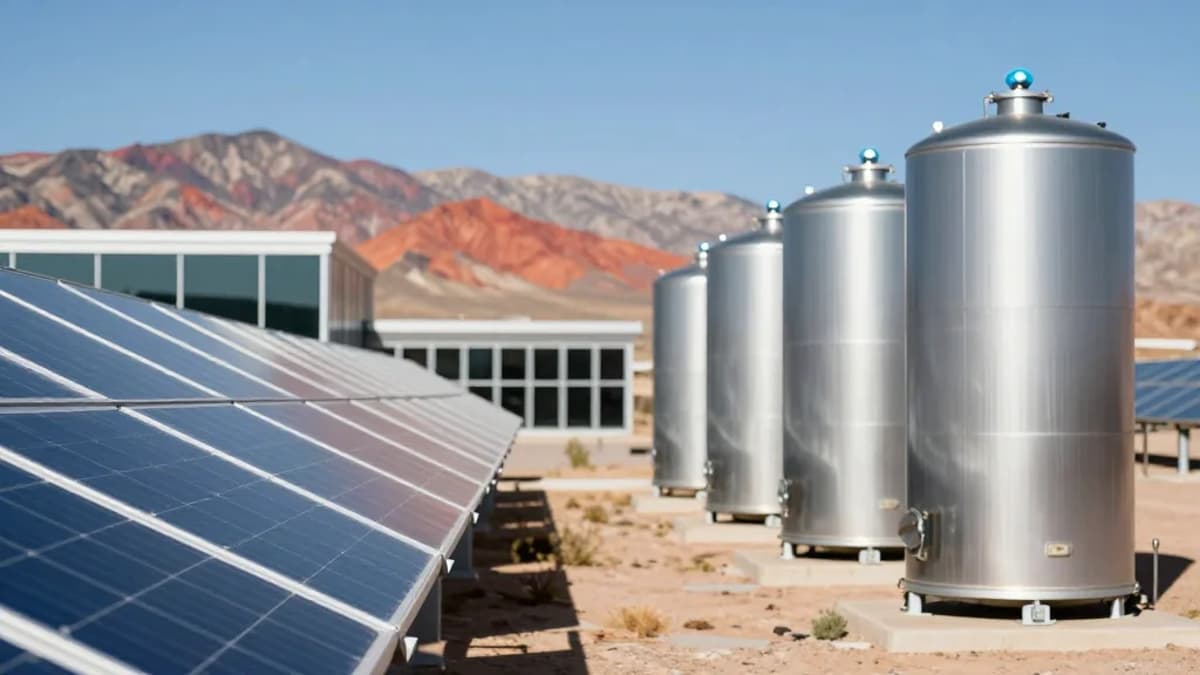
Utah ‘Gigasite’ Data Center Contemplates Solar-Storage Baseload Addition
•February 18, 2026
0
Why It Matters
The deal illustrates how high‑density data‑center workloads are prompting large‑scale, dispatchable renewable projects, reducing reliance on fossil fuels. It also validates the commercial viability of long‑duration storage for baseload power in emerging tech hubs.
Key Takeaways
- •Zeo to study 280 MW solar‑plus‑storage for Gigasite
- •Project could supply ~3% of Creekstone’s 10 GW target
- •PV likely primary; CSP considered but not core
- •Long‑duration storage aims for dispatchable, clean baseload
- •Data‑center power demand driving hybrid renewable investments
Pulse Analysis
The rapid expansion of artificial‑intelligence workloads is reshaping power markets, with hyperscale data centers demanding reliable, low‑carbon baseload. Creekstone’s Delta Gigasite, a 10‑gigawatt campus anchored by natural‑gas, solar, and future nuclear assets, exemplifies a hybrid model designed to meet that demand while leveraging existing transmission corridors near the Intermountain Power Project. By integrating 280 MW of solar‑plus‑storage, the project seeks to provide clean, dispatchable power that can smooth the intermittency of photovoltaics and support the campus’s 600 MW initial baseload.
Zeo Energy’s involvement marks a strategic pivot from its residential solar roots toward utility‑scale renewable solutions. The acquisition of Heliogen equips Zeo with concentrated‑solar expertise and advanced thermal‑storage concepts, though the current study favors conventional PV paired with long‑duration storage options such as molten‑salt, compressed CO₂, or battery systems. This flexibility reflects industry trends that prioritize proven PV economics while keeping innovative CSP pathways on the table for future scaling.
The collaboration underscores a broader shift toward diversified clean‑energy portfolios for data‑center operators. Long‑duration storage, capable of multi‑day discharge, is becoming a cornerstone for achieving firm renewable capacity, complementing emerging hydrogen‑ready gas turbines and prospective small modular reactors. As hyperscalers increasingly demand carbon‑neutral power, projects like Gigasite could set a template for replicable, hybrid renewable hubs that balance cost, reliability, and sustainability across the United States.
Utah ‘Gigasite’ Data Center Contemplates Solar-Storage Baseload Addition
0
Comments
Want to join the conversation?
Loading comments...