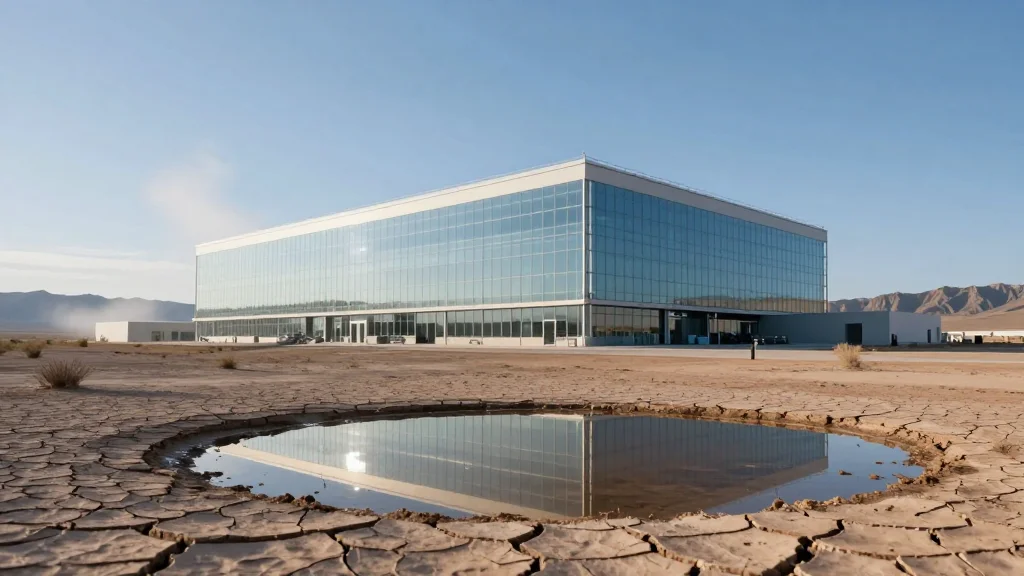
Utah Residents Challenge $100 B AI Data Center Over 16 Billion‑Gallon Water Demand

Why It Matters
The Stratos Project illustrates how AI’s exponential growth is testing the limits of traditional resource management. Water scarcity is already a pressing issue in the western United States, and a single data center complex that could consume up to 16.6 billion gallons annually threatens to exacerbate drought conditions, affect agricultural productivity, and strain local ecosystems. The dispute also highlights the need for climate‑tech policy frameworks that evaluate not just carbon emissions but also water footprints, land use, and community impact. Beyond Utah, the controversy may serve as a bellwether for other regions courting AI infrastructure. If regulators adopt stricter water‑use standards, developers could be forced to innovate more efficient cooling technologies or shift toward renewable‑energy‑only sites, potentially accelerating greener data‑center designs across the industry.
Key Takeaways
- •Box Elder County commissioners approved the $100 billion Stratos AI data center on May 4, 2026.
- •The campus would require 4.24‑16.6 billion gallons of water per year, far exceeding local water supplies.
- •At full build‑out, the project’s 9 GW power demand would be more than double Utah’s current electricity consumption.
- •Developers cite on‑site natural‑gas generation and a 3,000‑acre solar array as mitigation measures.
- •A community‑driven referendum and potential legal challenges are poised to decide the project’s fate.
Pulse Analysis
The Stratos controversy is a microcosm of the broader clash between AI compute demand and climate‑tech constraints. Historically, data‑center siting decisions have prioritized cheap electricity and land availability, often overlooking water intensity. As AI models grow larger and require more cooling, water becomes a limiting factor, especially in arid regions like the Intermountain West. The Utah case may push the industry toward two divergent paths: either invest heavily in water‑efficient cooling (e.g., liquid immersion, evaporative‑free designs) or relocate to water‑rich locales, each with its own geopolitical and environmental trade‑offs.
From an investment perspective, the backlash could temper the enthusiasm of venture capital and private‑equity firms that have been pouring billions into AI‑infrastructure startups. Investors may now demand clearer ESG metrics, including water usage disclosures, before committing capital. This shift could benefit firms that have already integrated advanced cooling technologies or that are exploring edge‑computing models that distribute compute loads, reducing the need for monolithic, water‑hungry facilities.
Policy makers will likely feel pressure to codify water‑use thresholds into data‑center permitting processes. The precedent set by Utah could inspire federal agencies, such as the EPA and the Department of Energy, to develop unified guidelines that balance national‑security arguments with sustainable resource stewardship. In the short term, the outcome of the Utah referendum will signal whether community consent can outweigh high‑profile private investment in the AI era, shaping the trajectory of climate‑tech integration into the next generation of digital infrastructure.
Utah Residents Challenge $100 B AI Data Center Over 16 Billion‑Gallon Water Demand
Comments
Want to join the conversation?
Loading comments...