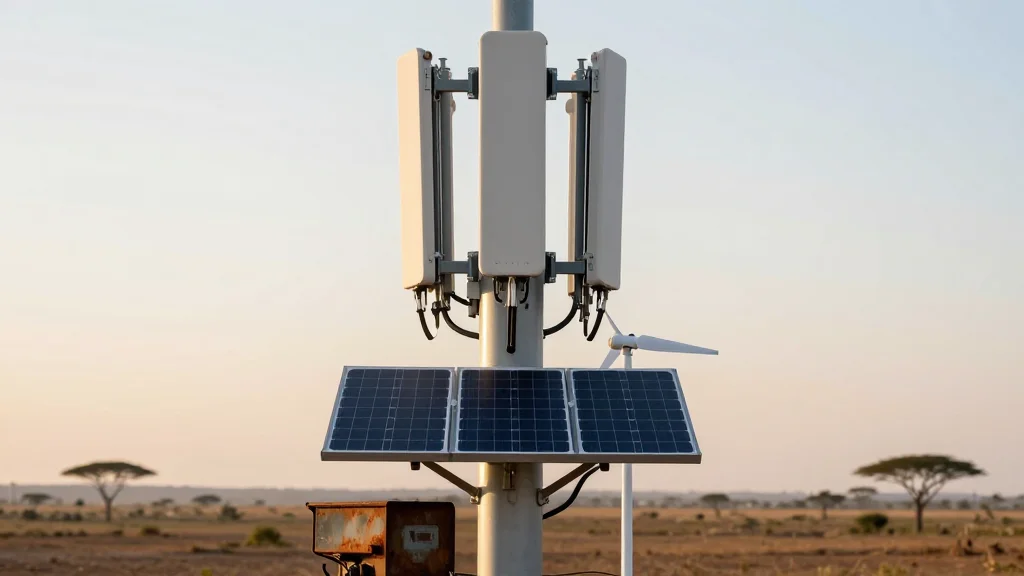
Vodacom Calls for Collective Action to Decarbonize Africa’s Digital Economy
Companies Mentioned
Why It Matters
Reducing telecoms’ carbon footprint unlocks cheaper, reliable power for Africa’s digital growth while catalyzing broader energy reforms and cost savings across the continent’s most energy‑intensive sector.
Key Takeaways
- •Africa’s telecoms rely heavily on diesel generators for network power.
- •Weak grids and financing gaps hinder renewable adoption in ICT sector.
- •PPAs and mini‑grids are proposed to power remote base stations.
- •Private‑sector participation and policy reforms essential for systemic decarbonization.
- •Vodacom’s white paper offers case studies and a roadmap for industry collaboration.
Pulse Analysis
Africa’s digital economy is expanding faster than its power infrastructure can keep pace, leaving mobile operators to lean on diesel generators that are both costly and carbon‑intensive. This mismatch creates a paradox: the very networks that drive economic inclusion also exacerbate climate risks. By quantifying the energy demand of base stations and exposing the fragility of national grids, the Vodacom white paper frames the energy‑digital nexus as a strategic priority for governments and investors alike.
The report outlines a suite of pragmatic solutions aimed at slashing emissions while preserving service reliability. Power purchase agreements (PPAs) enable operators to lock in renewable energy at predictable rates, mitigating exposure to volatile diesel prices. Decentralized mini‑grids, often powered by solar or hybrid systems, can supply remote sites where grid extension is uneconomic. Moreover, the paper calls for regulatory reforms that lower barriers for private capital, such as streamlined licensing and tax incentives, to accelerate the rollout of clean power across the ICT value chain.
For the broader market, Vodacom’s initiative signals a shift toward sustainability as a core business driver in Africa. Investors are likely to view telecoms with robust renewable strategies as lower‑risk assets, while policymakers can leverage the sector’s scale to pilot continent‑wide clean‑energy models. Ultimately, coordinated action—spanning utilities, financiers, and technology providers—could transform Africa’s digital backbone into a catalyst for a resilient, low‑carbon future.
Vodacom Calls for Collective Action to Decarbonize Africa’s Digital Economy
Comments
Want to join the conversation?
Loading comments...