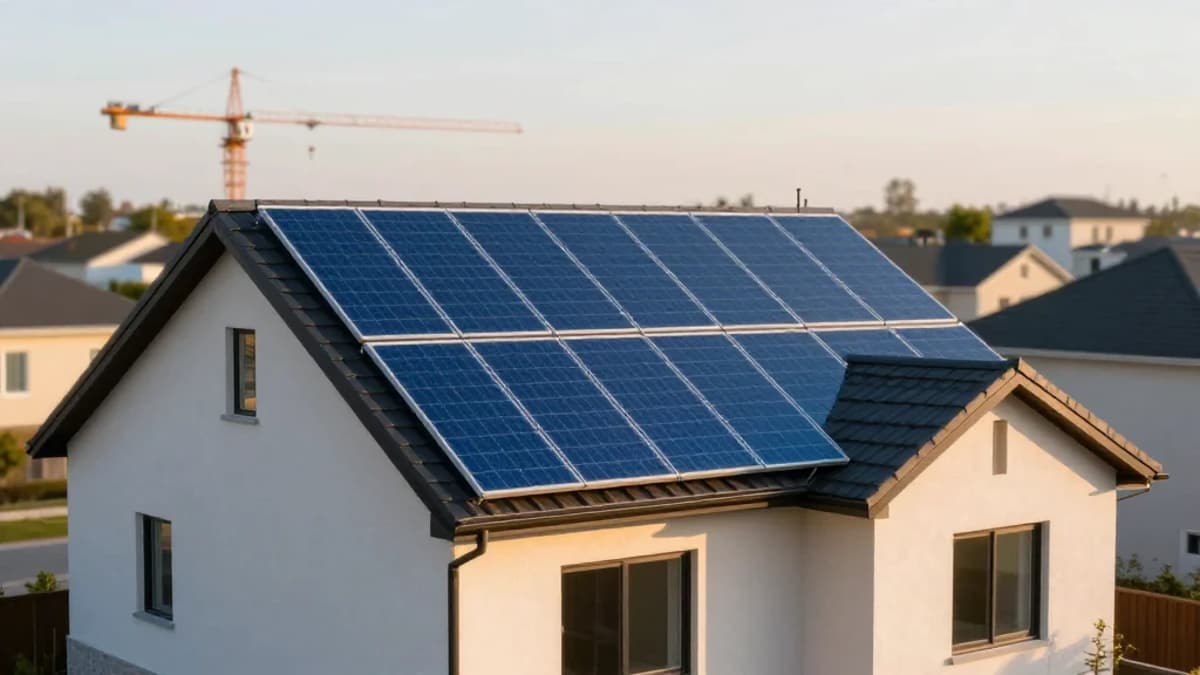
Wales First Part of UK to Mandate Solar Panels on New Buildings
•March 10, 2026
0
Why It Matters
The mandate accelerates the UK’s decarbonisation agenda by embedding solar generation into the construction pipeline, creating a sizable new market for installers and manufacturers. It also sets a policy benchmark that other devolved administrations are likely to emulate, reshaping regional energy strategies.
Key Takeaways
- •Wales mandates solar on new builds from March 2027.
- •Requirement applies to domestic and commercial structures, historic exempt.
- •Minimum generation threshold set at 720 kWh/year.
- •England expected to follow with Future Homes Standard.
- •Industry sees mandate as catalyst for UK renewable growth.
Pulse Analysis
Wales’ decision to embed a renewable electricity generation requirement into its building code marks a decisive policy shift. By defining a performance floor of 720 kWh annually, the regulation effectively forces developers to adopt rooftop solar as the most cost‑effective compliance route. This approach sidesteps prescriptive technology mandates while still guaranteeing measurable clean‑energy output, a model that could reconcile flexibility with ambition across diverse construction projects.
For builders and developers, the new rule introduces both opportunities and operational challenges. The exemption clause protects projects where solar installation is technically or financially infeasible, such as densely packed urban sites or heritage structures, but it also demands early-stage feasibility studies to avoid costly redesigns. Supply‑chain actors—panel manufacturers, EPC firms, and financing institutions—can anticipate a surge in demand, prompting capacity expansions and potentially driving down equipment costs through economies of scale. Meanwhile, the requirement may increase upfront construction budgets, a factor that will be weighed against long‑term energy savings and potential government incentives.
Regionally, Wales’ mandate positions it as a testing ground for the UK’s broader renewable agenda. England’s Future Homes Standard, slated for 2026, is expected to adopt a similar solar requirement, while Scotland and Northern Ireland watch closely to gauge market reactions. The policy aligns with the UK’s net‑zero target for 2050, reinforcing the role of distributed generation in meeting national electricity demand. Investors are likely to view the emerging mandatory market as a low‑risk avenue for capital, spurring further innovation in solar integration, storage, and smart‑grid solutions.
Wales first part of UK to mandate solar panels on new buildings
0
Comments
Want to join the conversation?
Loading comments...