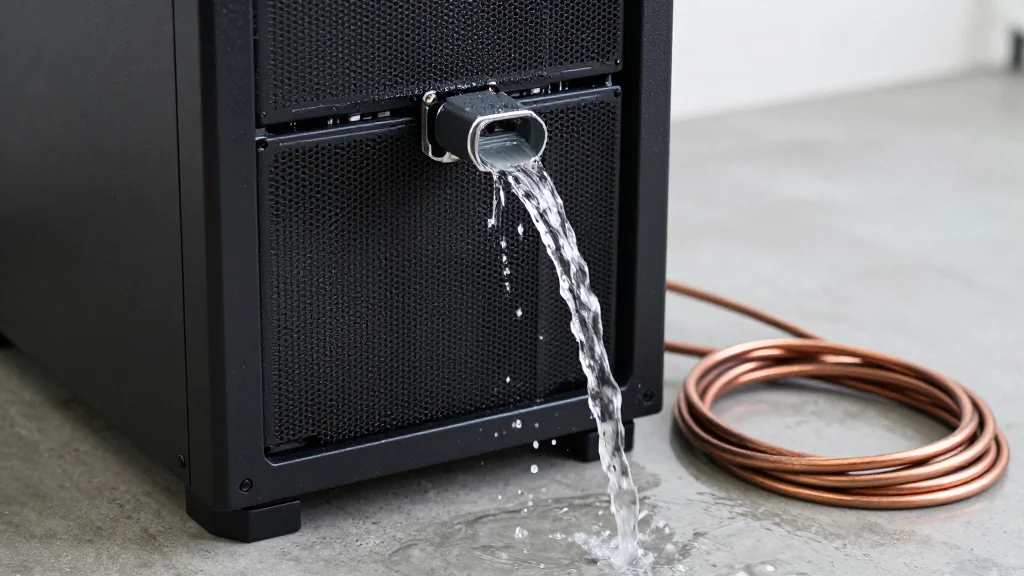
‘We Are Being Asked to Drain Our Reservoirs so a Sheriff Can Generate a Picture with Bigfoot’: An Ex-Programmer’s Brutal AI Data Center Warning Is Going Viral
Why It Matters
The controversy underscores how AI’s physical footprint can strain local resources, forcing municipalities to evaluate whether economic incentives justify environmental and social trade‑offs. It signals a growing demand for transparent, community‑centered AI deployment policies.
Key Takeaways
- •Ohio towns face AI data center water consumption concerns
- •Proposed center could draw five million gallons daily from reservoirs
- •Tax incentives offered despite limited local job creation
- •Critics warn about chemical runoff from cooling systems
- •Community pushback highlights need for transparent AI infrastructure planning
Pulse Analysis
Artificial intelligence is no longer confined to cloud‑based hype; its engines require sprawling data centers that consume vast amounts of electricity and water. Industry leaders tout "closed‑loop" cooling as a sustainable solution, yet critics argue that even sealed systems eventually release harmful chemicals into groundwater. As AI models grow in size and complexity, the infrastructure supporting them becomes a tangible environmental liability, prompting regulators and investors to scrutinize the true cost of scaling compute capacity.
In Ohio, the debate has moved from abstract policy to a city council meeting where ex‑programmer Mr. Hollingsworth warned residents about a proposed AI hub that could drain five million gallons of water each day. The project promises generous tax breaks and a handful of jobs, but locals fear the long‑term impact on reservoirs, power grids, and land use. The viral speech, now a Reddit sensation, amplifies concerns that AI-driven development often bypasses community consent, leaving taxpayers to shoulder the burden while corporations reap global profits.
The ripple effect extends beyond Ohio. Municipalities nationwide are confronting similar proposals, forcing a reevaluation of how public incentives are structured for high‑tech projects. Sustainable data center design, transparent water‑use reporting, and realistic job forecasts are emerging as non‑negotiable criteria for approval. As the AI industry matures, aligning its growth with environmental stewardship and local economic interests will be essential to avoid backlash and ensure that the benefits of artificial intelligence are broadly shared.
‘We are being asked to drain our reservoirs so a sheriff can generate a picture with Bigfoot’: an ex-programmer’s brutal AI data center warning is going viral
Comments
Want to join the conversation?
Loading comments...