“We Cannot Compete:” Why Global Inverter Giant Quit Australia’s Home Solar Market
Companies Mentioned
Why It Matters
SMA’s exit underscores the pricing pressure Chinese manufacturers place on legacy inverter makers and signals a market pivot toward utility‑scale, grid‑forming technology, which could reshape Australia’s renewable‑energy supply chain.
Key Takeaways
- •SMA exits Australian residential inverter market, focusing on utility scale
- •Utility‑scale inverters now account for 80% of SMA’s revenue
- •Chinese competitors’ low‑cost inverters drove SMA’s market share decline
- •Grid‑forming inverters enable inverter‑based resources to replace traditional generators
Pulse Analysis
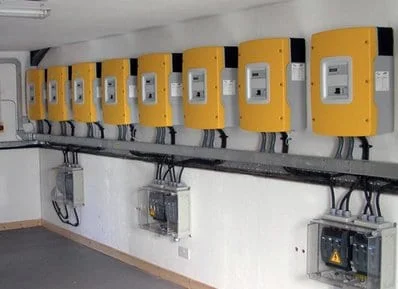
SMA Group, once the global leader in solar inverters, announced it will withdraw from Australia’s residential and commercial market. The decision, explained by CEO Jürgen Reinert, stems from an inability to match the aggressive pricing of Chinese manufacturers that have eroded SMA’s cost advantage. After a decade of revenue contraction—down 60% and accompanied by a 40% engineering staff cut—the company has re‑engineered its portfolio toward utility‑scale projects, where it still holds a strong position. Australia now represents SMA’s third‑largest market, but only within the utility segment.
The pivot to utility‑scale inverters aligns with a broader industry trend toward large solar‑battery hybrids and grid‑forming technology. SMA reports that 80% of its revenue now derives from utility applications, a shift that leverages its expertise in power‑electronics intelligence and decentralized grid support. Grid‑forming inverters can provide frequency regulation, fault‑current ride‑through, and inertia‑like services traditionally supplied by rotating generators, making them attractive for developers seeking lower‑cost, modular solutions. While Australian transmission operators remain cautious about fault‑current capabilities, SMA argues its products meet those standards, positioning the firm for upcoming procurement cycles.
Policy pressures are amplifying SMA’s strategic bet. Governments in the EU and Australia are scrutinizing Chinese‑origin inverters over security concerns, opening space for non‑Chinese suppliers. At the same time, falling module and battery prices—now under two cents per kilowatt‑hour for PV—are accelerating the economics of fully inverter‑based power systems. Competitors such as Tesla and Fluence are also promoting similar grid‑forming solutions, suggesting a competitive but expanding market. If regulatory trends continue to favor diversified supply chains, SMA’s focus on utility‑scale, grid‑forming inverters could restore growth and solidify its role in the next wave of renewable integration.
“We cannot compete:” Why global inverter giant quit Australia’s home solar market
Comments
Want to join the conversation?
Loading comments...