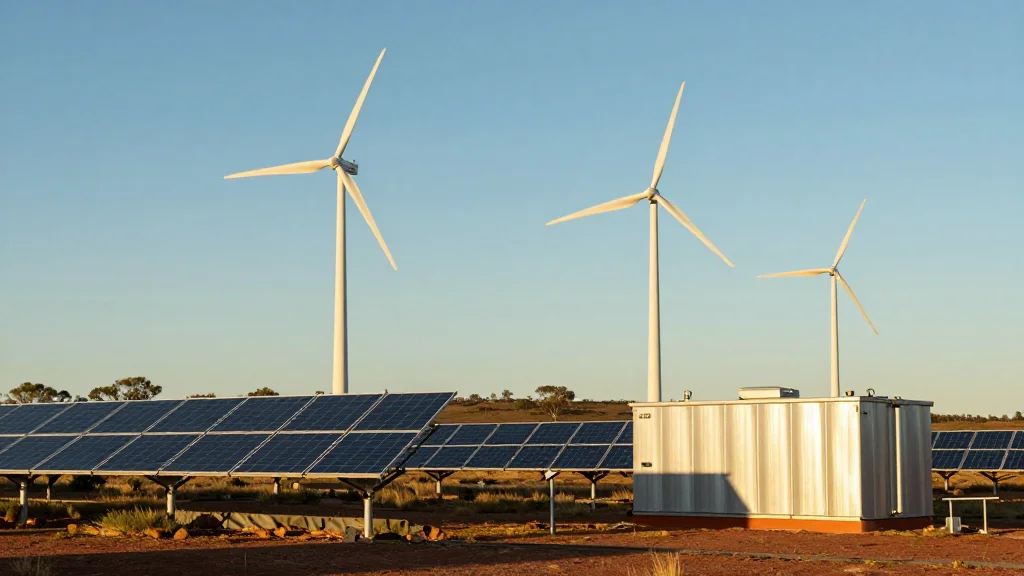
Western Australia Awards $5 Bn to Six Wind Farms, Two Solar‑hybrids and Long‑duration Batteries

Companies Mentioned
Why It Matters
The tender package marks a decisive shift for Western Australia, the world’s largest isolated electricity grid, from coal‑dependent generation to a renewable‑dominant system. By locking in $5 bn of capital and a mix of wind, solar and long‑duration storage, the state not only moves toward its 80 % renewable target but also creates a template for other regions with limited grid interconnections. The emphasis on seven‑hour batteries addresses a critical gap in firm capacity, demonstrating that storage can play a central role in ensuring reliability as coal plants retire. Beyond the local impact, the contracts send a market signal that large‑scale, multi‑technology renewable projects are financially viable even in challenging grid environments. Investors and developers worldwide will monitor the execution of these projects to gauge the scalability of similar schemes in other isolated or high‑risk markets, potentially accelerating global clean‑energy transitions.
Key Takeaways
- •Six wind farms (1.5 GW) and two solar‑battery hybrids win WA renewable generation tender
- •Two stand‑alone long‑duration battery projects (282 MW total) win dispatchable tender
- •Combined investment exceeds $5 bn, with delivery required by 2030
- •Projects will add 1.9 GW of renewable capacity and 2.1 GWh of storage to the grid
- •Western Australia targets 80 % renewable electricity by 2030, aligning with national 82 % goal
Pulse Analysis
Western Australia’s tender outcome is a watershed for isolated grids, proving that a blend of wind, solar and long‑duration storage can replace coal without relying on interconnections. Historically, isolated systems have struggled with reliability when scaling renewables, often resorting to diesel or gas peakers. By mandating at least seven‑hour batteries, the state is effectively creating a new class of firm capacity that can smooth the intermittency of wind and solar, a model that could be replicated in places like Hawaii or the Caribbean.
The inclusion of a pre‑financed wind project (Tilt Renewables’ Waddi) raises strategic questions about how governments balance market fairness with the need to de‑risk early‑stage projects. While it accelerates deployment, it may discourage newer entrants who lack similar financial backing. Bowen’s admission that wind development still faces hurdles suggests that future rounds could see stricter technical criteria or additional incentives to ensure a robust pipeline.
From an investment perspective, the $5 bn commitment signals confidence in Australia’s renewable supply chain, especially for battery manufacturers and turbine suppliers. If the projects stay on schedule, they could unlock further private capital, catalyze job creation in regional areas, and reinforce Australia’s position as a leader in renewable integration for isolated grids. Conversely, any delays—particularly on the wind side—could erode that confidence and prompt a re‑evaluation of the Capacity Investment Scheme’s design, potentially reshaping policy across the broader Asia‑Pacific region.
Western Australia awards $5 bn to six wind farms, two solar‑hybrids and long‑duration batteries
Comments
Want to join the conversation?
Loading comments...