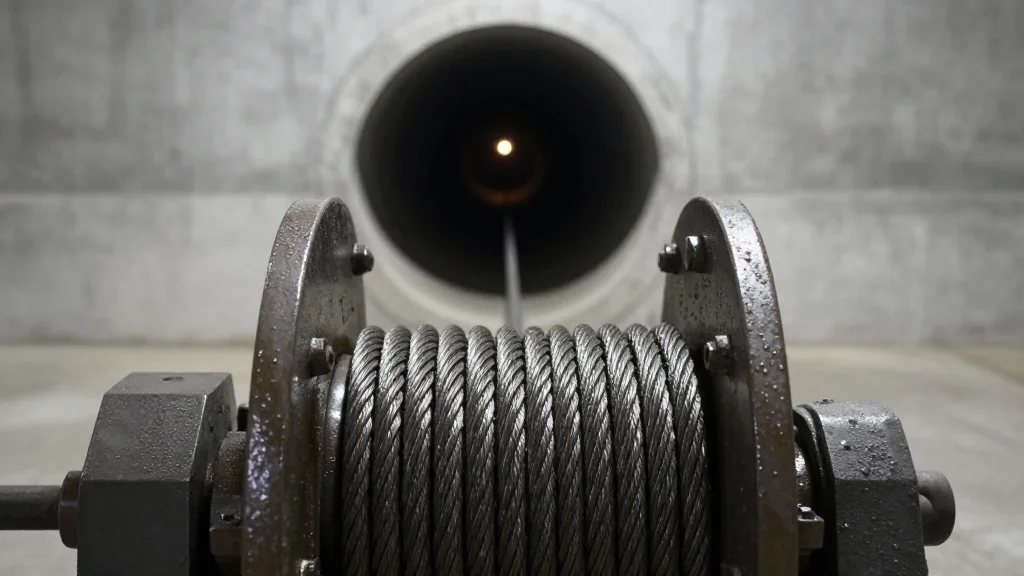
What Lies Beneath: Unearthing Advanced Compressed Air Energy Storage
Why It Matters
A‑CAES provides a low‑land, low‑water, mineral‑free storage solution that can stabilize grids as renewable penetration rises, reducing reliance on scarce resources and costly transmission upgrades.
Key Takeaways
- •A‑CAES 500 MW, 8‑hour plant fits on <100 acres, powers Boston‑size city
- •Hard‑rock caverns suitable worldwide; about one‑third of landmass viable
- •Subsurface construction accounts for 25‑30% of cost, mitigated by verification boreholes
- •Water requirement ≈150 m³ per MWh, ten times less than pumped hydro
- •No critical minerals needed; caverns designed for 50‑plus‑year lifespan
Pulse Analysis
Grid operators are under mounting pressure to balance intermittent renewable output with reliable supply, and traditional battery farms or pumped‑hydro reservoirs often face land, water, or mineral constraints. Advanced Compressed Air Energy Storage (A‑CAES) sidesteps these bottlenecks by converting surplus electricity into compressed air stored in excavated rock caverns. The underground approach mirrors decades‑old hydrocarbon storage practices, but repurposes them for clean‑energy applications, delivering megawatt‑scale capacity with a modest surface footprint.
The technical edge of A‑CAES lies in its use of ubiquitous hard‑rock formations—igneous and metamorphic strata that comprise roughly a third of the planet’s surface. By drilling to depths around 2,000 feet, developers can site facilities close to high‑demand corridors, minimizing new transmission lines. Subsurface work represents only a quarter of total project spend, and rigorous borehole testing de‑risks cavern integrity. Operating at about 75 bar, the system requires roughly 150 cubic meters of water per megawatt‑hour, dramatically less than pumped‑hydro, while eliminating the need for lithium, cobalt, or nickel.
From a market perspective, A‑CAES aligns with policy goals that prioritize long‑duration storage without expanding land use or mining footprints. Its 50‑plus‑year design life and reliance on an existing mining and oil‑and‑gas workforce lower capital risk and accelerate deployment timelines. As utilities seek cost‑effective ways to integrate higher shares of wind and solar, A‑CAES could emerge as a cornerstone technology, complementing batteries for short bursts and offering a scalable, sustainable alternative to traditional storage assets.
What lies beneath: Unearthing advanced compressed air energy storage
Comments
Want to join the conversation?
Loading comments...