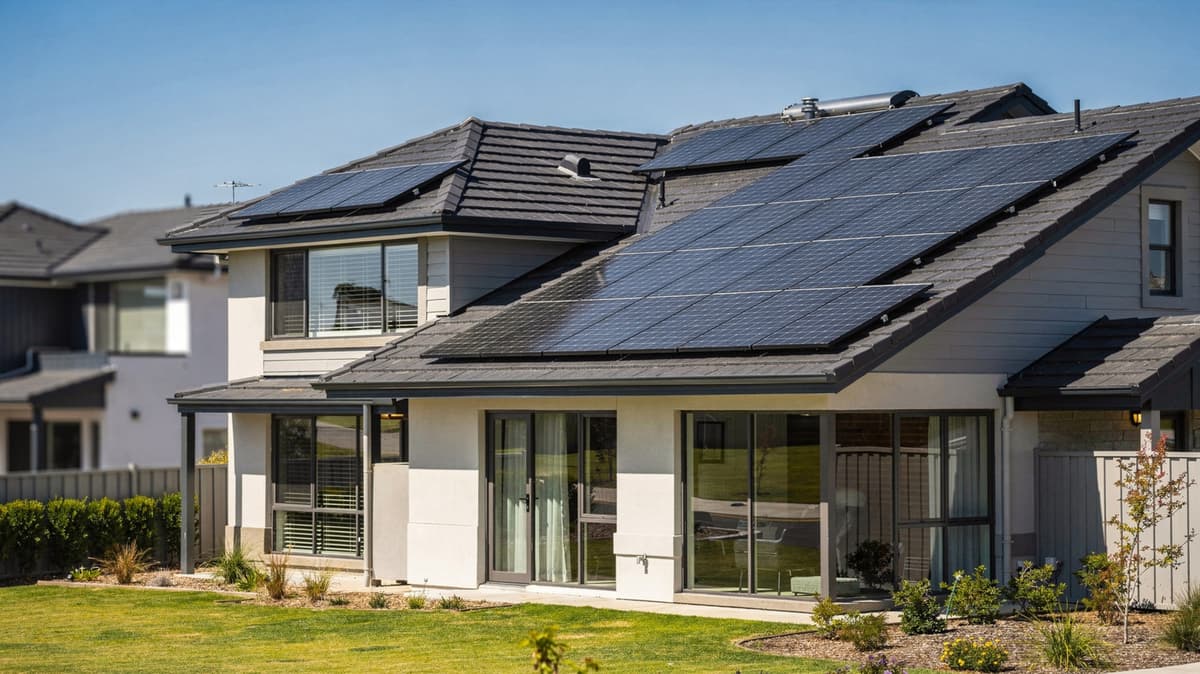
What's The Difference Between Bifacial And Monofacial Solar Panels?
Why It Matters
Bifacial technology offers a higher return on investment despite higher initial costs, reshaping residential solar economics and influencing installer recommendations. Its adoption could accelerate as homeowners seek lower electricity bills and longer‑term durability.
Key Takeaways
- •Bifacial panels cost 15‑25% more upfront than monofacial
- •Bifacial LCOE ~25% lower over 25 years
- •Bifacial panels need higher mounting for reflected light capture
- •Best on light‑colored roofs; monofacial works on any roof
- •Bifacial warranties often longer due to glass‑on‑glass design
Pulse Analysis
The surge in U.S. electricity rates—up 13% between 2022 and 2025—has renewed interest in residential solar as a hedge against utility price volatility. Homeowners evaluating solar projects now confront a technical decision: monofacial versus bifacial modules. While monofacial panels dominate the market due to their lower upfront price and straightforward installation, bifacial panels promise higher energy yields by harvesting reflected light from the roof, ground, or nearby surfaces. This dual‑sided capture can translate into substantial savings, with industry analyses showing a 25% reduction in the levelized cost of electricity over a 25‑year horizon.
From a performance standpoint, bifacial modules excel in environments with high albedo—light‑colored or reflective roofs, snow‑covered surfaces, and open ground. However, they demand elevated mounting systems and greater spacing to maximize rear‑side illumination, which can increase labor and structural costs. Monofacial panels, by contrast, are less sensitive to mounting height and can be deployed on virtually any roof type, making them a pragmatic choice for budget‑constrained projects or larger rooftops where space is abundant. Durability also tips in favor of bifacial designs; their glass‑on‑glass construction often carries longer warranties and better resistance to environmental stressors.
Looking ahead, policy incentives and falling module prices are narrowing the cost gap between the two technologies. As manufacturers scale bifacial production and installers refine mounting solutions, the higher upfront premium is expected to diminish, accelerating adoption among residential customers seeking maximum ROI. For investors and builders, understanding these trade‑offs is essential to advising clients on the most cost‑effective, future‑proof solar strategy.
What's The Difference Between Bifacial And Monofacial Solar Panels?
Comments
Want to join the conversation?
Loading comments...