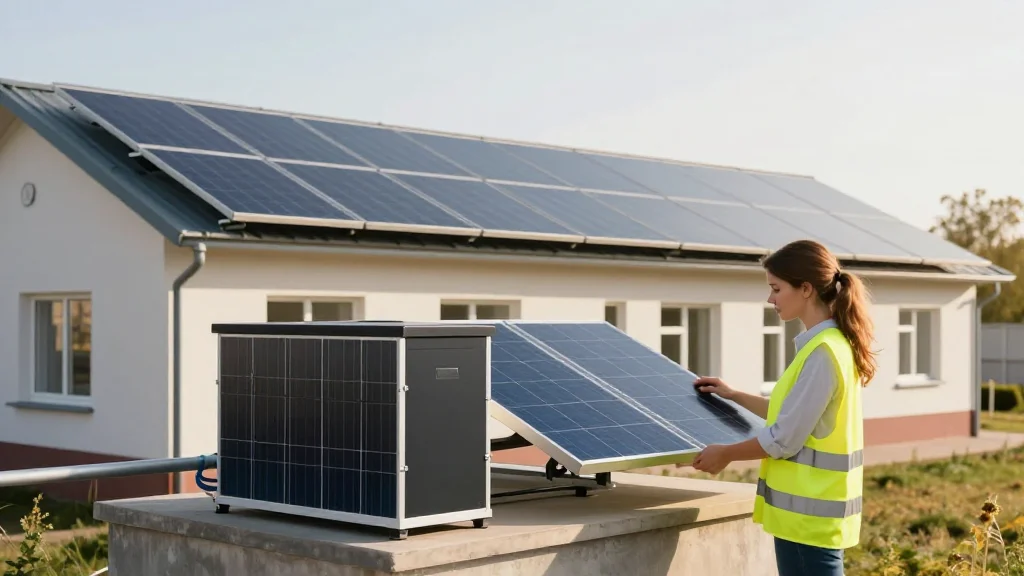
Women’s Leadership Is Everywhere in Ukraine
Why It Matters
Decentralized solar is now a national security asset, proving that resilient, community‑scale energy can safeguard critical services during conflict. Scaling such models and inclusive training strengthens both Ukraine’s reconstruction and Europe’s broader energy independence.
Key Takeaways
- •Solar + storage kept hospitals running during missile attacks
- •100 Solar Schools and 50 Solar Hospitals program installed critical micro‑grids
- •Solar Step trained 51 women, five secured jobs before graduation
- •Decentralized renewables proved essential for Ukraine’s energy security
- •Europe’s solar industry can boost resilience by supplying tech and expertise
Pulse Analysis
The Russian invasion forced Ukraine to rethink energy from a climate goal to a survival necessity. When the national grid was repeatedly crippled, solar panels paired with battery storage became the quickest way to restore power to hospitals, schools and community hubs. These micro‑grids operate off‑grid, require no fuel supply chains, and can be installed in weeks, turning rooftops into lifelines for patients in neonatal units and classrooms for children facing days of darkness.
Beyond the hardware, the Energy Act for Ukraine Foundation has built a human infrastructure that amplifies the impact of renewable tech. Its "Solar Step" program offers a four‑month, tuition‑free curriculum in solar project management, targeting internally displaced women, veterans and widows. By graduating 51 women and already placing five in jobs, the initiative demonstrates how gender‑inclusive training can fill critical skill gaps while fostering economic resilience in war‑torn regions. The model showcases a scalable pathway for other conflict‑affected economies seeking to rebuild their energy workforce.
For Europe, Ukraine’s experience is a live case study in energy security. Decentralized, hardened solar installations reduce reliance on cross‑border supply lines that can be weaponized in geopolitical disputes. European firms that provide robust panels, storage solutions, and engineering expertise can help Ukraine transition from reconstruction to a resilient, low‑carbon grid, while simultaneously strengthening their own supply chains against future shocks. Investing in Ukraine’s renewable sector therefore serves dual purposes: accelerating the continent’s climate agenda and fortifying collective energy independence.
Women’s leadership is everywhere in Ukraine
Comments
Want to join the conversation?
Loading comments...