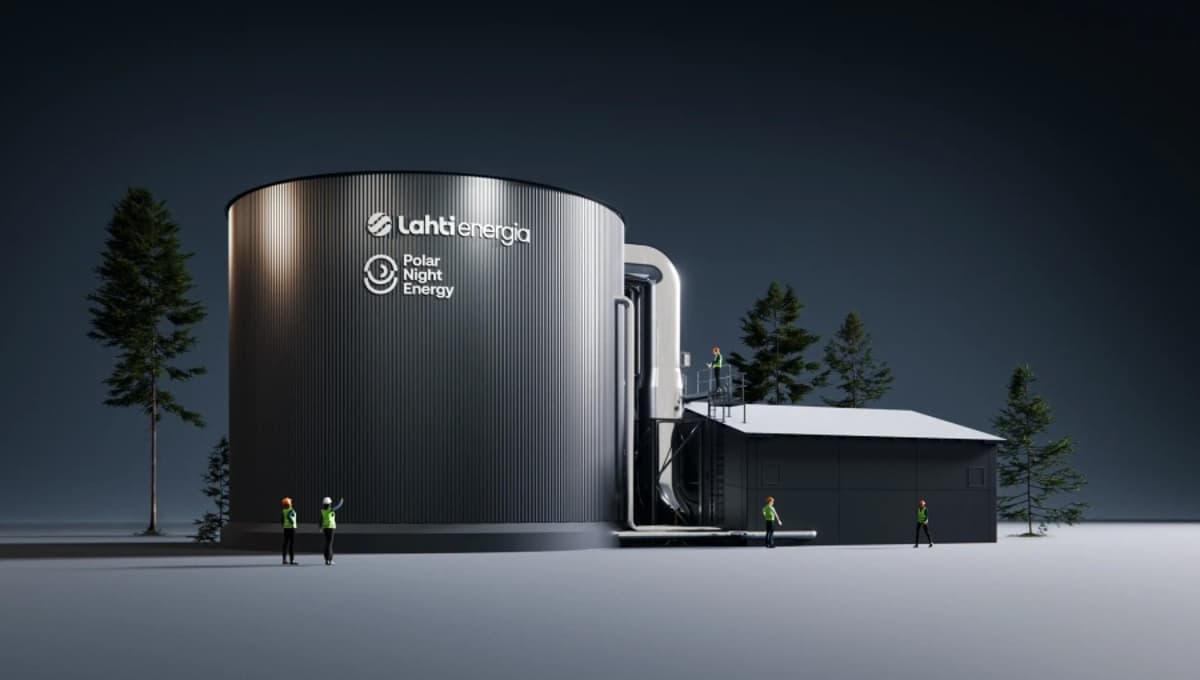
World’s Largest Sand Battery Survives Its Worst Winter, Ready for Roll Out
Companies Mentioned
Why It Matters
The project proves large‑scale thermal storage can decarbonise district heating and hedge against volatile power markets, offering a replicable model for cold‑climate municipalities and industrial heat users.
Key Takeaways
- •1 MW/100 MWh sand battery cuts district‑heat oil use to zero
- •CO₂ emissions fell ~70%, saving ~160 t CO₂ annually
- •Round‑trip efficiency reaches 80‑90%, rivaling pumped hydro
- •AI optimises charging, delivering cost savings amid volatile electricity prices
- •Next 2 MW/250 MWh unit under construction, scaling technology further
Pulse Analysis
The transition to renewable energy has long wrestled with the question of how to store excess heat when the sun isn’t shining or the wind isn’t blowing. Finland’s sand‑battery pilot in the village of Pornainen offers a concrete answer. By heating 2,000 tonnes of recycled soapstone to 500‑600 °C using cheap surplus wind or solar power, the system stores thermal energy in a low‑maintenance, solid medium. Unlike water‑based tanks, sand tolerates far higher temperatures, enabling a dense 100 MWh storage capacity that can supply a month of heat in summer or a week in the depths of winter.
The Pornainen installation proved its economic case during a winter when spot electricity prices surged from roughly $3 to $410 per megawatt‑hour. An AI‑driven platform from Elisa automatically timed charging and discharging, turning price volatility into savings for Loviisan Lämpö. The battery’s round‑trip efficiency of 80‑90% rivals pumped‑hydro storage and outperforms many lithium‑ion solutions for thermal applications. As a result, oil was completely removed from the local heating mix, CO₂ emissions fell about 70% (≈160 t CO₂ annually), and wood‑chip consumption dropped 60%, delivering both climate and cost benefits.
With the success of the world’s largest sand battery, Polar Night Energy is already scaling up. A 2 MW/250 MWh unit slated for completion in 2027 will use 2,400 tonnes of locally sourced sand, demonstrating that the technology can be expanded without prohibitive material costs. Beyond district heating, the firm is exploring industrial‑process heat and even power‑to‑heat‑to‑power cycles, although the latter remains technically challenging. If replicated across the Nordic region and other cold markets, sand‑based thermal storage could become a cornerstone of low‑carbon energy systems, reducing reliance on fossil fuels and smoothing renewable supply.
World’s largest sand battery survives its worst winter, ready for roll out
Comments
Want to join the conversation?
Loading comments...