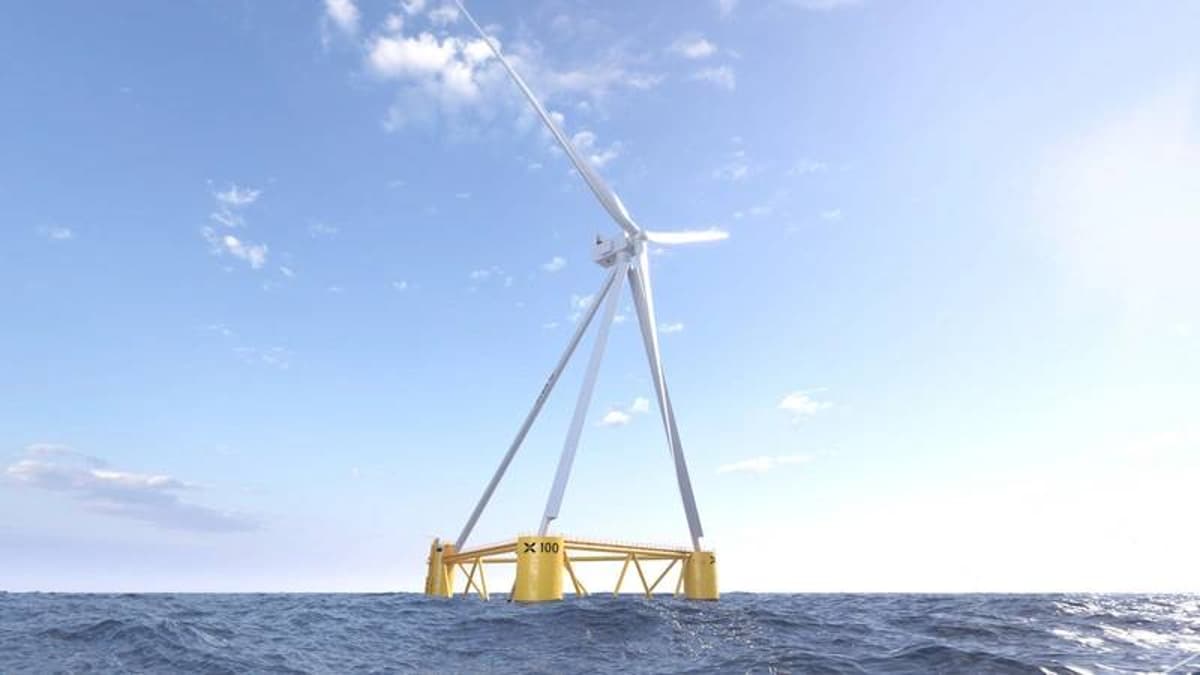
X1 Wind Gets DNV Certification for Floating Wind Platform Design
•March 10, 2026
0
Why It Matters
The DNV endorsement reduces technical risk and builds investor confidence, accelerating the commercialization of cost‑competitive floating wind solutions.
Key Takeaways
- •X1 Wind's X100 gains DNV basic design certification
- •Certification validates structural, stability, hydrodynamic performance
- •Platform targets 6‑10 MW turbines, 160 m rotors
- •Supports NextFloat test at PLEMCAT, Spain
- •Accelerates X150 development for 15‑20 MW projects
Pulse Analysis
Floating offshore wind is rapidly emerging as a cornerstone of the global clean‑energy transition, offering access to deep‑water sites where traditional fixed foundations are impractical. In this landscape, third‑party validation such as DNV’s Statement of Compliance carries significant weight, assuring investors and regulators that a design meets rigorous safety and performance standards. X1 Wind’s recent certification of its X100 platform under the DNV‑SE‑0442 framework signals that the company’s engineering approach has passed a critical hurdle, paving the way for commercial deployment.
The X100 is engineered for 6‑10 MW turbines with roughly 160‑meter rotor diameters, combining a lightweight hull with an advanced station‑keeping system that mitigates weathervaning. DNV’s review confirmed the platform’s structural integrity, stability and hydrodynamic performance over a 25‑year service life, even under extreme wind, wave and current conditions. By meeting these criteria, X1 Wind expects to lower the levelized cost of energy for floating wind projects, a key metric that has historically hindered market adoption. The platform’s first sea trial at the PLEMCAT site in Spain, under the NextFloat programme, will generate performance data essential for scaling to commercial units.
Beyond the X100, the certification accelerates X1 Wind’s roadmap for the larger X150 platform, designed for 15‑20 MW turbines and already booked for projects across Europe and Asia. Securing DNV approval early reduces downstream engineering risk and shortens financing timelines, making the technology more attractive to utilities and offshore developers. As governments raise offshore wind targets, validated floating solutions like X100 and X150 could unlock high‑capacity sites that were previously inaccessible, driving a new wave of investment in deep‑water renewables.
X1 Wind Gets DNV Certification for Floating Wind Platform Design
0
Comments
Want to join the conversation?
Loading comments...