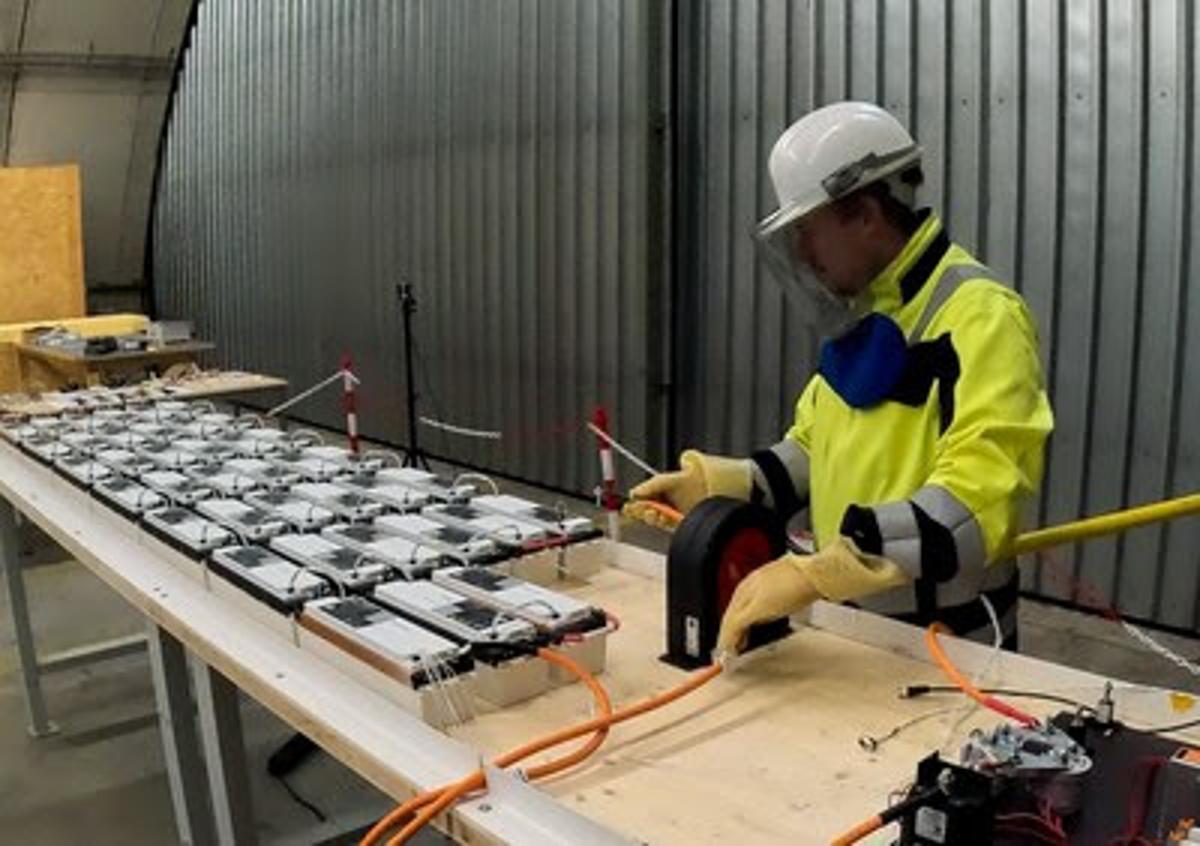
H55 Successfully Completes System Safety Function Verification Testing of Integrated Energy Storage System

Why It Matters
System‑level safety verification accelerates H55’s path to certification, a prerequisite for large‑scale deployment of electric aircraft. It signals to OEMs and regulators that the ESS meets rigorous aviation standards, reducing adoption risk.
Key Takeaways
- •H55 validated full ESS integration across battery, management, and power units
- •System safety functions auto-disconnect power under fault conditions, meeting aviation standards
- •Certification roadmap de‑risked, moving from component to system-level approval
- •Aerospace‑grade ESS aligns with EASA requirements, enabling large‑scale electric aircraft deployment
- •Over 2,000 electric flight hours achieved without battery incidents, demonstrating reliability
Pulse Analysis
The aviation industry is racing to replace fossil‑fuel propulsion with electric alternatives, but certification remains the biggest hurdle. Regulators such as EASA demand proof that energy storage systems can safely handle fault conditions, thermal events, and integration stresses. Traditional battery packs, often developed in isolation, struggle to meet these stringent requirements, forcing manufacturers to either delay programs or invest heavily in bespoke testing. As airlines and OEMs commit to net‑zero targets, a certified, scalable ESS becomes a critical enabler for next‑generation electric and hybrid aircraft.
H55’s recent System Safety Function Verification Testing addresses that gap by demonstrating full‑system reliability in an integrated architecture. The campaign exercised battery modules, management units, an energy flow counter, protection and power distribution units, and a charge control unit under realistic operating scenarios. Crucially, the system automatically isolated power when predefined faults occurred, satisfying a core aviation safety criterion. By moving the validation from individual components to a cohesive system, H55 reduces the uncertainty that typically inflates certification timelines and costs, bringing its ESS one step closer to formal approval.
For aircraft manufacturers, H55’s milestone offers a ready‑made, regulator‑aligned solution that can be incorporated into new airframes without extensive redesign. The company’s heritage from the Solar Impulse program and its 2,000‑hour electric flight record provide tangible evidence of operational safety. As demand for certified electric propulsion grows, H55 is positioned to become a preferred supplier, potentially accelerating the rollout of electric regional jets and commuter aircraft. The broader market may see faster certification cycles, lower capital expenditures, and a clearer pathway to commercial electric flight.
H55 Successfully Completes System Safety Function Verification Testing of Integrated Energy Storage System
Comments
Want to join the conversation?
Loading comments...