Middle East Conflict Revives Concerns Over Fertilizer Dependence in the U.S. and Brazil
Key Takeaways
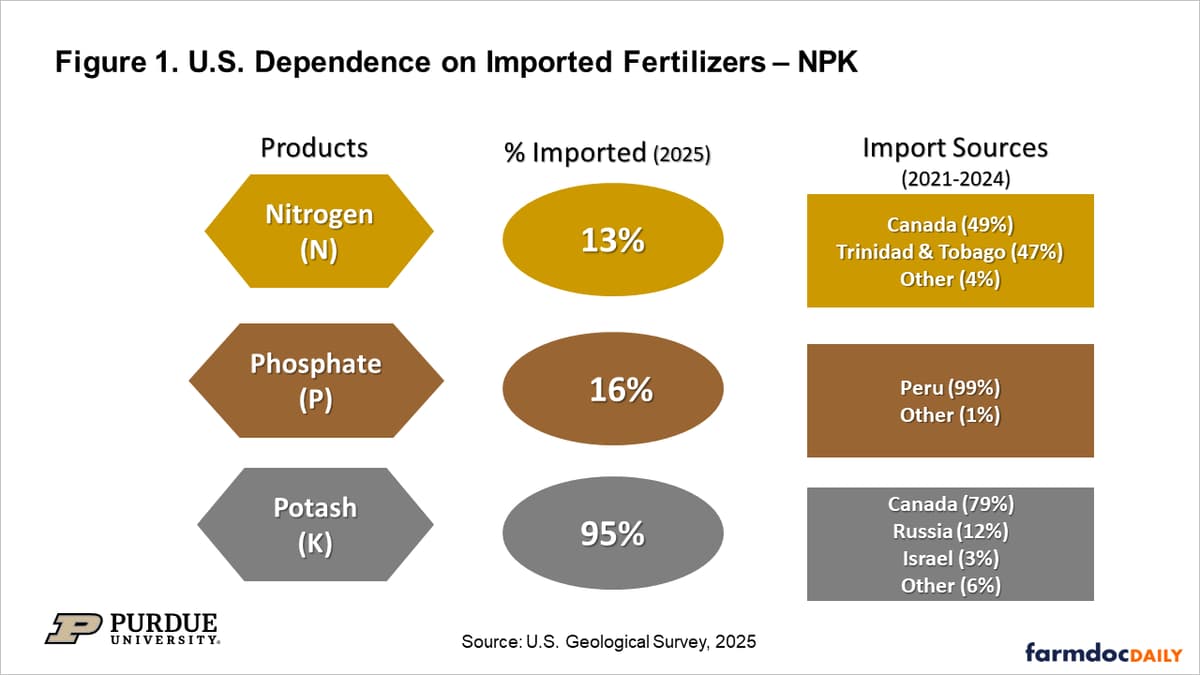
- •U.S. imports 95% of potash, mainly from Canada.
- •Brazil imports 96% of potash and 95% of nitrogen.
- •Iran's Hormuz closure pushes global fertilizer prices higher.
- •U.S. fertilizer imports rose modestly; Brazil's imports hit record 43 Mt.
- •Domestic production lags demand in both nations, raising supply risk.
Pulse Analysis
The Strait of Hormuz has long been a chokepoint for energy and fertilizer flows, moving roughly a third of the world’s fertilizer cargoes. Recent Iranian restrictions have sent prices for nitrogen and phosphate fertilizers soaring, echoing the shockwaves felt after the Russia‑Ukraine war. Traders now price in a premium for Gulf‑origin urea and ammonia, while downstream farmers scramble for alternative supplies, underscoring how geopolitical flashpoints can quickly translate into higher farm bills.
In the United States, a relatively robust domestic industry still leaves the sector vulnerable: 95% of potash and a growing share of nitrogen and phosphate are imported, primarily from Canada, Russia and Peru. Although overall U.S. fertilizer imports have been steady, the surge in potash prices erodes Midwest corn and soybean margins, especially for producers who locked in inputs before the conflict. Brazil faces a sterner test. With 96% of its potash and 95% of its nitrogen sourced abroad, the country’s record 43.3 million metric tons of fertilizer imports in 2025 have amplified exposure to price spikes, squeezing already thin margins for soybean growers.
Policymakers in both nations are now weighing strategies to blunt future shocks. Options include expanding domestic potash and nitrogen capacity, incentivizing recycling of nutrients, and diversifying import routes beyond the Gulf. Brazil’s new phosphate complex hints at a modest shift toward self‑sufficiency, but scaling up ammonia and potash plants will require significant capital and stable energy supplies. For the United States, bolstering strategic reserves and fostering public‑private partnerships could smooth short‑term volatility. Ultimately, reducing reliance on a single maritime corridor will be key to safeguarding global grain supplies and maintaining competitive export positions.
Middle East Conflict Revives Concerns Over Fertilizer Dependence in the U.S. and Brazil
Comments
Want to join the conversation?