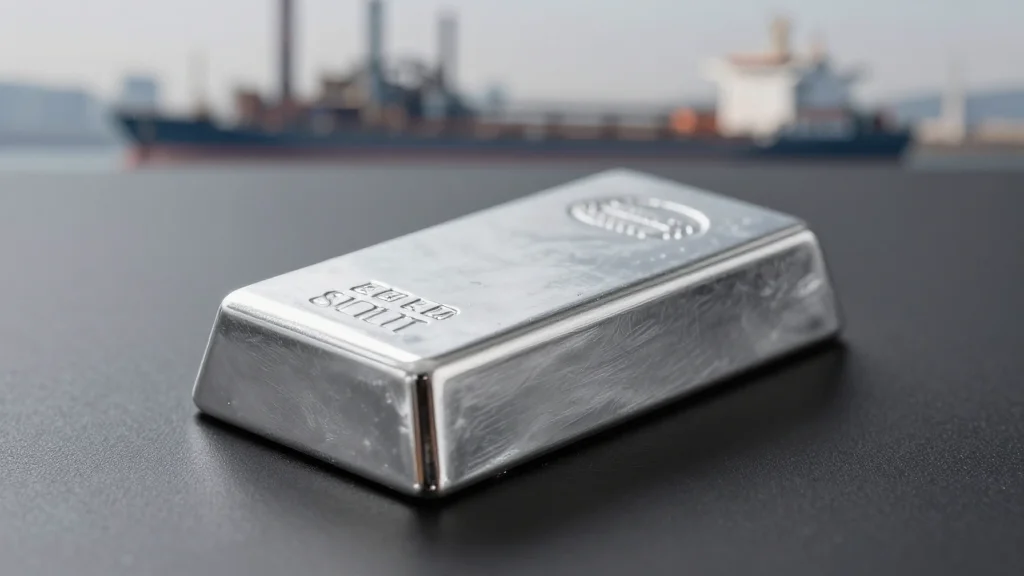
Aluminium Prices Jump 14% as Iran War Slashes Gulf Output, LME Tightens

Companies Mentioned

Why It Matters
The aluminium market underpins a wide array of industries, from transportation to renewable energy. A sustained supply deficit raises production costs for manufacturers, feeding through to consumer prices and potentially stoking inflationary pressures in key economies. Moreover, the reliance on Gulf output highlights geopolitical vulnerabilities; any further escalation could force buyers to seek costlier, less efficient sources, reshaping global trade flows. For investors, the sharp premium spikes and backwardated LME spreads signal heightened risk premia and may attract speculative capital, while also prompting downstream firms to reconsider inventory strategies and supply‑chain diversification. Policymakers will need to balance sanctions regimes with the need for stable metal supplies, especially as the world accelerates its transition to low‑carbon technologies that heavily depend on aluminium.
Key Takeaways
- •Aluminium spot price up 14% to $3,650/ton since Iran war began
- •LME cash‑to‑three‑month spread at $80 backwardation, tightest since 2007
- •LME registered stocks down a third to 339,475 tons; 68,000 tons cancelled recently
- •Physical premiums: Japan $350 surcharge, Europe up 58‑75%, U.S. Midwest up 8%
- •Combined Gulf and Mozambique production loss of ~2.4 million tons over two months
Pulse Analysis
The current aluminium rally is less a price spike than a structural rebalancing driven by geopolitical risk. Historically, supply shocks—such as the 2008‑09 financial crisis or the 2022 Ukraine war—have produced short‑lived price spikes that quickly normalized as inventories replenished. In contrast, the Iran‑related Gulf disruption is eroding both on‑exchange and off‑exchange stocks simultaneously, creating a dual‑layer shortage that is harder to offset.
The $80 LME spread indicates that market participants expect continued scarcity, prompting a shift from cash‑based trading to forward contracts. This forward‑leaning behavior can lock in higher prices for producers but also raises financing costs for end‑users, especially in price‑sensitive sectors like automotive and packaging. The surge in physical premiums, particularly the $350 surcharge in Japan, reflects a willingness to pay for certainty—a classic sign of a market moving from a commodity to a strategic material.
Looking forward, the aluminium market’s trajectory will hinge on three variables: the speed of Gulf plant repairs, the geopolitical resolution of the Strait of Hormuz, and the ability of alternative producers—particularly in the United States and Europe—to scale up amid energy constraints. If any of these factors improve, we could see a gradual unwinding of premiums and a return to more typical LME spreads. Conversely, prolonged disruption would cement a new high‑cost equilibrium, accelerating the push for recycling and substitution in downstream applications. Stakeholders should therefore monitor inventory data, repair timelines, and diplomatic developments as the primary leading indicators of market direction.
Aluminium Prices Jump 14% as Iran War Slashes Gulf Output, LME Tightens
Comments
Want to join the conversation?
Loading comments...