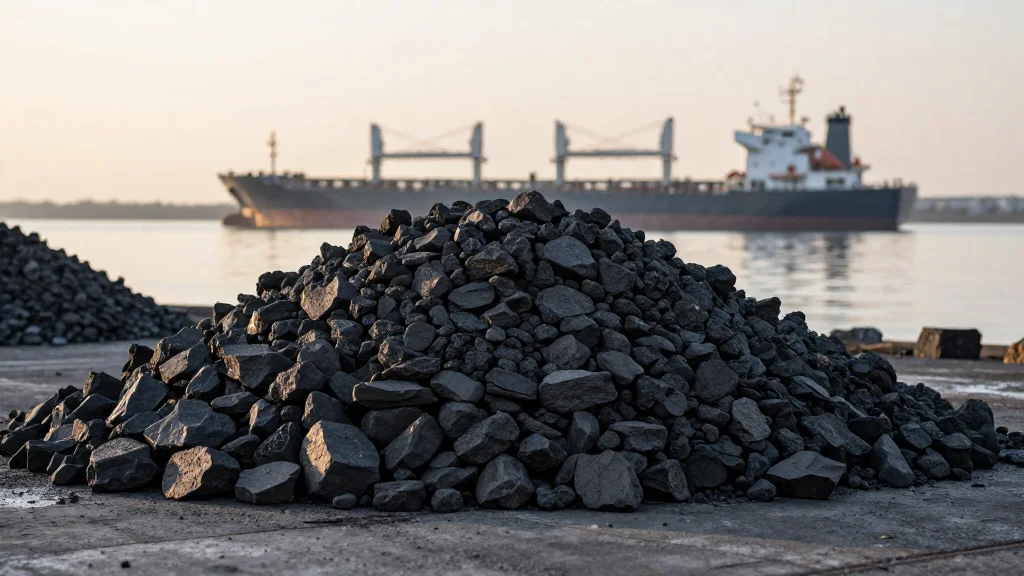
Coal Futures Dip Below $130 as US‑Iran Talks Boost Optimism

Companies Mentioned

Why It Matters
The price movement underscores how geopolitical developments can quickly reshape commodity markets, especially for energy‑intensive fuels like coal. A potential easing of gas supply constraints would reduce the incentive for utilities to rely on coal as a backup, affecting demand dynamics and profitability for miners worldwide. Moreover, the episode highlights the sensitivity of coal markets to risk premiums embedded in shipping routes that are critical for global energy trade. For investors and policymakers, the episode offers a reminder that diplomatic progress can have immediate material effects on commodity pricing, influencing everything from power generation costs to the financial health of mining companies. Monitoring the trajectory of US‑Iran negotiations will be essential for forecasting coal demand and price stability in the coming months.
Key Takeaways
- •Coal futures fell below $130 per ton, a seven‑week low.
- •Price retreat follows a 17‑month high of $146.5 on March 20.
- •Optimism about US‑Iran talks could reopen the Strait of Hormuz.
- •Coal values have risen nearly 9% since the war began in early March.
- •Potential easing of gas disruptions may lower short‑term coal demand.
Pulse Analysis
The latest price dip illustrates the tight coupling between geopolitical risk and commodity pricing. Historically, coal has acted as a swing commodity, absorbing shocks when oil or gas supplies are constrained. The current scenario mirrors the 2022‑2023 period when Middle‑East tensions forced utilities to pivot to coal, driving prices upward. However, the market now appears to be pricing in a possible de‑escalation, which could re‑balance the supply‑demand equation.
If diplomatic channels succeed and the Strait of Hormuz reopens, gas markets could see a modest influx of supply, easing price spikes that have kept coal in the spotlight. This would likely benefit gas‑fired power generators by reducing fuel costs, while coal miners could face tighter margins unless they can offset lower prices with cost efficiencies or shift focus to higher‑value metallurgical coal. Companies with diversified portfolios, such as Glencore, may navigate the volatility better than pure‑play thermal coal producers.
In the medium term, the episode reinforces the importance of monitoring geopolitical developments alongside traditional supply‑side metrics. Investors should watch for concrete outcomes from US‑Iran talks, as well as any policy shifts in major coal‑consuming regions. A sustained price decline could trigger a reallocation of capital away from coal projects, accelerating the sector's longer‑term transition pressures.
Coal Futures Dip Below $130 as US‑Iran Talks Boost Optimism
Comments
Want to join the conversation?
Loading comments...