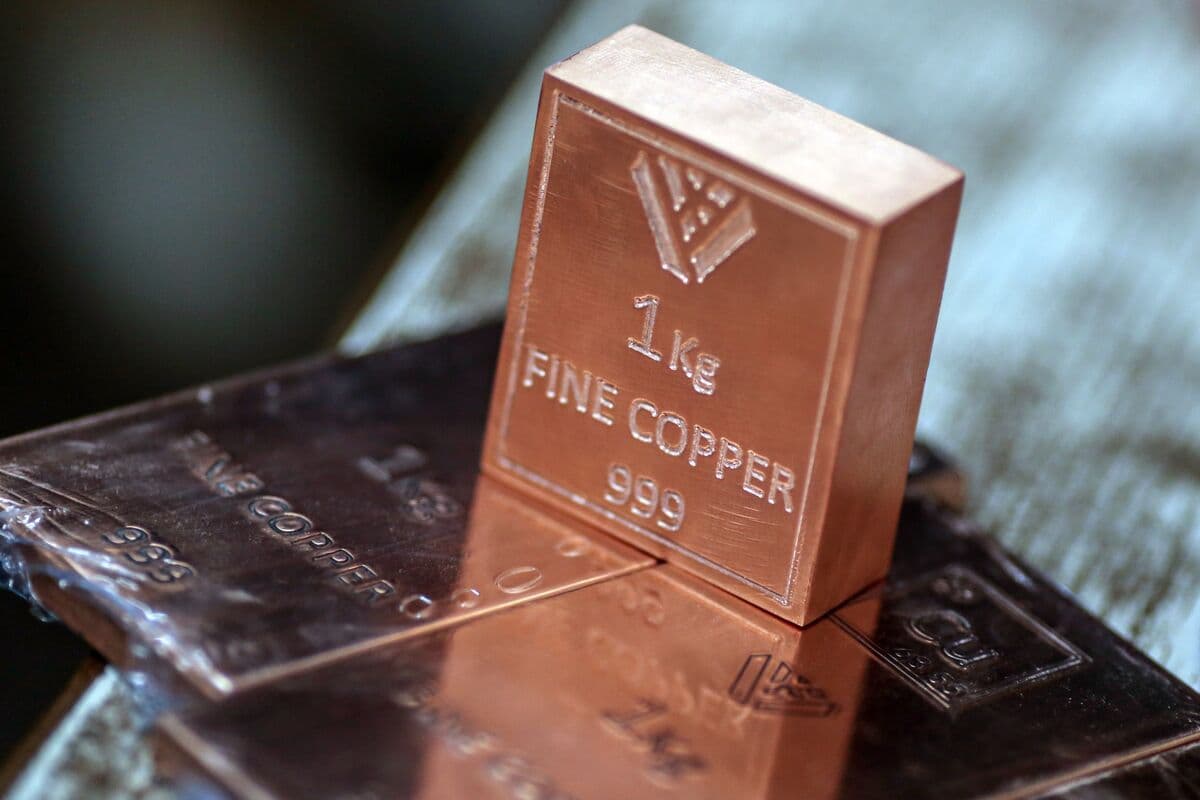
Copper Declines From Three-Week High as Traders Track Iran War
Why It Matters
Copper is a key input for construction, electronics, and clean‑energy projects, so price volatility signals broader economic uncertainty and can affect corporate budgeting and investment decisions.
Key Takeaways
- •Futures fell under $14,000/ton, ending three‑week high.
- •Prices had jumped 3% in early‑week sessions.
- •Iranian attack on Kuwait heightened geopolitical risk.
- •U.S. strike on Qeshm Island deepened market uncertainty.
- •Copper’s sensitivity reflects broader industrial and economic outlook.
Pulse Analysis
Copper’s price trajectory has long mirrored the health of global manufacturing, infrastructure spending, and the transition to renewable energy. In 2025‑26, demand from electric‑vehicle batteries, wind‑turbine generators, and data‑center construction lifted the metal’s fundamentals, supporting a steady climb toward $14,500 per ton. Yet the market remains supply‑sensitive, with major mines in Chile and the Democratic Republic of Congo facing labor disputes and logistical bottlenecks that can quickly tighten inventories.
Geopolitical turbulence now adds a volatile overlay to these structural trends. The recent Iranian missile strike on Kuwait and the U.S. retaliation against Qeshm Island have revived fears of broader regional escalation, prompting risk‑averse investors to shed commodities perceived as vulnerable to trade disruptions. Copper, heavily traded in futures markets, reacted sharply as traders priced in potential shipping route interruptions and heightened insurance premiums for cargoes transiting the Persian Gulf. Such conflict‑driven sentiment can outweigh short‑term demand fundamentals, driving price swings that outpace underlying supply‑demand dynamics.
Looking ahead, analysts expect copper to regain momentum if diplomatic channels de‑escalate and supply constraints ease. A tentative price target of $15,000 per ton by year‑end hinges on sustained demand from green‑technology projects and a stable geopolitical environment. Investors should monitor not only mine output reports but also diplomatic developments in the Middle East, as any flare‑up could again depress prices and reshape risk‑adjusted returns for commodity‑focused portfolios. Diversifying exposure through copper ETFs or forward contracts may help mitigate sudden market shocks while preserving upside from the metal’s long‑term growth narrative.
Copper Declines From Three-Week High as Traders Track Iran War
Comments
Want to join the conversation?
Loading comments...