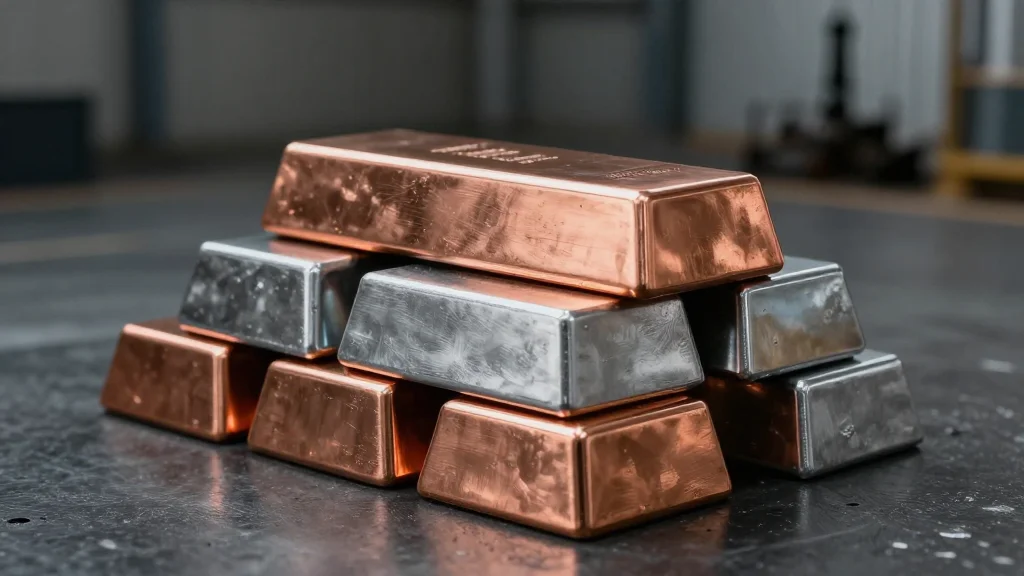
Copper Rises to 6-Week High as Iran Talks Raise Hopes
Companies Mentioned
Why It Matters
The price bounce signals that geopolitical risk premiums on key commodities are receding, which could lower input costs for manufacturers and improve profit margins across sectors reliant on copper and other base metals.
Key Takeaways
- •Copper hits $13,285/ton, highest in six weeks.
- •Iran may pause Hormuz shipments, easing supply concerns.
- •Base metals rally as peace talks boost investor confidence.
- •Aluminum drops 1.2% after reaching four‑year high.
- •War impact on metals expected to wane like Russia‑Ukraine.
Pulse Analysis
The latest surge in copper prices reflects a broader shift in market sentiment as diplomatic overtures between the United States and Iran gain traction. Traders are pricing in a potential de‑escalation of tensions in the Strait of Hormuz, a critical chokepoint for global energy and metal shipments. By signaling a possible pause in Iranian oil exports, Tehran is easing supply‑chain anxieties that had previously driven copper and other base metals to historic lows. This development underscores how quickly geopolitical narratives can translate into tangible price movements in commodity markets.
Investors are also interpreting the renewed dialogue as a sign that the macro‑economic shock from the Middle East war may be short‑lived. Similar to the gradual normalization seen after the Russia‑Ukraine conflict, the easing of war‑related risk premiums is prompting a reallocation of capital back into industrial metals. Aluminum’s brief four‑year high, followed by a modest pullback, illustrates the market’s cautious optimism—participants are willing to re‑enter positions but remain vigilant for any resurgence of hostilities. The broader base‑metal rally suggests that manufacturers may soon see lower input costs, potentially boosting earnings in sectors such as construction, automotive, and renewable energy.
Looking ahead, the durability of this price recovery hinges on the concrete outcomes of the upcoming peace talks. A formal cease‑fire or a clear timeline for negotiations could cement the current bullish trend, while any setback would likely reignite volatility. Companies that rely heavily on copper should monitor shipping data through the Hormuz corridor and consider hedging strategies to lock in current price levels. Meanwhile, analysts will watch for spill‑over effects on related commodities, as a sustained de‑escalation could reshape the risk calculus for the entire industrial metals portfolio.
Copper Rises to 6-Week High as Iran Talks Raise Hopes
Comments
Want to join the conversation?
Loading comments...