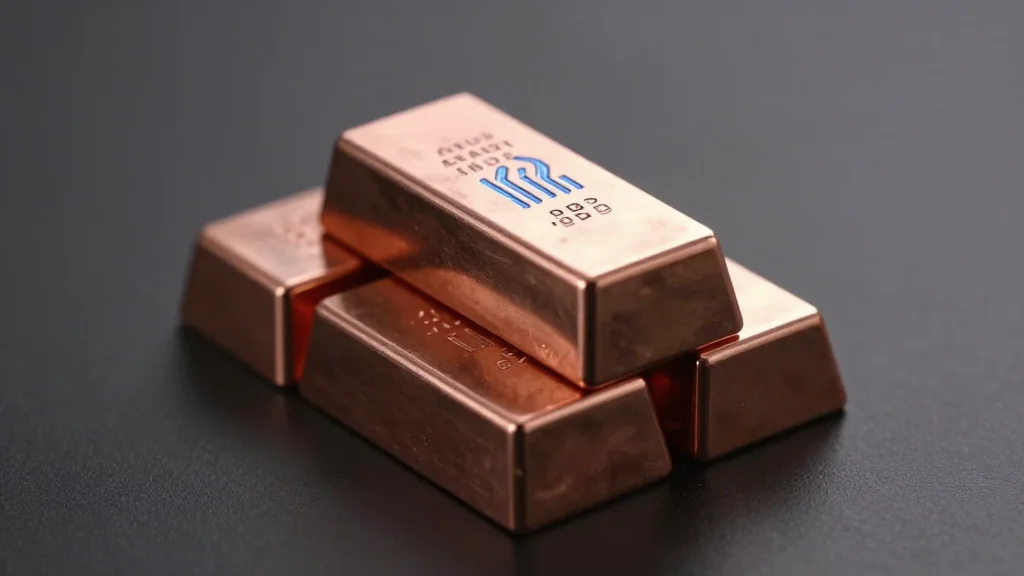
Copper Surges Past $14,000/Ton as China Demand and Supply Constraints Tighten

Companies Mentioned
Freeport‑McMoRan
London Metal Exchange
Why It Matters
The copper rally signals a broader shift in the commodities landscape where technology‑driven demand can outweigh traditional macro‑economic headwinds. As AI and electrification projects consume more copper, the metal becomes a proxy for the health of the digital economy, linking commodity markets directly to tech‑sector cycles. Supply‑side fragilities – from geopolitical disruptions to mine‑restart delays – underscore the importance of diversified sourcing and the strategic value of inventory buffers. Policymakers and investors alike will need to factor these dynamics into energy transition plans, where copper is a critical input for renewable‑energy infrastructure and grid modernization.
Key Takeaways
- •Copper hit $14,106.50/ton on the LME, a 1.2% rise, near its all‑time high
- •COMEX copper futures set a record $6.6455 per pound
- •Supply constraints stem from Middle‑East sulphuric‑acid export suspension and a delayed Grasberg restart
- •AI‑driven data‑center construction in China and globally adds ~1.5 % to copper demand
- •Chile’s Q1 2026 output fell ~6% YoY, tightening physical balance
Pulse Analysis
Copper’s recent price breakout reflects a structural realignment rather than a fleeting speculative flare. Historically, base‑metal rallies have been anchored in macro‑economic cycles; this time, the catalyst is the convergence of AI‑fuelled data‑center builds and a supply chain that is increasingly vulnerable to geopolitical shocks. The acid‑shortage narrative illustrates how a single input can ripple through the entire value chain, from leaching to final refining, creating a cascade of capacity cuts that amplify price pressure.
From an investment perspective, the metal’s price trajectory suggests a shift toward a supply‑constrained regime. Traditional hedging strategies that rely on inventory buildup may lose efficacy as refiners struggle to secure essential chemicals. Investors should therefore monitor not only mine‑level production metrics but also the health of ancillary inputs such as sulphuric acid, which have become de‑facto leading indicators for copper.
Looking forward, the interplay between policy and technology will dictate the rally’s durability. If governments accelerate renewable‑energy targets, copper demand could outpace supply even more dramatically, pushing prices toward the $15,000‑ton mark. Conversely, any diplomatic resolution that restores Middle‑East acid exports would relieve a key bottleneck, potentially moderating the uptrend. Market participants must therefore balance geopolitical risk assessments with the secular demand surge driven by AI and electrification.
Copper Surges Past $14,000/Ton as China Demand and Supply Constraints Tighten
Comments
Want to join the conversation?
Loading comments...