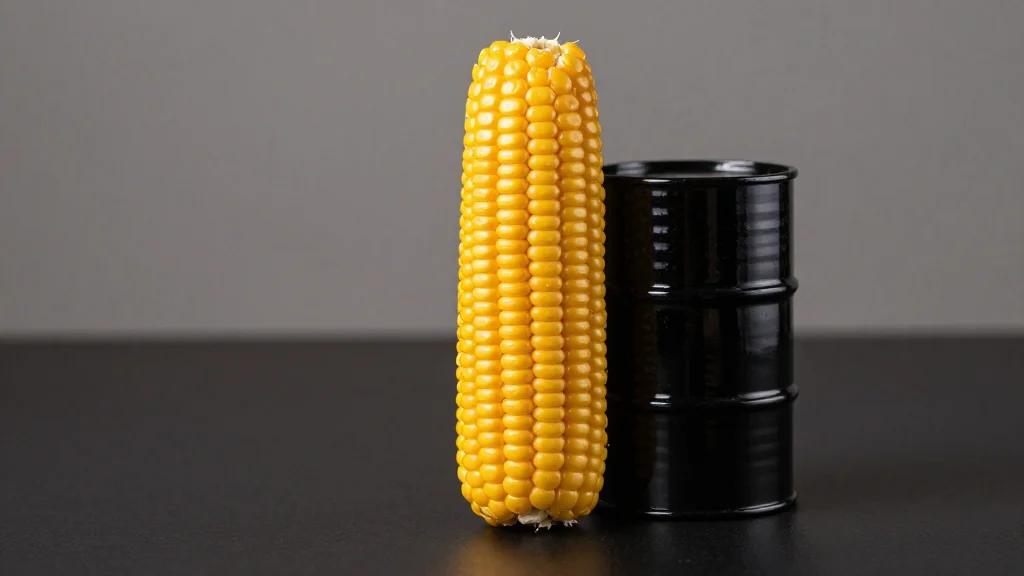
Corn Futures Slip to Three‑Week Low as Oil Prices Fall and Planting Accelerates

Why It Matters
The price dip in corn futures signals a pivot in the grain market away from biofuel‑driven demand toward pure supply‑side fundamentals. With oil prices retreating, ethanol producers may cut feedstock purchases, reducing a historically stabilizing demand source for corn. Simultaneously, an accelerated planting schedule suggests a potentially larger U.S. harvest, which could depress global corn prices and affect downstream industries such as livestock feed and food processing. Stakeholders—from farmers to food manufacturers—must adjust planting decisions, hedging strategies, and pricing models in response to these evolving dynamics. For investors, the confluence of lower oil prices and faster planting creates a risk‑on environment for corn‑related equities and futures contracts. Commodity traders will need to factor in the volatility of geopolitical developments that can swing oil prices, as well as weather‑driven planting outcomes, to accurately price risk. The situation also highlights the interconnectedness of energy and agricultural markets, reinforcing the importance of cross‑sector monitoring for anyone with exposure to commodities.
Key Takeaways
- •Corn futures fell about $4.5 per bushel to a three‑week low on May 7, 2026.
- •U.S. planting reached 38% of the corn crop, ahead of the five‑year average of 34%.
- •Oil price decline, driven by potential U.S.–Iran cease‑fire, reduced biofuel demand.
- •Net export sales of old‑crop U.S. corn for the week ended April 23 were 1,597,800 tons.
- •Elevated input costs are prompting acreage shifts toward less input‑intensive crops.
Pulse Analysis
The recent slide in corn futures illustrates how tightly woven energy and agricultural markets have become. Historically, corn’s price floor has been bolstered by ethanol demand, which rises when oil prices climb. This relationship inverted as oil prices fell on diplomatic headlines, stripping away that floor and exposing corn to pure supply‑side forces. The faster planting pace, driven by favorable weather, compounds the effect by expanding near‑term supply expectations.
From a historical perspective, periods of oil price volatility have repeatedly reshaped corn’s demand curve. The 2022‑2023 oil price spike, for instance, lifted corn to record highs as ethanol plants scrambled for feedstock. The current environment mirrors the 2014‑2015 oil price drop, when corn prices also softened, but the added factor of an accelerated planting schedule makes this cycle more pronounced. Market participants should therefore recalibrate their risk models to account for a dual‑shock scenario: demand erosion from energy markets and supply expansion from agronomy.
Looking forward, the grain market’s trajectory will hinge on three variables: oil price stability, weather‑driven planting progress, and export demand elasticity. If oil remains subdued, ethanol demand may stay muted, keeping corn prices under pressure. Conversely, a sudden geopolitical flare‑up could revive oil prices, re‑energizing biofuel demand and offering a price rebound. Weather remains the wild card; a late‑season storm could slow planting or damage crops, tightening supply and potentially offsetting demand weakness. Stakeholders who can monitor and synthesize these signals will be best positioned to navigate the volatility ahead.
Corn Futures Slip to Three‑Week Low as Oil Prices Fall and Planting Accelerates
Comments
Want to join the conversation?
Loading comments...