Crypto Hedge Funds Turn to Oil and Gold on 24/7 Blockchain Platforms

Companies Mentioned
Why It Matters
The migration of crypto hedge funds into oil, gold and other commodities on 24‑hour blockchain platforms could fundamentally alter liquidity provision in these markets. Continuous trading may reduce price gaps and improve access for a wider investor base, while also exposing the commodity sector to the volatility and regulatory uncertainty that characterize crypto assets. For traditional commodity producers and traders, the shift represents both an opportunity to tap new capital streams and a risk that market dynamics could become fragmented across regulated exchanges and unregulated token venues. Furthermore, the surge in stable‑coin activity, exemplified by Circle’s stock rally and USDC’s record transaction volume, provides the settlement backbone that makes tokenized commodity trading feasible. As stablecoins gain acceptance as a bridge between fiat and digital assets, they could become the default medium of exchange for commodity tokens, accelerating the integration of blockchain technology into mainstream financial markets.
Key Takeaways
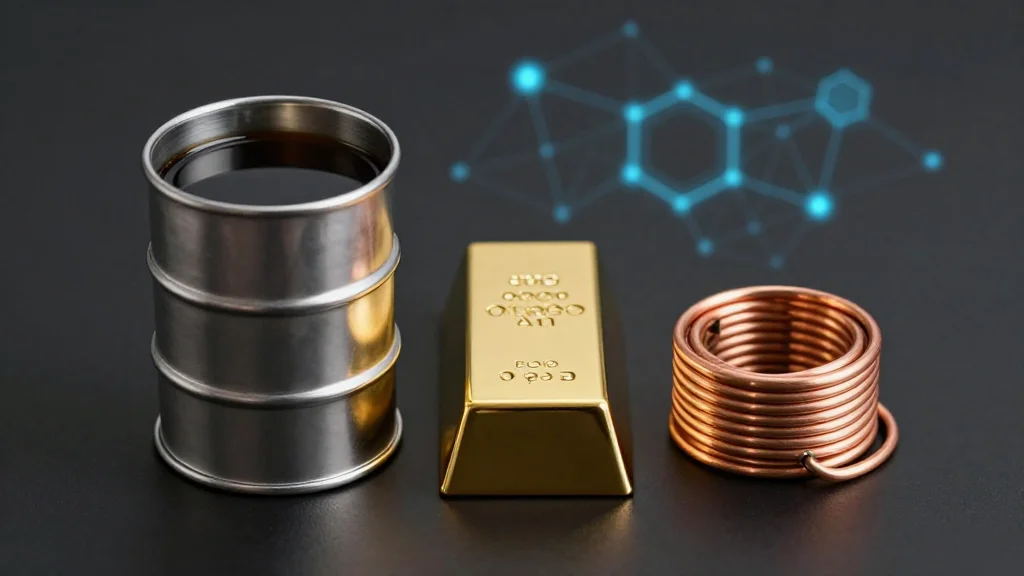
- •Crypto hedge funds are allocating capital to tokenized crude oil, gold and copper on 24/7 blockchain platforms.
- •Bloomberg reports that these platforms are experiencing higher order flow than ever, shifting focus from crypto‑only assets.
- •Circle Internet Group’s stock jumped 9.5% to $108.05, reflecting broader crypto‑market optimism and stable‑coin growth.
- •USDC transaction volume hit $11.9 trillion in Q4 2025, a 247% YoY increase, underpinning liquidity for tokenized commodities.
- •Regulators warn that unregulated commodity tokens could pose market‑integrity risks, prompting calls for clearer oversight.
Pulse Analysis
The convergence of crypto hedge‑fund capital with tokenized commodities marks a watershed moment for both sectors. Historically, commodity markets have relied on a handful of regulated exchanges and clearing houses to ensure price integrity and settlement certainty. By moving trading onto blockchain, funds gain the ability to execute strategies around the clock, capture arbitrage opportunities across time zones, and reduce reliance on legacy infrastructure. This could compress bid‑ask spreads and attract a new class of participants who were previously deterred by the rigidity of traditional futures contracts.
However, the upside is tempered by significant risk. The absence of a central clearing mechanism means that counterparty exposure is managed through smart contracts, which are only as secure as the code that underpins them. A single vulnerability could cascade across multiple tokenized assets, eroding confidence. Moreover, the regulatory vacuum surrounding commodity tokens may invite scrutiny from bodies such as the CFTC and the SEC, especially if trading volumes approach those of established futures markets. Firms that can demonstrate robust custodial practices, transparent reserve backing and compliance with emerging standards will likely secure a competitive edge.
Looking ahead, the trajectory of this nascent market will hinge on two variables: the evolution of stable‑coin infrastructure and the speed of regulatory response. Circle’s expanding USDC ecosystem provides a credible, low‑volatility settlement layer that could become the de‑facto currency for commodity token trades. Simultaneously, policymakers are drafting frameworks that could either legitimize tokenized commodities or impose restrictions that drive activity back to traditional venues. Hedge funds, therefore, must balance the lure of continuous, high‑frequency commodity exposure against the operational and compliance challenges inherent in an uncharted regulatory landscape.
Crypto Hedge Funds Turn to Oil and Gold on 24/7 Blockchain Platforms
Comments
Want to join the conversation?
Loading comments...