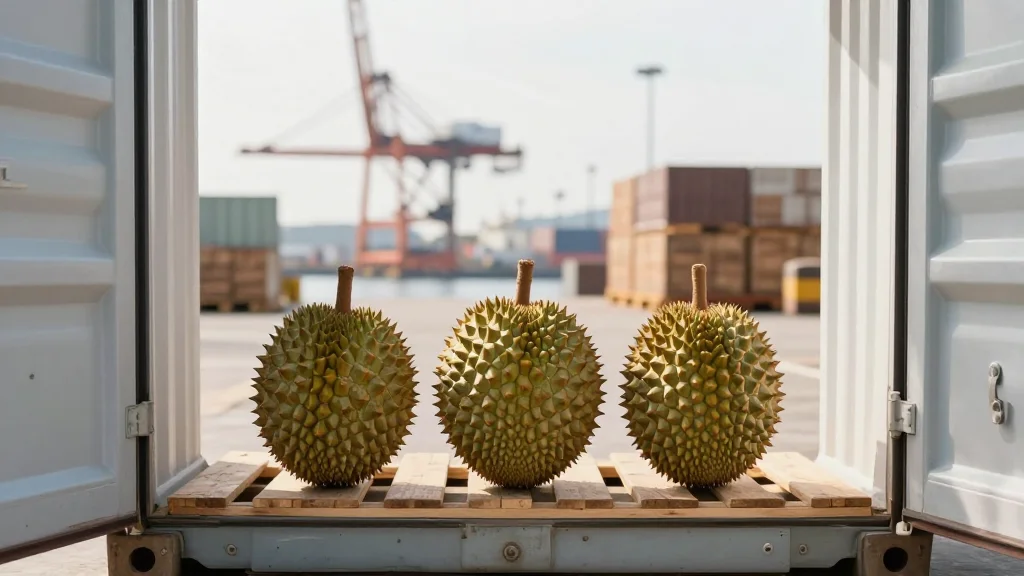
Durian Prices Tumble in China as Faster Deliveries From Southeast Asia Boost Supply
Why It Matters
The price collapse expands durian’s consumer base in China and forces exporters to compete on quality rather than price, reshaping trade dynamics across the region.
Key Takeaways
- •Cold‑chain rail cuts durian spoilage to 3%.
- •Kunming durians now 28 yuan/kg (~$4), down from 200 yuan.
- •Rail link moves 200,000 t of fruit yearly, 26‑hour transit.
- •Chinese market shifts from price to quality, spurring AI sorting.
Pulse Analysis
The inauguration of a temperature‑controlled rail corridor between Thailand, Laos and China’s Yunnan province has rewired the durian supply chain. By maintaining a constant 13 °C environment, the service trims transit from weeks to just 26 hours to Kunming and under five days to Chengdu, while reducing spoilage from 10% to roughly 3%. This efficiency gain not only lowers freight costs relative to air freight but also preserves the fruit’s organoleptic qualities, making large‑scale imports economically viable for Chinese wholesalers.
Consumers have felt the impact immediately. Wholesale prices in Kunming have collapsed to 28 yuan per kilogram (≈$4), and in Chengdu to 40 yuan ($5.60), compared with the 200 yuan ($29) levels seen a year ago. The price compression has broadened durian’s appeal beyond affluent niche buyers, fueling a surge in online livestream sales where a two‑kilogram bundle can be purchased for 129 yuan ($19) with shipping included. As cost barriers erode, shoppers are now scrutinizing texture, aroma and provenance, prompting a shift from pure price competition to quality differentiation.
The logistics breakthrough is reshaping regional trade patterns. Thailand and Vietnam, which together supplied roughly $7.4 billion of durian last year, stand to capture additional market share as the rail line offers a faster, cheaper alternative to traditional cargo ships. Exporters are responding with AI‑driven sorting, full‑chain traceability and QR‑code labeling to meet Chinese buyers’ growing demand for premium, verifiable fruit. Analysts expect the cold‑chain corridor to be replicated for other perishable commodities, potentially redefining China’s import strategy for tropical produce.
Durian prices tumble in China as faster deliveries from Southeast Asia boost supply
Comments
Want to join the conversation?
Loading comments...