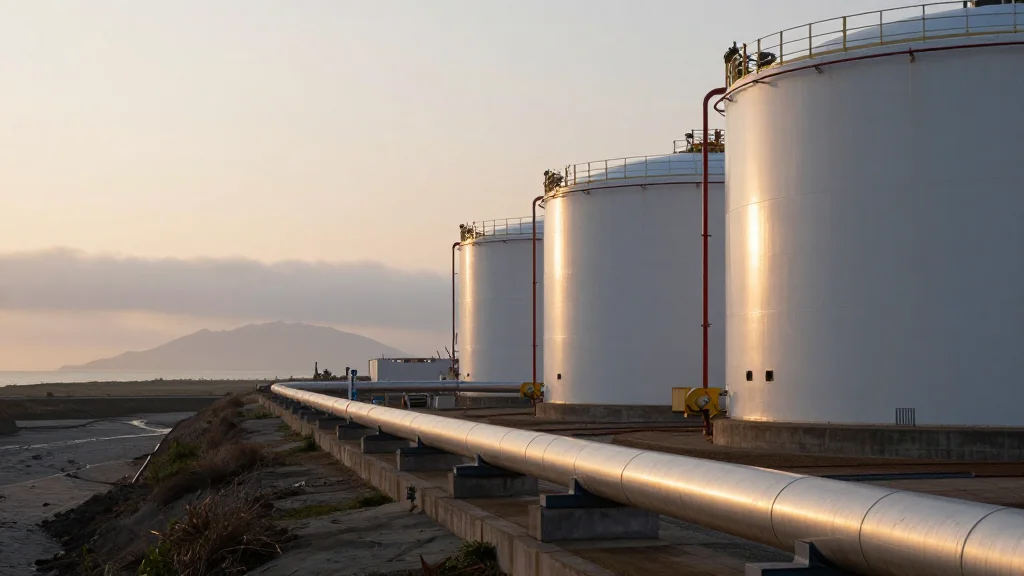
Exxon Mobil’s Golden Pass LNG Train Boosts U.S. Export Capacity as Pipeline Projects Accelerate

Companies Mentioned
Why It Matters
The combined effect of new LNG export capacity and rapid pipeline expansion directly addresses Europe’s urgent need for reliable, non‑Russian gas supplies. By increasing the United States’ ability to ship LNG to Central and Eastern Europe, these developments reduce the continent’s exposure to geopolitical supply shocks and help anchor global gas prices. Moreover, the infrastructure upgrades create long‑term revenue streams for U.S. energy firms, reinforcing the country’s position as a leading gas exporter. For investors, the story signals a shift in risk dynamics: companies with exposure to LNG projects and mid‑stream pipelines stand to benefit from higher utilization rates and longer‑term contracts, while regions still dependent on volatile spot markets may see price volatility ease as supply diversifies.
Key Takeaways
- •Exxon Mobil’s Golden Pass LNG Train 1 adds ~5% U.S. export capacity; full project to boost exports ~15%
- •DT Midstream approves 400 MMcf/d Vector expansion and 70 MMcf/d Millennium R2R line
- •MasTec pipeline segment revenue jumps 92% to $682 million, EBITDA margin 21%
- •U.S. policymakers push "peace pipelines" to channel gas to Central/Eastern Europe amid Middle‑East conflict
- •European LNG demand rises as spot cargoes from the U.S. increase, supporting price stability
Pulse Analysis
The surge in U.S. LNG capacity, epitomized by Exxon Mobil’s Golden Pass startup, marks a strategic inflection point for the global gas market. Historically, U.S. export growth has been incremental, constrained by limited pipeline bottlenecks and regulatory lag. The simultaneous approval of high‑volume pipelines by DT Midstream and the rapid scaling of MasTec’s pipeline business compresses that lag, effectively turning new LNG cargoes into deliverable volumes within months rather than years.
From a geopolitical perspective, Europe’s scramble for alternative gas supplies has accelerated policy incentives for "peace pipelines"—infrastructure that can be quickly repurposed to route gas to conflict‑adjacent markets. While the term is political, the underlying economics are clear: higher utilization of existing U.S. gas fields and new LNG trains improves asset returns and diversifies revenue away from volatile oil markets. Companies that can lock in long‑term European contracts now stand to capture premium pricing, especially as spot markets tighten.
Looking forward, the key risk lies in the timing of regulatory approvals and potential supply‑side disruptions, such as the Qatar LNG train repairs Woods highlighted. If those issues are resolved without major setbacks, the United States could solidify its role as Europe’s primary gas lifeline, reshaping trade flows for the next decade. Investors should monitor contract award pipelines, FID milestones for the remaining Golden Pass trains, and any legislative actions that could further incentivize cross‑border gas flows.
Exxon Mobil’s Golden Pass LNG Train Boosts U.S. Export Capacity as Pipeline Projects Accelerate
Comments
Want to join the conversation?
Loading comments...