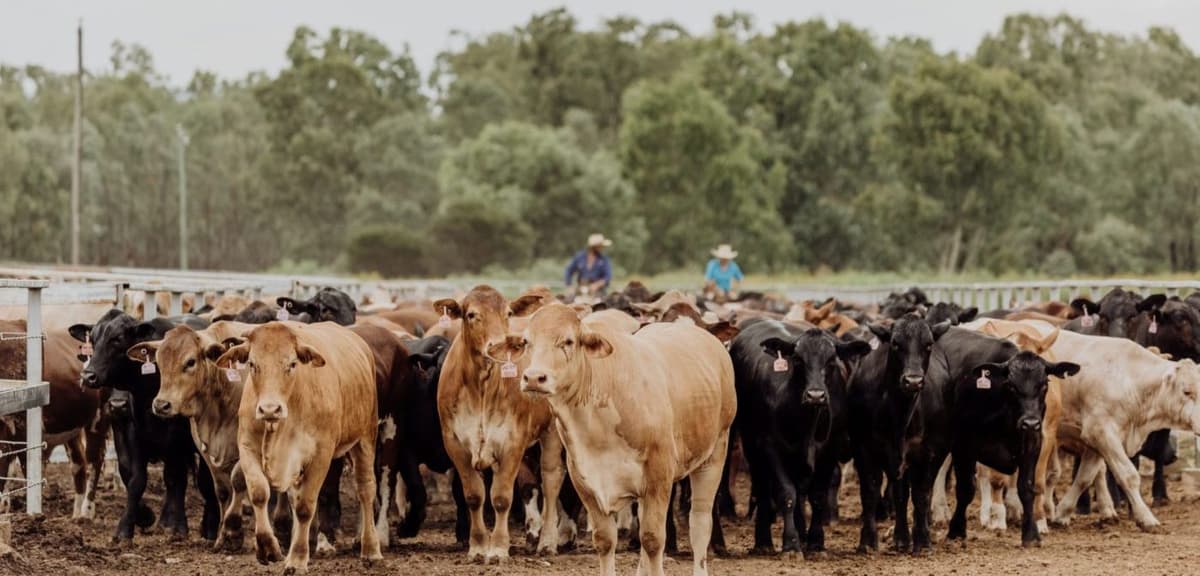
Feeder Cattle Market: Grids Down as Big Numbers Kick In
Why It Matters
Tight feedlot capacity and falling prices signal supply pressure and altered cattle flows, affecting beef margins and downstream processors.
Key Takeaways
- •Eastern feedlots booked weeks ahead due to drought‑driven cattle influx.
- •Flat‑back steers priced 440‑460 c/kg (~$2.9‑$3.0 USD/kg), down 10 c.
- •Angus feeder prices slipped to 520‑525 c/kg (~$3.4‑$3.5 USD/kg).
- •Producers swapping heavy feeders for lighter cattle, seeking lower c/kg costs.
Pulse Analysis
The Australian beef supply chain is feeling the strain of an unprecedented drought across northern New South Wales and southern Queensland. As pasture dries, producers are moving larger, heavier feeder steers to eastern feedlots that are now booked weeks in advance. This surge of "big numbers" has flooded the market, prompting buyers to adjust pricing quickly. The shift illustrates how weather extremes can instantly reshape livestock logistics, forcing feedlots to manage capacity constraints while maintaining animal health standards.
Price pressure is evident across the board. Flat‑back steers over 400 kg are now quoted at 440‑460 cents per kilogram, roughly $2.9‑$3.0 USD/kg, a 10‑cent drop from the previous week. Angus feeder cattle have slipped to 520‑525 cents/kg (about $3.4‑$3.5 USD/kg), with northern offers even lower at 490 cents/kg. The MLA feeder‑steer indicator reflects this softness, falling 2 c overall and 4 c in the 400 kg+ segment. For processors, tighter margins mean tighter cost controls and a need to reassess inventory strategies, especially as feedlot bookings limit flexibility.
Looking ahead, producers are adapting by selling heavier feeders and buying lighter, younger cattle that cost less per kilogram. This backgrounding approach reduces exposure to prolonged dry spells while awaiting the Bureau of Meteorology’s forecasted rain for southern NSW, Victoria, and the New England region. If rainfall arrives as expected, pasture recovery could rebalance supply, easing feedlot pressure and stabilising prices. Until then, the market will likely continue to favor lighter cattle, and processors should monitor weather patterns and regional feedlot capacity to manage risk effectively.
Feeder cattle market: Grids down as big numbers kick in
Comments
Want to join the conversation?
Loading comments...