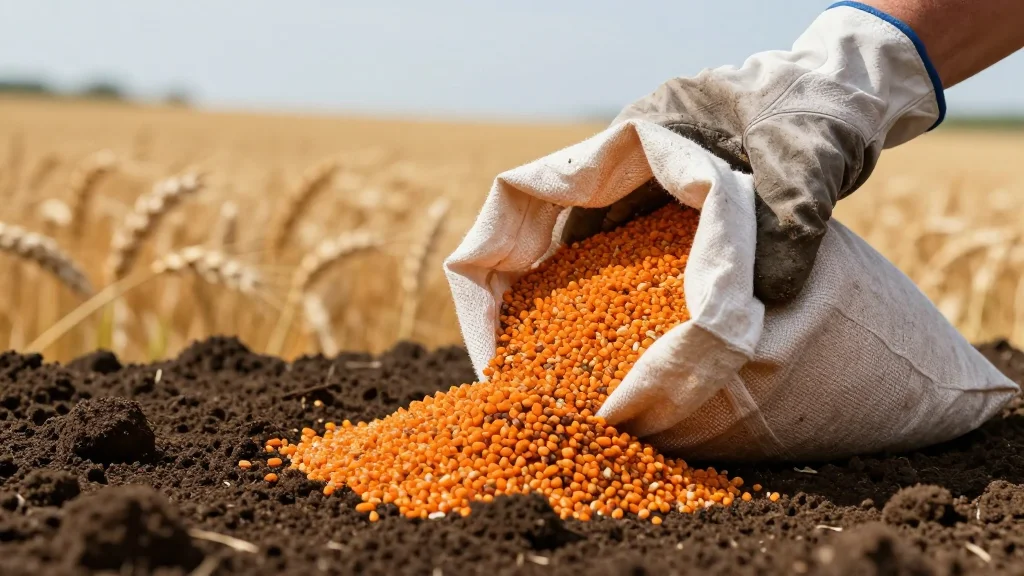
Fertilizer Prices Surge as Iran War Triggers EU Aid and US Farmer Crisis

Companies Mentioned
Why It Matters
Rising fertilizer costs threaten global food security by squeezing farmer margins at a time when commodity prices for corn and soybeans are already under pressure. In Europe, the EU’s emergency fund is a test of the bloc’s ability to intervene quickly in commodity markets, while in the United States the affordability gap could lead to reduced acreage, lower yields, and higher food prices for consumers. For fertilizer producers, sustained input‑cost inflation and volatile demand could reshape investment strategies, accelerate consolidation, and spur a shift toward alternative nitrogen sources. The situation also highlights the geopolitical fragility of global agricultural supply chains. The Strait of Hormuz handles a third of the world’s fertilizer shipments; any prolonged closure can reverberate through the entire food system. Policymakers and industry leaders must therefore consider longer‑term diversification of supply routes and the development of more resilient, possibly regional, fertilizer production capacities.
Key Takeaways
- •EU Commission proposes emergency agricultural funds to offset fertilizer price spikes caused by Iran war.
- •Fertilizer prices have risen about 67% since the conflict, with urea reaching $784 per short ton.
- •70% of U.S. farmers report they cannot afford the fertilizer needed for the 2026 season.
- •Mosaic Company faces margin pressure as raw‑material costs for sulfur and ammonia climb.
- •Strait of Hormuz blockage, which handled ~33% of global fertilizer trade, remains a key risk factor.
Pulse Analysis
The current fertilizer price shock is a textbook case of how geopolitical events can cascade through commodity markets and land directly on the farm gate. Historically, supply disruptions in the Middle East have caused short‑term spikes, but the confluence of a modern war, record natural‑gas prices, and a tight global fertilizer market has amplified the impact. The EU’s swift move to augment its emergency reserve signals a willingness to use fiscal tools to stabilize agricultural inputs, a departure from its traditionally more hands‑off approach. However, without clear funding figures, the measure may be seen as a stop‑gap rather than a lasting solution.
In the United States, the Farm Bureau’s survey reveals a structural vulnerability: a large share of producers are already operating on thin margins, and the sudden input‑cost surge pushes many beyond the breakeven point. The quote from Faith Parum underscores a likely shift in planting decisions, which could reduce overall grain output and tighten global food supplies. This dynamic may feed back into commodity markets, potentially lifting grain prices and further eroding farm profitability—a feedback loop that policymakers must break.
For fertilizer manufacturers like Mosaic, the crisis is both a challenge and an opportunity. While phosphate margins are squeezed, the strong performance of potash and nitrogen segments suggests that diversification within the fertilizer portfolio can buffer shocks. Companies may accelerate investments in alternative nitrogen production methods, such as green ammonia, to reduce reliance on volatile natural‑gas inputs. In the longer term, the industry could see increased consolidation as smaller players struggle to survive, reshaping the competitive landscape for years to come.
Fertilizer Prices Surge as Iran War Triggers EU Aid and US Farmer Crisis
Comments
Want to join the conversation?
Loading comments...