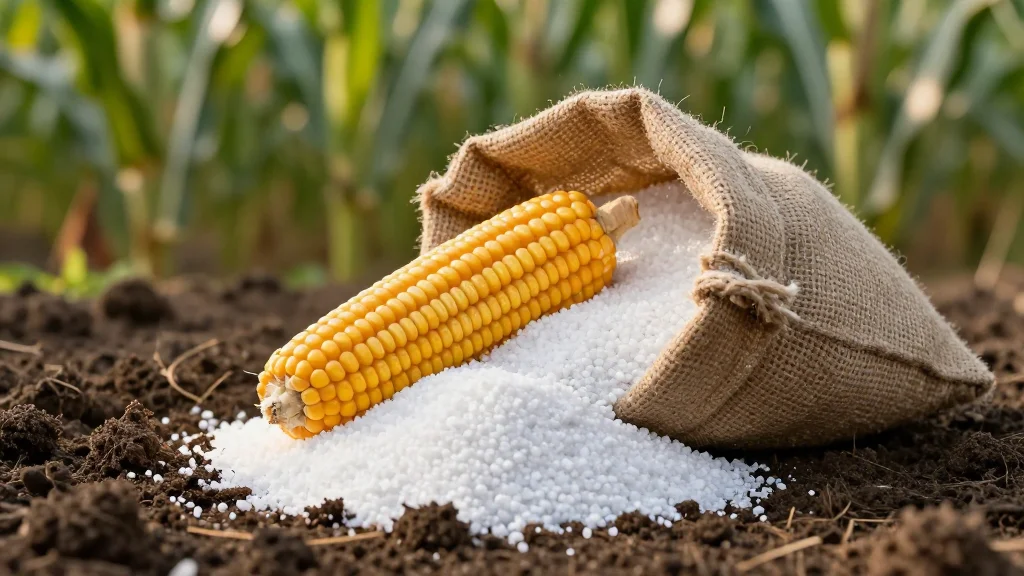
Fertilizer Spike Adds up to $35/Acre for US Corn as Iran Crisis Deepens
Why It Matters
The cost increase squeezes US growers’ margins and signals broader risk to global crop yields and food price stability. Stakeholders must monitor supply‑chain vulnerabilities as geopolitical tensions persist.
Key Takeaways
- •Urea price rise adds $35 per acre to US corn
- •Strait of Hormuz closure cuts 30% global urea flow
- •North Africa emerges as key nitrogen exporter
- •Sulfur shortage erodes US phosphate producer margins
- •Farmers may cut nitrogen use, switch crops
Pulse Analysis
The closure of the Strait of Hormuz has turned a regional conflict into a worldwide fertilizer crisis. With nearly half of global sulfur and a third of urea transiting the corridor, the bottleneck has driven nitrogen and phosphate prices to multi‑digit increases. In the United States, Rabobank’s analysis shows that the urea spike alone can add $35 per acre to corn production, a figure that, when combined with rising diesel and natural‑gas costs, threatens to push many farms into negative margins. This supply shock underscores how tightly agricultural inputs are linked to geopolitical stability and energy markets.
As traditional Middle‑Eastern sources tighten, trade patterns are rapidly shifting. North African exporters such as Egypt and Algeria are filling nitrogen gaps, while Nigeria’s new urea capacity is targeting Atlantic markets, including Brazil and the US. Morocco’s dominance in phosphate continues, giving it outsized price‑setting power. Meanwhile, Brazil, which imports 90% of its fertilizer, is scrambling to secure alternative contracts before the peak import season, and European producers face gas‑price‑driven cuts in ammonia output. These realignments highlight the fragility of a supply chain that relies heavily on a single maritime corridor.
The agricultural sector must adapt to a new normal of price volatility and potential input scarcity. Farmers are likely to reduce nitrogen application rates, switch to less input‑intensive crops, or explore precision‑fertilizer technologies that decouple nutrient use from fossil‑fuel markets. Policymakers may consider strategic stockpiles or trade‑policy adjustments to buffer domestic markets. Over the longer term, investment in green ammonia, renewable‑based nitrogen production, and localized phosphate processing could mitigate future shocks, preserving farm profitability and food‑price stability.
Fertilizer spike adds up to $35/acre for US corn as Iran crisis deepens
Comments
Want to join the conversation?
Loading comments...