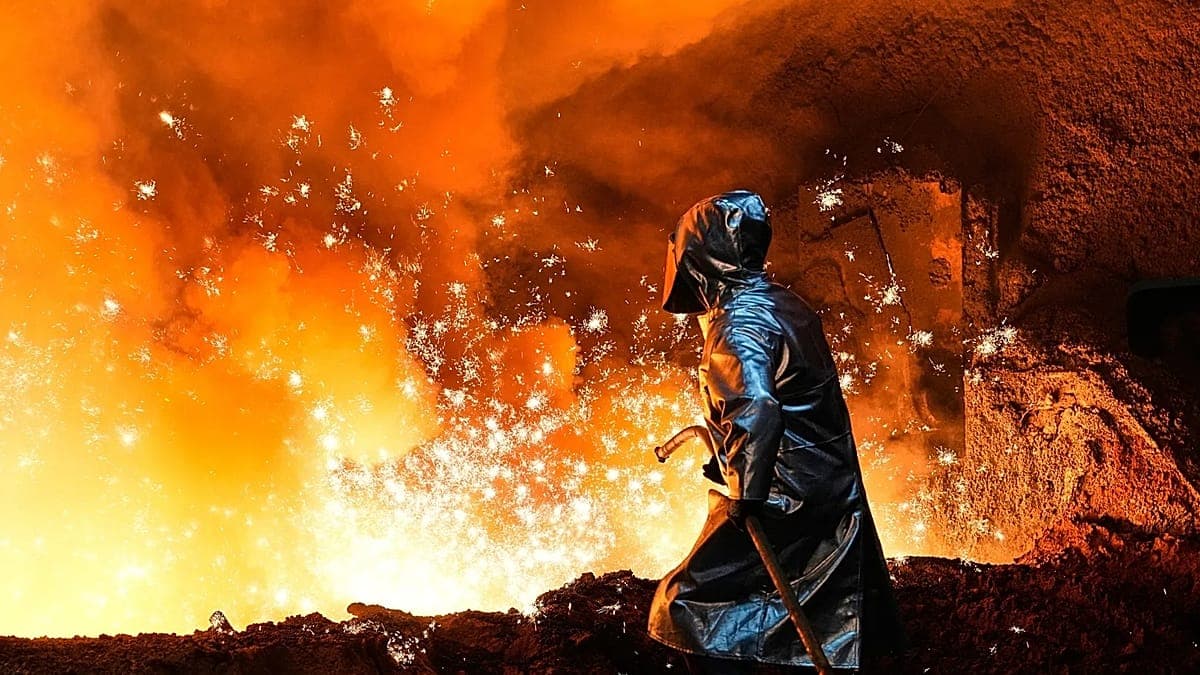
Global Steel Crisis Deepens as Oversupply Reaches Alarming Levels, OECD Warns
Companies Mentioned
Why It Matters
The widening gap between capacity and demand could depress steel prices, erode margins for domestic producers, and increase reliance on imports of a material critical to construction, defence and energy infrastructure.
Key Takeaways
- •Chinese steel subsidies 15x higher than non‑OECD producers
- •China exported 131 million tonnes in 2025, 153% rise since 2020
- •Global overcapacity projected 745 million tonnes by 2028
- •OECD forecasts 139 million tonnes new capacity versus 34 million demand growth
- •Europe faces higher labor, energy costs and stricter environmental standards
Pulse Analysis
The OECD’s latest steel market assessment highlights how subsidised expansion in China has reshaped global supply dynamics. By channeling massive public funds into new blast furnaces and electric‑arc furnaces, Chinese firms have been able to undercut competitors, driving a 153 percent surge in exports since 2020. This state‑driven growth has pushed worldwide steelmaking capacity well beyond the modest demand trajectory, creating a structural surplus that threatens to depress prices for years to come.
For European steelmakers, the oversupply problem is compounded by higher labor costs, stringent environmental regulations and soaring energy prices—energy alone can account for up to 40 percent of production costs. The region’s inability to match the low‑cost structure of Chinese and other subsidised producers leaves it vulnerable to prolonged periods of low margins. Moreover, trade‑distorting practices such as routing semi‑finished steel through Southeast Asia to evade tariffs further erode the competitive footing of OECD‑based firms.
Policymakers face a delicate balancing act: they must curb harmful subsidies while safeguarding domestic industry and strategic material security. The OECD calls for coordinated international action, including stricter anti‑dumping measures and transparent trade rules, to level the playing field. Without such cooperation, the excess capacity could exceed the total annual steel output of all OECD nations by 320 million tonnes, jeopardising the sector’s long‑term viability and the broader economic stability of steel‑dependent economies.
Global steel crisis deepens as oversupply reaches alarming levels, OECD warns
Comments
Want to join the conversation?
Loading comments...