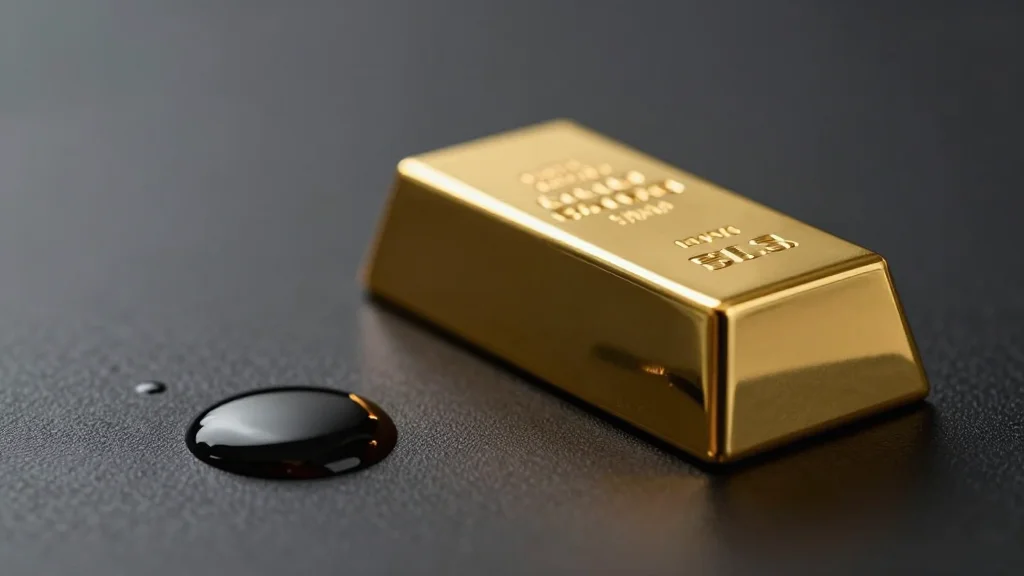
Gold Falls Around 2% in One Week as Skyrocketing Oil Prices Fuel Inflation Worries. What Lies Ahead?
Companies Mentioned
Why It Matters
The price dip underscores how volatile commodity markets become when oil‑driven inflation pressures threaten monetary policy, affecting both investors and central‑bank reserve strategies. A potential long‑term rally could reshape portfolio allocations toward gold as a hedge.
Key Takeaways
- •Oil spikes to $126/barrel, pushing inflation fears
- •Gold down ~2% weekly, trading near $4,620/oz
- •Indian gold futures rose ~Rs 114 (~$1,400) per 10g
- •Deutsche Bank sees gold hitting $8,000/oz in five years
- •Analysts expect near‑term gold volatility, range‑bound between Rs1.48‑1.52 lakh
Pulse Analysis
The recent surge in crude oil to $126 a barrel has sent shockwaves through global markets, reviving worries about a second‑round of inflation. The price jump is tied to escalating tensions in the Strait of Hormuz, where the Iran‑U.S. conflict has disrupted supply lines. Higher oil costs feed into consumer prices, prompting central banks—particularly the Fed—to keep policy rates elevated longer than anticipated, a scenario that traditionally dampens gold’s appeal as a safe‑haven asset.
Yet gold’s reaction has been mixed. While the metal slipped roughly 2% over the week, it remains near $4,620 per ounce, a level that still offers a hedge against rising inflation. In India, futures contracts rose about Rs 114 (≈$1,400) per 10 grams, reflecting local demand and rupee‑linked pricing dynamics. Analysts like Carsten Menke argue that short‑term moves are driven more by speculative futures traders than by genuine safe‑haven buying, creating a volatile, range‑bound market between Rs 1.48 lakh and Rs 1.52 lakh (≈$1,785‑$1,830) per 10 grams.
Looking ahead, Deutsche Bank’s forecast of $8,000 an ounce within five years signals a potential structural shift. The bank expects gold’s share of central‑bank reserves to climb from 30% to 40%, bolstering demand and supporting a long‑term price rally. For investors, this suggests a dual strategy: navigate near‑term volatility while positioning for a possible multi‑year upside, especially as geopolitical risks and inflationary pressures remain elevated.
Gold falls around 2% in one week as skyrocketing oil prices fuel inflation worries. What lies ahead?
Comments
Want to join the conversation?
Loading comments...