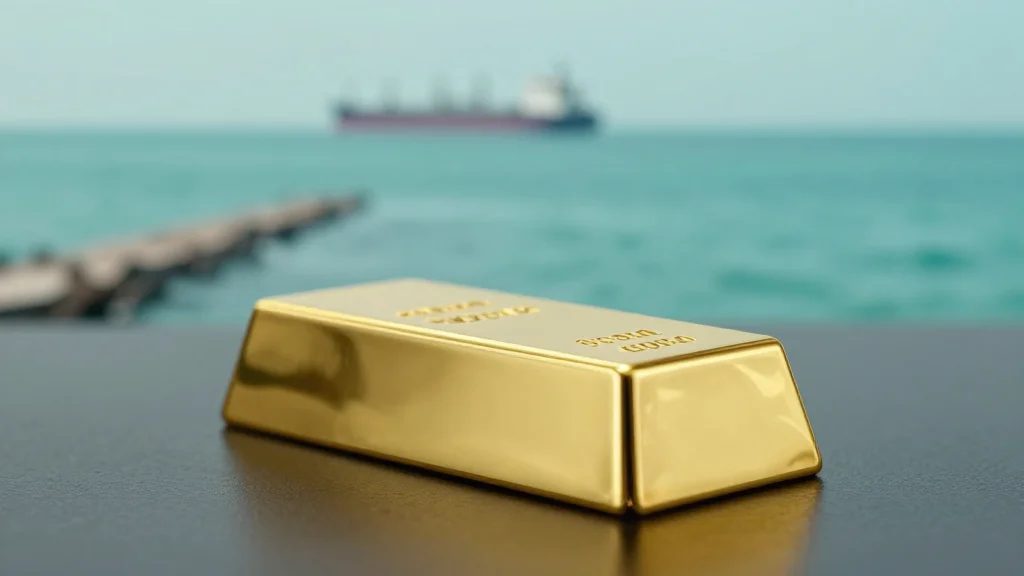
Gold Jumps 1.8% as Strait of Hormuz Tensions Ignite Safe‑Haven Demand

Why It Matters
The surge in gold highlights the sensitivity of precious‑metal markets to geopolitical shocks, especially in regions that dominate energy logistics. A prolonged standoff in the Strait of Hormuz would not only affect oil prices but also reinforce the role of gold as a hedge against supply‑chain uncertainty. For investors and policymakers, the episode serves as a reminder that commodity risk management must account for flashpoints that can quickly alter market dynamics. Moreover, the episode illustrates the interplay between currency movements and safe‑haven assets. A softer dollar amplified gold’s appeal even as US labor data suggested a resilient economy. This dual influence suggests that future gold price trajectories will hinge on both geopolitical developments and the trajectory of US monetary policy.
Key Takeaways
- •Gold rose 1.83% this week, reaching ₹1,51,078 (≈ $610) per 10 g in India.
- •US‑Iran skirmishes near the Strait of Hormuz revived safe‑haven buying.
- •US jobs report showed strong employment (unemployment 4.3%) but a softer dollar supported gold.
- •IBJA reported increased physical gold purchases at lower price levels.
- •Analysts warn further Hormuz escalation could push gold toward ₹1.55 lakh (≈ $660) per 10 g.
Pulse Analysis
The current gold rally is a textbook case of geopolitical risk outweighing macro‑economic headwinds. Historically, any perceived threat to oil transit routes—whether the Persian Gulf, the Suez Canal, or the Strait of Hormuz—has spurred a flight to safety, lifting gold and other non‑yielding assets. The recent US‑Iran exchange of fire, though brief, re‑energized that pattern, especially as the market digests a softer dollar that mitigates the usual pressure from a strong US labor market.
From a commodities perspective, the episode could have a cascading effect. Tightening oil supplies would likely push crude prices higher, feeding inflation expectations and potentially prompting central banks to maintain or raise rates. Higher rates typically depress gold, but the risk premium from a threatened energy corridor can offset that effect, creating a tug‑of‑war scenario. Investors should therefore monitor not only the geopolitical narrative but also the policy response from the Federal Reserve and the reaction of oil markets.
Looking ahead, the durability of the gold rally will depend on two variables: the trajectory of Hormuz tensions and the evolution of US monetary policy. If diplomatic channels de‑escalate the conflict, the risk premium could evaporate, leading to a correction in gold prices. Conversely, a prolonged standoff could cement a higher price floor for bullion, especially if oil prices stay elevated. Market participants would be wise to position themselves with a view to both scenarios, perhaps by diversifying into other safe‑haven assets such as the Swiss franc or Treasury Inflation‑Protected Securities (TIPS).
Gold Jumps 1.8% as Strait of Hormuz Tensions Ignite Safe‑Haven Demand
Comments
Want to join the conversation?
Loading comments...