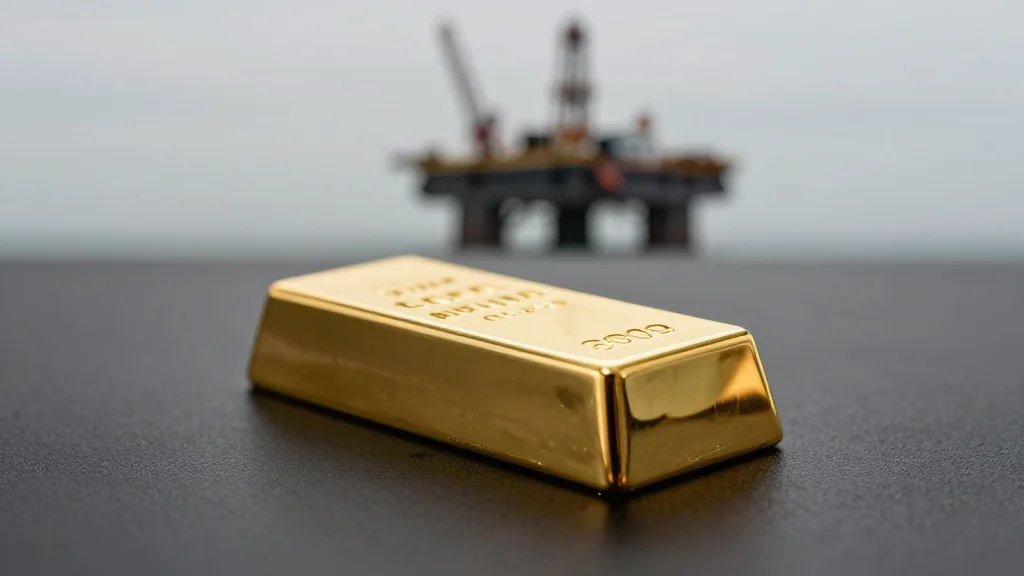
Gold Slides to Six‑Week Low as Middle East Tensions Squeeze Safe‑Haven Appeal

Companies Mentioned

Why It Matters
Gold’s slide signals a shift in how investors value traditional safe‑haven assets amid intertwined geopolitical and monetary pressures. A weakening of bullion’s appeal could reshape capital flows across the broader commodities spectrum, influencing everything from mining investment to the pricing of related metals. For emerging‑market central banks, the episode highlights the trade‑off between holding gold as a buffer against currency shocks and the risk of valuation losses when global risk sentiment turns sour. The episode also underscores the growing importance of Fed policy expectations in commodity pricing. As rate‑sensitive assets like gold react sharply to even modest changes in the probability of a rate hike, market participants must monitor monetary‑policy signals as closely as they track geopolitical flashpoints. This dual sensitivity may lead to more volatile commodity markets, with price swings increasingly driven by policy data releases and geopolitical headlines rather than supply‑demand fundamentals alone.
Key Takeaways
- •Spot gold fell 1.1% to $4,488.99/oz, its lowest since March 30.
- •U.S. June gold futures dropped 1.5% to $4,493.30/oz.
- •CME FedWatch shows a 50% chance of a Fed rate hike by December.
- •India’s gold reserves rose $5.637 billion to $120.853 billion, boosting total FX reserves to $696.988 billion.
- •Oil prices hit a two‑week high after a UAE drone strike, adding inflation pressure.
Pulse Analysis
Gold’s recent dip marks a rare moment when a geopolitical shock, rather than reinforcing its safe‑haven status, actually erodes it. Historically, conflicts in the Middle East have driven investors toward bullion, but the current environment is different: soaring oil prices are stoking inflation fears, which in turn are nudging the Federal Reserve toward tighter monetary policy. The Fed’s potential rate hike raises the opportunity cost of holding a non‑yielding asset, making the dollar and Treasury yields more attractive.
For the commodities sector, this dynamic could accelerate a broader reallocation away from precious metals toward energy‑linked assets. Miners may see tighter margins as higher oil costs increase production expenses, while refiners could pass on those costs to consumers, feeding back into inflation expectations. The feedback loop between energy prices, inflation, and monetary policy creates a volatile backdrop that could see gold oscillate sharply on any new data point.
Looking forward, the durability of gold’s safe‑haven appeal will depend on the trajectory of the Middle East conflict and the Fed’s policy stance. A rapid de‑escalation could restore confidence in bullion, but a prolonged standoff combined with a decisive rate hike would likely cement a new paradigm where gold is no longer the default hedge in crisis periods. Market participants should therefore monitor both geopolitical developments and Fed communications as co‑drivers of commodity price movements.
Gold Slides to Six‑Week Low as Middle East Tensions Squeeze Safe‑Haven Appeal
Comments
Want to join the conversation?
Loading comments...