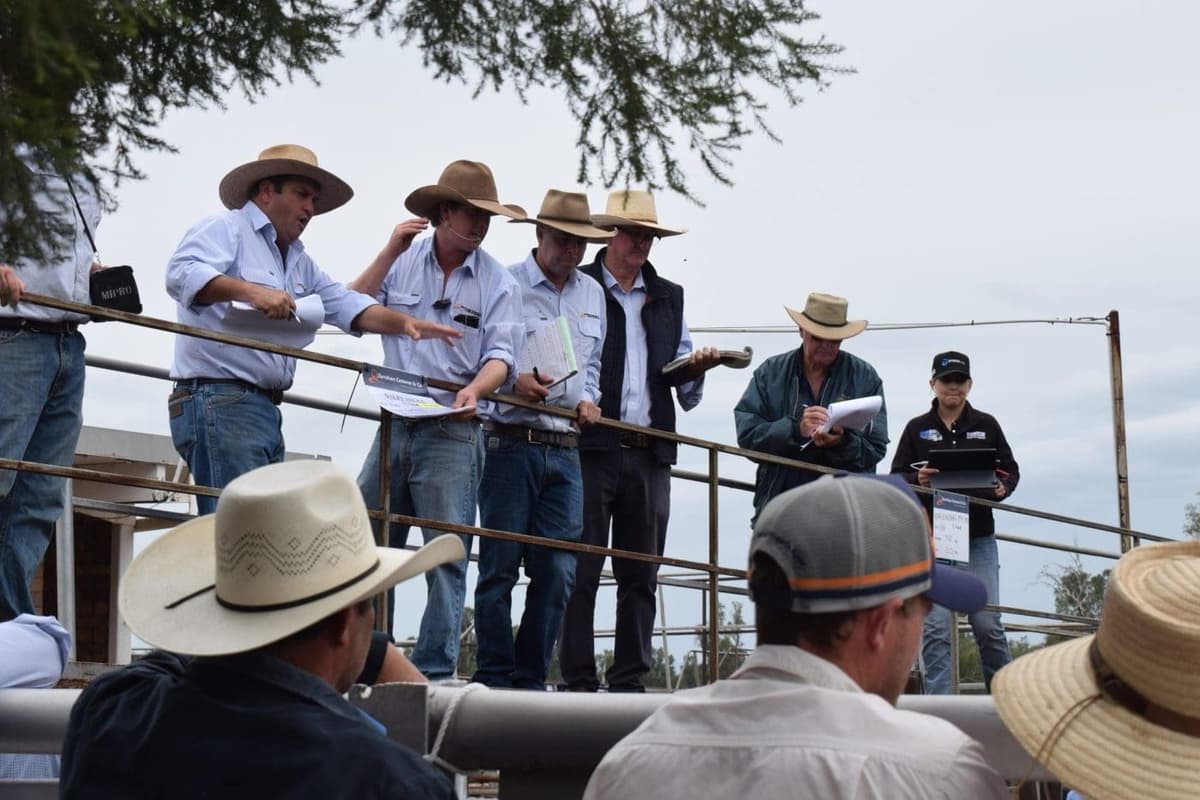
Gunnedah 28 Apr 2026: Cow Prices Cheaper, Feeders Lift in Smaller Offering
Why It Matters
Higher prices for feeder cattle signal strong demand from feedlots and restockers, boosting farm revenues, while lower prime cow prices may pressure producers focused on breeding stock. These shifts affect profitability across the Australian beef supply chain and influence export competitiveness.
Key Takeaways
- •Young cattle trade prices rose ~40 cents per kg, hitting $2.90/kg
- •Yearling steers to feed improved 10‑15 cents, now $2.77‑$3.42/kg
- •Restocker competition lifted steers to $3.26/kg, heifers $2.86/kg
- •Prime heavy cows fell 5 cents, averaging $2.07/kg
- •Cows returning to paddock saw sharp gains up to $1.98/kg
Pulse Analysis
Gunnedah’s weekly saleyard data is a bellwether for the broader Australian cattle market, and the latest figures underscore a nuanced shift in supply dynamics. While overall headcount dipped by 1,300, the yard maintained a high‑quality mix, attracting a full field of buyers. This robust participation, especially from restockers, helped push feeder cattle prices higher, reflecting confidence in feedlot capacity and global beef demand. Converting the reported Australian cents to U.S. dollars reveals steers trading near $2.90 per kilogram, a level that supports farm cash flow amid rising input costs.
The price uplift for young cattle and yearling steers to feed highlights a tightening market for finishing animals. Restocker competition, a key driver of price discovery, lifted steers to roughly $3.26 USD/kg and heifers to $2.86 USD/kg, narrowing the spread between trade and feedlot premiums. Conversely, prime heavy cows slipped modestly, averaging $2.07 USD/kg, indicating that breeding‑stock sellers may face tighter margins. Processors buying prime grown steers and heifers still see reasonable rates around $2.70 USD/kg, suggesting downstream demand remains resilient despite modest softening in the senior cattle segment.
Looking ahead, the divergent price trends could reshape herd management decisions. Producers may prioritize raising more feeder cattle to capture higher market premiums, while trimming senior cow numbers to mitigate lower returns. Export markets, particularly in Asia, will watch these Australian price signals closely, as they influence global beef pricing and supply availability. Stakeholders should monitor restocker activity and feedlot capacity, as any shifts could quickly alter the balance between supply and demand, impacting profitability across the entire beef value chain.
Gunnedah 28 Apr 2026: Cow prices cheaper, feeders lift in smaller offering
Comments
Want to join the conversation?
Loading comments...