Historical Cropping Patterns for Illinois Grain Farms
Key Takeaways
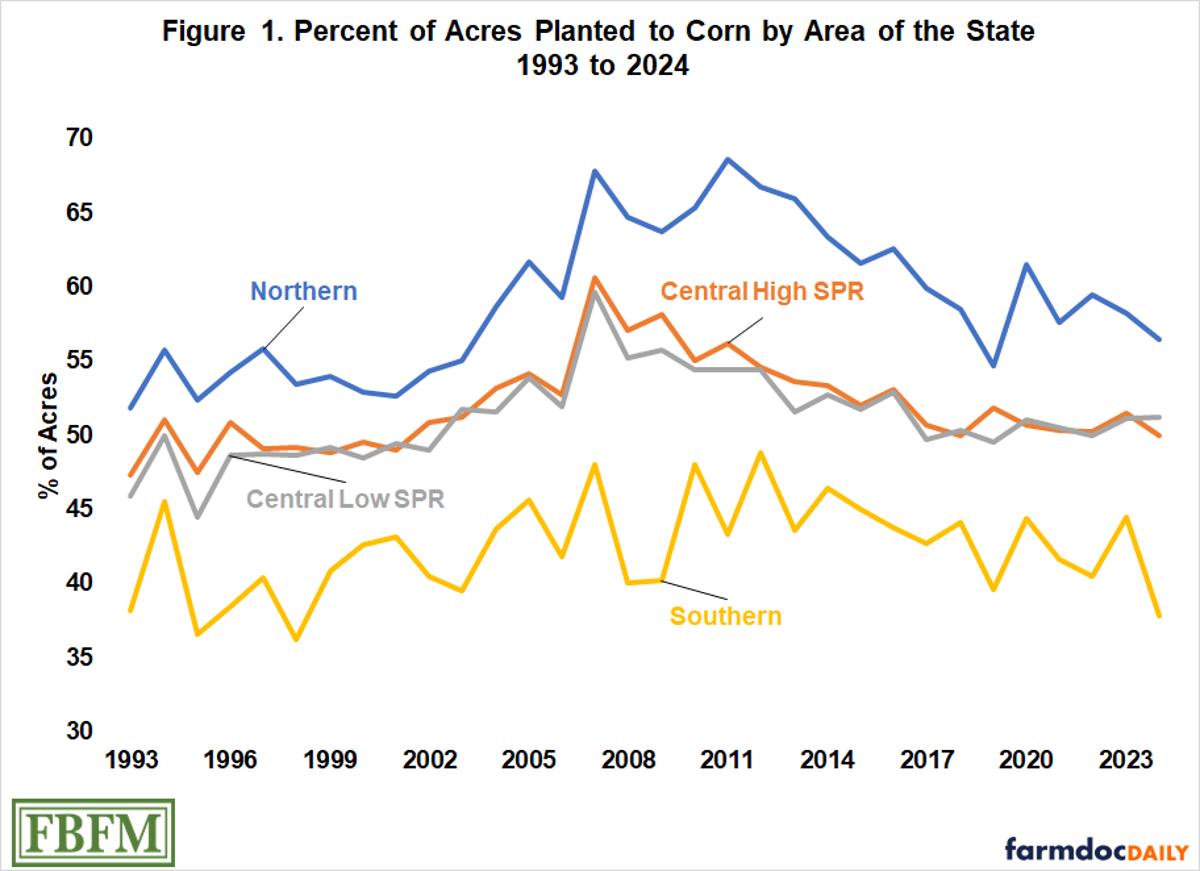
- •Northern Illinois corn share fell from 61.6% to 56.4%
- •Central Illinois maintains near 50/50 corn‑soybean rotation
- •Southern Illinois corn share lowest, wheat rising to 9.8%
- •Soybean profitability outpaced corn except 2021‑2022
- •2019 wet weather increased idle/CRP acres statewide
Pulse Analysis
Illinois remains America’s top corn and soybean producer, yet its internal crop mix is evolving. Data from the state’s Farm Business Management (FBFM) network reveal a decade‑long drift toward soybeans, especially in the north where corn’s dominance slipped from over 60% to just above the mid‑50s. Central farms, split by soil productivity, have steadied around an even corn‑soybean balance, while the southern belt—characterized by lighter soils and more variable weather—has consistently favored soybeans and wheat, keeping corn well below half of planted acres.
Economic incentives drive much of this realignment. Soybean margins have generally eclipsed corn’s, except during the 2021‑2022 price spikes that temporarily revived corn planting. Rising input costs, such as fertilizer and diesel, further erode corn’s profitability, prompting producers to allocate more land to higher‑return soybeans. Simultaneously, extreme weather events, notably the wet spring of 2019, forced many farms to leave fields idle or enroll them in the Conservation Reserve Program, amplifying regional differences in acreage decisions.
The implications extend beyond farm budgets. A continued tilt toward soybeans could alter Illinois’s contribution to national corn supplies, affecting livestock feed prices and ethanol production. Lenders and insurers are also recalibrating risk models to reflect the lower corn exposure and higher weather‑related idle acreage. As climate variability intensifies, growers may increasingly adopt flexible rotations, double‑cropping soy after wheat, or integrate cover crops to safeguard yields. Monitoring these trends will be essential for agribusinesses, policymakers, and investors tracking the Midwest’s grain outlook.
Historical Cropping Patterns for Illinois Grain Farms
Comments
Want to join the conversation?