Home Batteries Earn During Negative Electricity Price Spikes
Companies Mentioned
Why It Matters
The model turns residential storage from a self‑consumption tool into a market‑ready revenue source, lowering utilities’ balancing costs and accelerating Europe’s transition to a more flexible, renewable‑heavy grid.
Key Takeaways
- •Households earned €30‑40 ($33‑44) in a single negative‑price day.
- •Typical German home generates ≈€40 ($44) monthly flexibility revenue.
- •Delta Green coordinates batteries, EVs, and wallboxes via 72‑hour forecasts.
- •Flexibility reduces utilities’ imbalance penalties, saving tens of euros per customer.
- •Revenue varies: Austria $78, Czech $57, Poland $49 monthly.
Pulse Analysis
Negative wholesale electricity prices have become a recurring feature of Europe’s renewable‑driven grid, especially during sunny holidays when solar output outpaces demand. In the Germany‑Luxembourg zone, day‑ahead prices plunged to –€0.50/kWh, creating a rare incentive for consumers to absorb excess power rather than curtail generation. This price inversion highlights the growing need for flexible demand‑side resources that can act as a buffer, stabilizing the market and preventing costly imbalances for system operators.
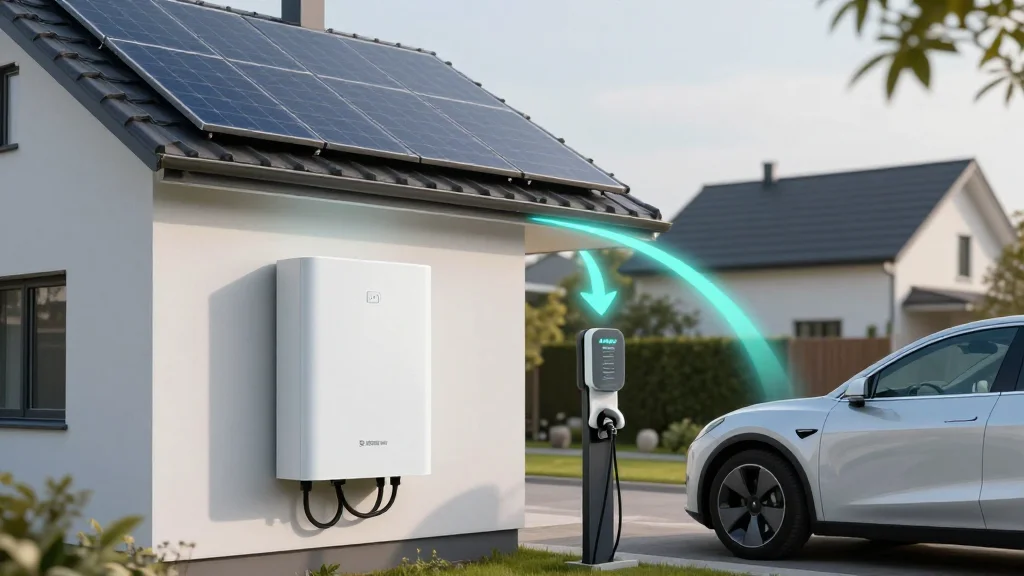
Delta Green’s platform leverages a 72‑hour price forecast to orchestrate home batteries, electric‑vehicle chargers and wallboxes as a coordinated virtual power plant. By deliberately keeping batteries empty before the negative‑price window and then charging them when the grid pays, the company delivered €30‑40 ($33‑44) in a single day to participating households and projects roughly €40 ($44) per month in ongoing flexibility value. For utilities, the service mitigates exposure to imbalance penalties that can reach €10‑15 ($11‑17) per kWh, translating into tens of euros saved per customer on high‑impact days.
The approach underscores a broader shift: residential assets are no longer passive; they are monetizable market participants. Revenue potential varies across markets—Austria ($78), the Czech Republic ($57) and Poland ($49) per month—reflecting differing levels of market maturity and price volatility. Policy discussions in Germany about mandatory direct marketing of small PV systems could further unlock this value, but Delta Green’s model already functions under fixed‑price contracts, offering a scalable template for other regions seeking to harness distributed flexibility as a cornerstone of a low‑carbon electricity system.
Home batteries earn during negative electricity price spikes
Comments
Want to join the conversation?
Loading comments...