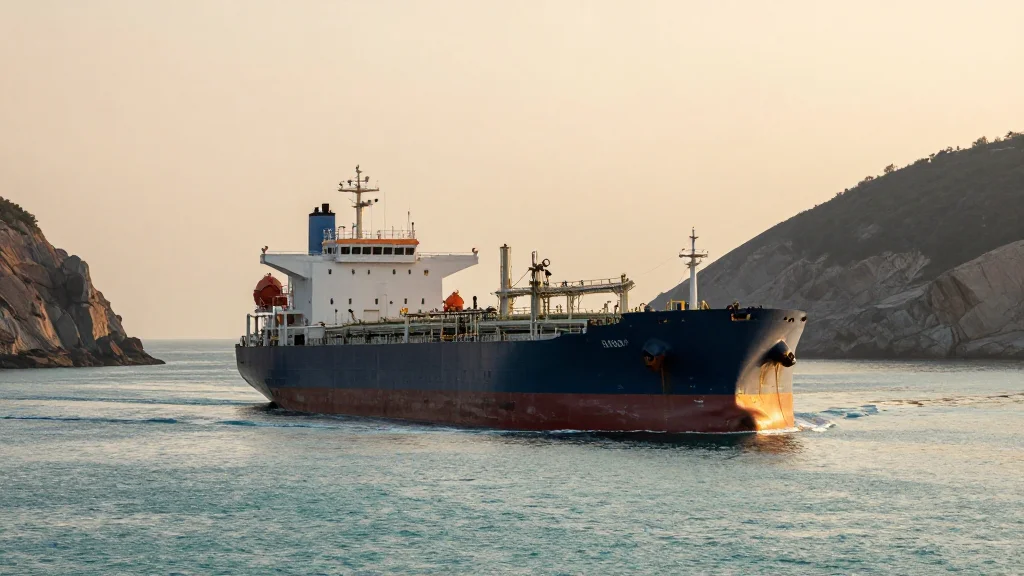
Hormuz Strait Congestion and Longer‑Haul Trades Reshape Crude Tanker Market

Companies Mentioned
Why It Matters
The Hormuz congestion underscores how geopolitical moves can instantly disrupt oil logistics, inflating freight costs and prompting rerouting that reshapes global supply chains. Simultaneously, the shift to longer‑haul trades demonstrates the tanker market’s resilience, with higher freight rates and strategic vessel deployments offsetting lost volumes and preserving profitability for major operators. For commodity traders and refiners, these dynamics affect crude pricing, inventory strategies, and hedging decisions. Persistent bottlenecks could spur further investment in alternative pipelines, storage, or even accelerate the transition to non‑oil energy sources, while the profitability of longer‑haul routes may attract new entrants and drive fleet modernization.
Key Takeaways
- •Iran reported 35 vessels crossing the Strait of Hormuz under a new permit system in the last 24 hours.
- •Windward data shows a 93% increase in Iranian‑linked oil tankers anchored off Kharg Island, reaching 27 vessels.
- •Frontline posted a Q1 2026 adjusted profit of $344.9 million, its highest since 2004.
- •CMB.Tech earned $368.8 million in Q1, aided by $260 million capital gains from VLCC sales.
- •VLCC day rates on the US Gulf‑China route have fallen from >$200,000 to around $100,000 per day.
Pulse Analysis
The twin narratives of Hormuz congestion and longer‑haul market rebalancing illustrate a classic supply‑demand tug‑of‑war in commodity logistics. On the supply side, Iran’s unilateral permit regime is a strategic lever to extract political concessions, but it also creates a choke point that raises freight premiums and forces carriers to seek costly detours. The rapid buildup of dark‑ship VLCCs off Kharg Island signals that tankers are being held as floating storage, a tactic that can depress spot rates but inflate time‑charter values for vessels that can secure cargo elsewhere.
On the demand side, the market’s pivot to longer‑haul trades reflects a flexible response to the loss of 15 million bpd of Gulf crude. By stretching voyages to new exporters—particularly the United States, Brazil and Guyana—shippers have effectively increased the tonne‑mile metric, preserving revenue despite lower volumes. This adaptation has translated into record quarterly earnings for Frontline and CMB.Tech, suggesting that the tanker sector can monetize volatility when it can command premium rates for scarce cargoes.
Looking ahead, the durability of this new equilibrium hinges on two variables: diplomatic resolution of the Hormuz permit dispute and the sustained output growth of alternative exporters. If Tehran’s demands are softened, traffic could normalize, easing the premium on longer‑haul routes. Conversely, a protracted standoff may entrench higher freight rates, encouraging further fleet expansion and possibly accelerating the shift toward larger, more efficient vessels. Stakeholders should monitor IMO statements, Gulf state diplomatic moves, and quarterly earnings for early signals of market recalibration.
Hormuz Strait Congestion and Longer‑Haul Trades Reshape Crude Tanker Market
Comments
Want to join the conversation?
Loading comments...