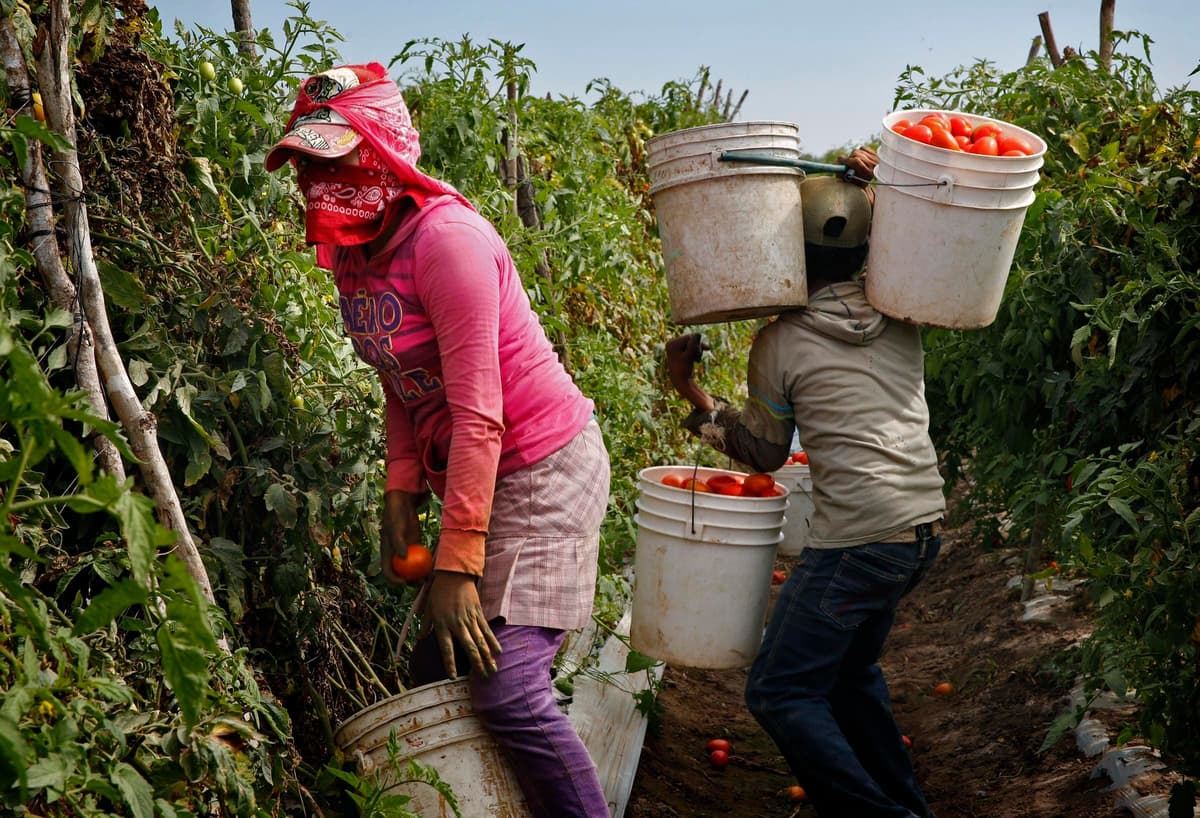
How Tariffs And The Strait Of Hormuz Crisis Are Inflating Tomato Prices
Why It Matters
Tariff and energy shocks are driving food‑price inflation that now consumes about 10 % of household disposable income, signaling broader supply‑chain vulnerability. The situation pressures policymakers to rethink trade and energy strategies to safeguard food affordability.
Key Takeaways
- •Tariffs on Mexican tomatoes added ~7‑10% price increase.
- •Diesel prices rose over 30% due to Middle East conflict.
- •Fertilizer costs climb as Strait of Hormuz disruptions persist.
- •Domestic canned tomatoes offer cheaper alternative to fresh imports.
- •Food inflation now impacts 10% of disposable income.
Pulse Analysis
The United States’ decision in July 2023 to abandon the 1990s‑era Tomato Suspension Agreement with Mexico removed a long‑standing safety valve for fresh produce. By imposing a 17 % duty on roughly two‑thirds of America’s tomato supply—an import stream valued at about $3 billion annually—the policy instantly narrowed the market and forced wholesalers to absorb higher costs. Economists estimate that the tariff alone lifts retail tomato prices by 7 % to 10 %, with some industry studies projecting a 52 % surge for Mexican varieties such as the Roma.
Compounding the tariff shock, the Iran‑related escalation in the Strait of Hormuz has driven global oil and natural‑gas prices sharply higher. Diesel, the lifeblood of truck fleets that move tomatoes from Nogales and Laredo to grocery shelves, now averages $5.64 per gallon nationwide and exceeds $7.50 in California—more than a third above pre‑conflict levels. Simultaneously, nitrogen‑based fertilizers, which depend on natural‑gas feedstock, have risen as LNG flows through the Hormuz corridor tighten. Higher fuel and fertilizer costs shrink harvest yields and inflate the price of every pound of fresh tomato.
Consumers can blunt the impact by shifting to domestically produced canned tomatoes, which remain insulated from volatile spot tariffs, and by buying seasonal, locally grown fruit during California’s summer peak. Policymakers, however, face a broader challenge: food price volatility now touches roughly 10 % of household disposable income, outpacing gasoline costs and fueling public anxiety. Sustainable solutions will require coordinated trade reforms, energy‑price stabilization mechanisms, and investment in diversified domestic agriculture to reduce reliance on a single import source.
How Tariffs And The Strait Of Hormuz Crisis Are Inflating Tomato Prices
Comments
Want to join the conversation?
Loading comments...