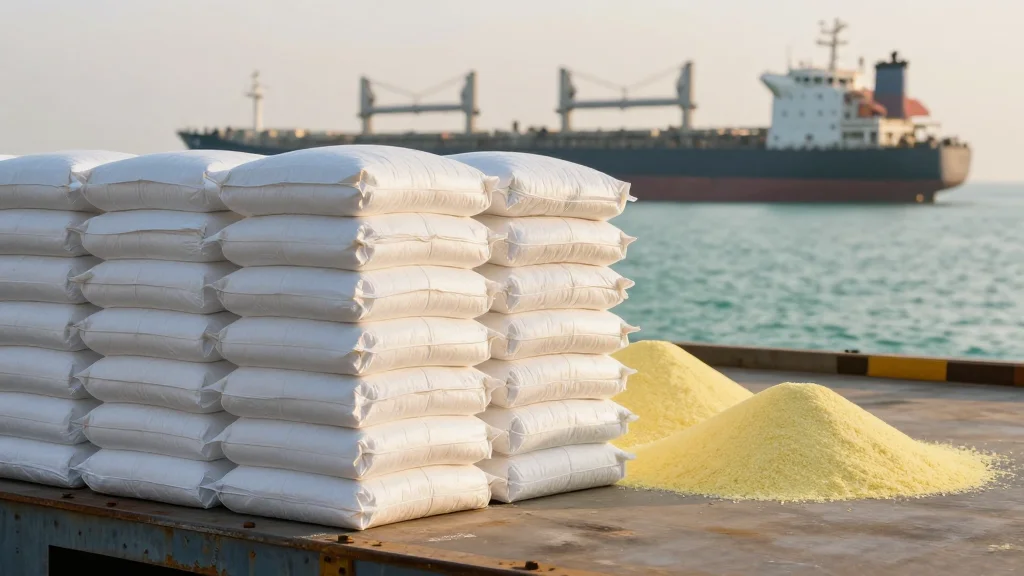
How the US Can Use Its Natural Gas Abundance to Ease Rising Fertilizer Prices
Why It Matters
Higher fertilizer costs threaten U.S. farm margins and global food affordability, making domestic production incentives critical for supply‑chain resilience.
Key Takeaways
- •Iran conflict removed 50% of global sulfur trade
- •U.S. ammonia prices jumped 25% to $160/ton
- •Homegrown Fertilizer Act aims to fund domestic plants
- •Expedited permits could bring new ammonia capacity online by 2028
Pulse Analysis
The war in Iran has transformed a regional maritime dispute into a global fertilizer crisis. By halting traffic through the Strait of Hormuz, the conflict has taken half of the world’s traded sulfur and more than a third of urea off the market, while ammonia shipments from the Gulf have ceased entirely. These commodities are the backbone of nitrogen‑based fertilizers, and their scarcity has pushed U.S. benchmark ammonia and urea prices up by over a quarter, with anhydrous ammonia surging nearly $300 per ton in just two months. The ripple effect is felt on farms nationwide, where higher input costs erode profit margins and could force crop‑mix adjustments.
The United States is uniquely positioned to mitigate the shock thanks to its abundant natural‑gas reserves, which power domestic ammonia synthesis. Production is slated to increase by roughly 22 million metric tons per year by 2030, yet the largest new facilities won’t be operational until 2028. Legislative action, such as the bipartisan Homegrown Fertilizer Act, could accelerate financing and streamline environmental reviews for projects like the Blue Point ammonia plant in Louisiana. Fast‑tracking permits and maintaining temporary measures—such as the Jones Act suspension and lifted sanctions on Venezuelan fertilizers—would lower transportation costs and unlock idle capacity, delivering relief within the two‑year window before the 2027 planting season.
If policymakers act swiftly, the U.S. can reduce reliance on volatile overseas supplies, stabilizing fertilizer prices and safeguarding food security both domestically and abroad. A more resilient supply chain would temper the inflationary pressure on staple crops, protecting consumer purchasing power and supporting global markets still reeling from the combined Iran and Ukraine crises. In the longer term, sustained investment in green ammonia and sulfur recovery could also align the sector with climate goals, offering a competitive edge as the world transitions to lower‑carbon agriculture.
How the US can use its natural gas abundance to ease rising fertilizer prices
Comments
Want to join the conversation?
Loading comments...