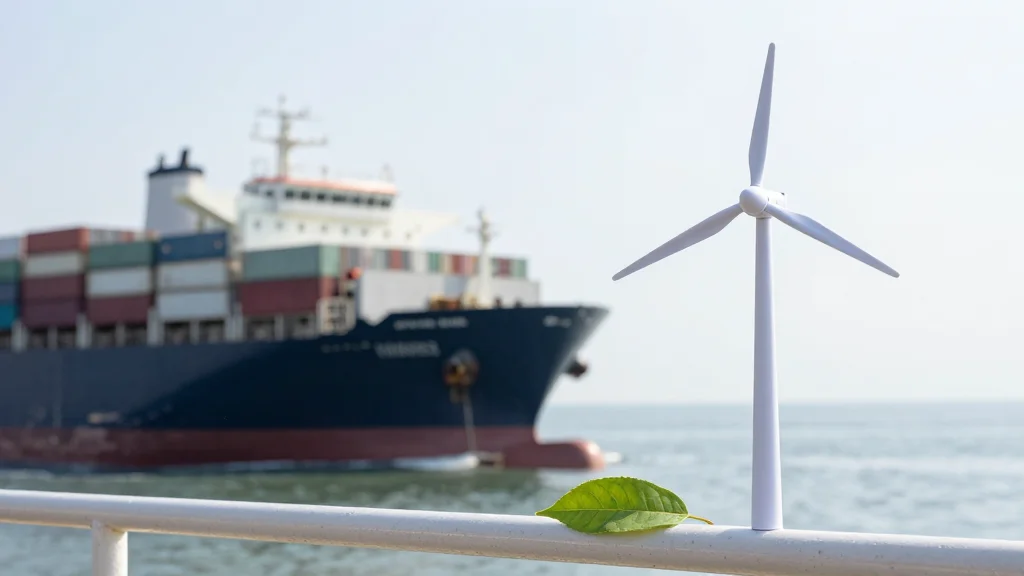
IMO Pushes Net‑Zero Shipping Framework, Raising Stakes for Marine Fuel Markets

Why It Matters
The IMO’s net‑zero shipping framework represents the most comprehensive attempt to impose a global carbon price on maritime transport, a sector responsible for roughly 3 % of global CO₂ emissions. By moving the conversation from ship‑level efficiency to fuel‑level lifecycle accounting, the framework could dramatically alter bunker fuel demand, accelerating the shift toward low‑carbon alternatives. For commodity markets, this translates into new revenue streams for producers of LNG, ammonia, and hydrogen, while traditional oil majors like Imperial Oil may face declining demand for high‑sulfur fuel oil. The political tug‑of‑war between the United States and climate‑forward nations also highlights how geopolitical considerations can shape commodity supply chains and pricing. Furthermore, the timing aligns with broader energy transition goals, including the International Energy Agency’s target to halve shipping emissions by 2030. The framework’s success or failure will signal the viability of market‑based mechanisms in other hard‑to‑decarbonize sectors, setting a precedent for carbon pricing in aviation, heavy industry, and beyond.
Key Takeaways
- •IMO released a draft net‑zero shipping framework at MEPC 84, targeting a global fuel standard and carbon pricing.
- •U.S. and Saudi Arabia blocked formal adoption in 2025, using trade‑threat tactics to delay the rule.
- •Imperial Oil’s Q1 net profit fell to C$940 million (≈ US$695 million) as revenues slipped to C$12.45 billion (≈ US$9.2 billion).
- •John Whelan, Imperial Oil CEO, pledged continued dividend (87 cents CAD ≈ US$0.64) and share buybacks despite market headwinds.
- •MEPC 85, set for late 2026, will decide the framework’s fate amid U.S. midterm elections, influencing bunker fuel markets and low‑carbon fuel investments.
Pulse Analysis
The IMO’s net‑zero framework is a watershed for the maritime sector, but its impact will be mediated by the political environment in Washington. Historically, the IMO has moved at the pace of the most cautious flag states; this time, the inclusion of a carbon‑pricing mechanism forces a market‑based solution that could bypass political gridlock. If the U.S. maintains a hardline stance, the framework may be watered down, preserving the status quo for high‑sulfur bunker fuel and protecting the near‑term earnings of oil majors like Imperial Oil. However, a Democratic surge could unlock bipartisan oversight, making it politically costly for the administration to block the rule.
From a commodities perspective, the framework could catalyze a rapid reallocation of capital toward low‑carbon marine fuels. LNG, already gaining traction as a transitional fuel, may see accelerated contracts, while emerging pathways for ammonia and hydrogen could attract early‑stage investment. Oil producers that diversify into these markets will likely outperform peers that cling to traditional fuel oil sales. Imperial Oil’s recent earnings dip underscores the vulnerability of legacy oil businesses to policy shifts; its dividend commitment signals confidence, but the company must hedge against a potential long‑term decline in bunker demand.
Looking ahead, the decisive factor will be the alignment of regulatory certainty with market readiness. Ports and shipyards are already investing in alternative fuel infrastructure, but the scale of deployment hinges on a clear carbon price signal. If MEPC 85 delivers a robust framework, we can expect a surge in forward contracts for low‑carbon fuels, a re‑pricing of maritime insurance premiums, and a reshaping of global trade routes to favor greener vessels. Conversely, a diluted rule could stall investment, leaving the shipping sector lagging behind broader climate goals and preserving the volatility of traditional oil markets. Stakeholders should monitor the U.S. midterm outcomes, the final language of the IMO rule, and early contract announcements from major bunker suppliers as leading indicators of the market’s direction.
IMO Pushes Net‑Zero Shipping Framework, Raising Stakes for Marine Fuel Markets
Comments
Want to join the conversation?
Loading comments...