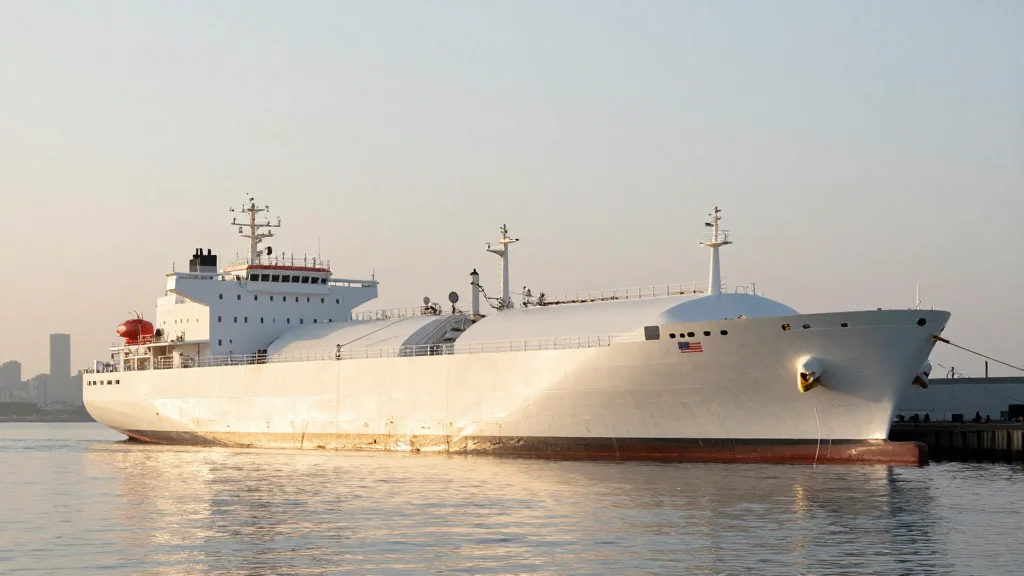
Iran‑Russia Conflict Drives Europe Toward U.S. LNG, Boosting Demand

Companies Mentioned
Why It Matters
The realignment of Europe’s gas imports toward the United States has profound implications for global energy security and commodity pricing. By substituting Russian pipeline gas with U.S. LNG, Europe is not only diversifying its supply base but also granting the United States a decisive geopolitical lever in a region traditionally dominated by Russian and Middle Eastern exporters. This shift could accelerate investment in U.S. liquefaction capacity, driving down per‑tonne costs and making American LNG more competitive worldwide. At the same time, the disruption of the Strait of Hormuz highlights the vulnerability of global energy flows to geopolitical flashpoints. Prolonged closures could force a permanent re‑routing of LNG trade, prompting a re‑evaluation of insurance costs, shipping routes, and the strategic value of European on‑shore and floating regasification infrastructure. The EU’s hard‑line ban on Russian gas further institutionalizes this new order, signaling to markets that Europe will not revert to previous dependencies, even if geopolitical tensions ease.
Key Takeaways
- •Russian pipeline gas fell 87% from 137 bcm (2021) to 18 bcm (2025)
- •EU voted to ban Russian LNG by end‑2026 and pipeline gas by late‑2027, with $44 million penalties
- •European gas prices surged ~25% in one day after Hormuz closure
- •U.S. LNG demand spikes as Europe seeks alternatives amid 35‑40% storage levels
- •Oil prices doubled to $126 per barrel, insurers raise war‑risk premiums
Pulse Analysis
The Iran‑Russia conflict has accelerated a transition that began after Russia’s 2022 invasion of Ukraine. Europe’s rapid decoupling from Russian gas was already underway, but the Hormuz shutdown has turned a strategic diversification plan into an operational necessity. U.S. LNG exporters, who have been expanding capacity at a historic pace, now find a captive market willing to pay a premium for security of supply. This dynamic is likely to cement the United States as the de‑facto gas supplier for Europe, reshaping the global LNG trade map and potentially lowering the market share of traditional exporters like Qatar and Australia.
However, the new reliance on U.S. LNG is not without risk. The United States faces its own supply constraints, with liquefaction projects still under construction and a limited number of export terminals on the Gulf Coast. Any bottleneck in U.S. capacity could translate into price volatility for European buyers, especially if the Hormuz blockage persists. Moreover, the EU’s punitive ban on Russian gas creates a legal and financial environment that may discourage flexible, spot‑market trading, pushing contracts toward longer‑term, higher‑priced agreements.
In the longer term, the crisis could trigger a broader re‑assessment of energy geopolitics. Nations may prioritize domestic storage, invest in renewable capacity, and diversify LNG sourcing to mitigate future chokepoints. For investors, the story underscores the upside of U.S. LNG infrastructure and the downside risk for companies heavily exposed to Russian gas pipelines. The coming months will reveal whether Europe’s pivot is a temporary fix or the foundation of a new, American‑centric gas order.
Iran‑Russia Conflict Drives Europe Toward U.S. LNG, Boosting Demand
Comments
Want to join the conversation?
Loading comments...