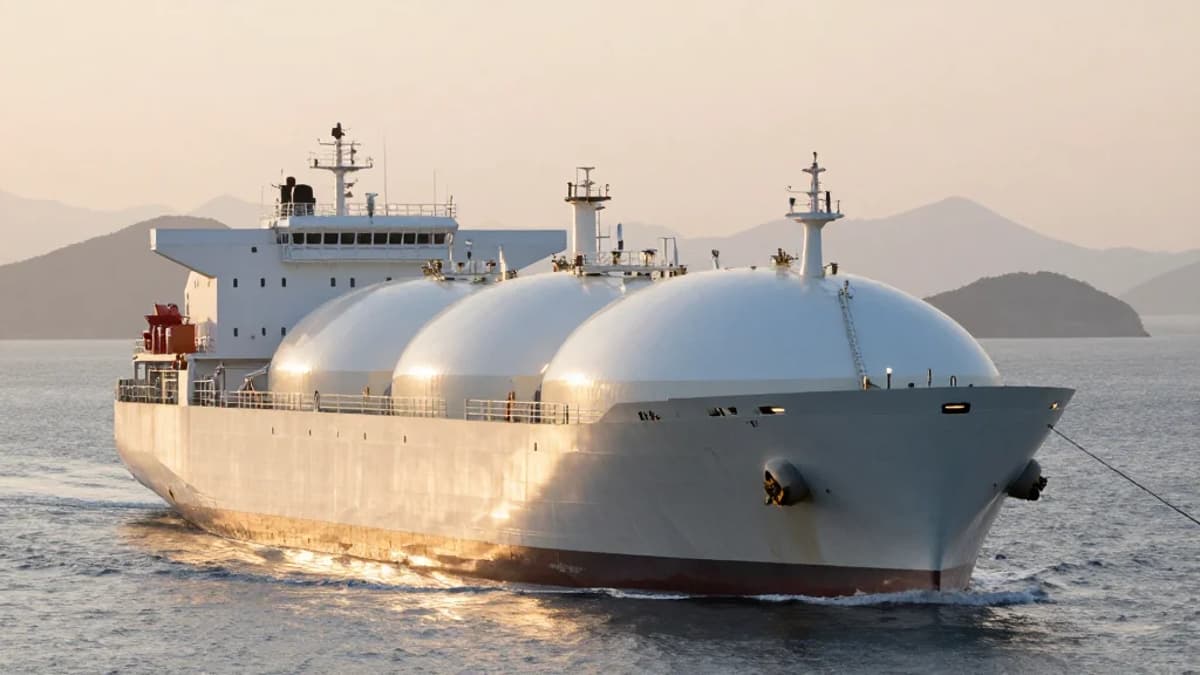
Japan LNG Resales Hit Record as Companies Expand Overseas Trading
•February 25, 2026
0
Why It Matters
The surge in Japanese LNG resales reshapes global supply flows, enhancing market liquidity but also exposing traders to price volatility as oversupply risks rise.
Key Takeaways
- •Record FY2024 LNG resales exceed any single supplier import
- •Domestic demand decline drives Japanese firms to export surplus cargoes
- •Flexible long‑term contracts enable arbitrage and Asian market entry
- •Margin pressure looms as global supply overshadows resale profits
- •Japan emerging as major LNG trading hub, boosting market liquidity
Pulse Analysis
Japan, traditionally the world’s largest single‑buyer of liquefied natural gas, is undergoing a structural transformation. In fiscal year 2024 the country resold more LNG than it imported from any individual supplier, a milestone driven by a steady erosion of domestic demand. Factors such as the gradual restart of nuclear reactors, aggressive energy‑efficiency programs, and rapid expansion of renewable generation have collectively reduced the need for imported gas. As a result, utilities and trading houses are increasingly acting as intermediaries, channeling excess cargoes to foreign buyers rather than consuming them at home.
To capitalize on this surplus, Japanese firms are locking in long‑term supply contracts that embed destination‑flexibility clauses, especially with U.S. producers. These agreements allow cargoes to be rerouted to third‑party markets across Southeast and South Asia, where new downstream infrastructure is expanding rapidly. The flexibility creates arbitrage opportunities, letting traders capture price differentials between regional spot markets while building lasting relationships with emerging buyers. Investment in regasification terminals and pipeline networks in countries such as Vietnam, the Philippines and Indonesia further supports the flow of resold LNG, reinforcing Japan’s role as a regional hub.
The aggressive resale strategy is not without downside. A growing global LNG supply, combined with expectations of oversaturation, threatens to compress resale margins, especially if feed‑gas costs remain high and competition intensifies. Japanese traders could face financial strain if contracted purchase volumes exceed market prices, exposing them to price‑risk mismatches. Nonetheless, the evolution positions Japan as a pivotal liquidity source in the LNG market, potentially smoothing price discovery but also amplifying volatility as cargoes shift across regions. Stakeholders will watch how flexible contracts and infrastructure investments balance profit opportunities against emerging market risks.
Japan LNG resales hit record as companies expand overseas trading
0
Comments
Want to join the conversation?
Loading comments...