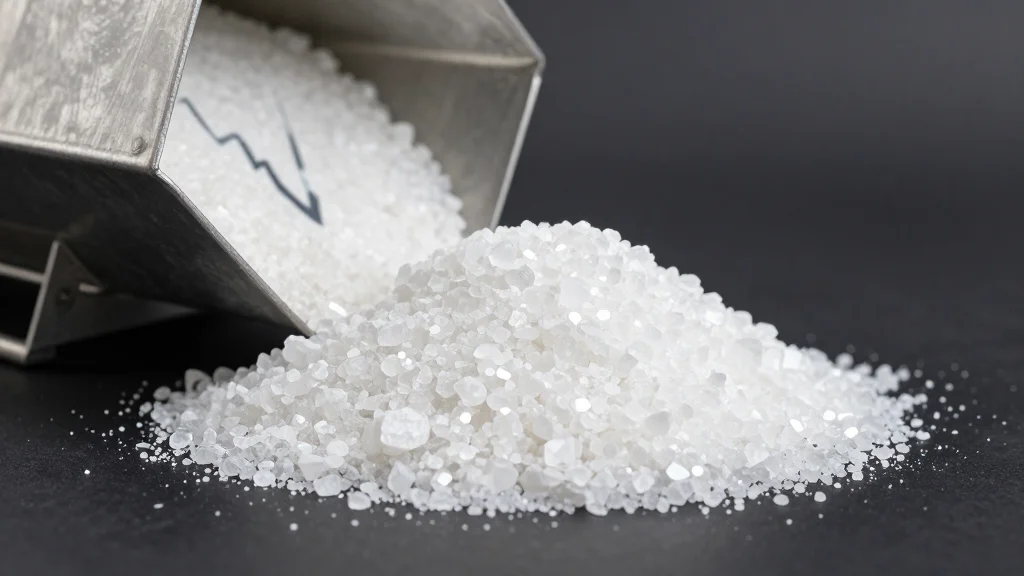
K+S Group Posts €156.9 Million Q1 Loss as Potash Prices Slide

Companies Mentioned
Why It Matters
The K+S loss underscores a pivotal shift in the global fertilizer supply chain. Potash, a cornerstone of modern agriculture, is experiencing a price correction that could translate into higher crop production costs for farmers worldwide. If the oversupply persists, it may force producers to cut output or consolidate, reshaping market concentration. For commodity traders and investors, the episode signals heightened volatility in agricultural inputs, prompting a reassessment of risk models that have long assumed relatively stable potash pricing. Policy makers may also feel pressure to intervene, either through export controls or strategic stock releases, to stabilize markets and protect food security.
Key Takeaways
- •K+S Group posted a €156.9 million (≈$170 million) Q1 loss, reversing a €85.5 million profit from 2025.
- •Adjusted loss after tax was €136.5 million ($147 million) as potash prices fell about 12% YoY.
- •Revenue rose to €1.06 billion ($1.15 billion), driven by higher prices in other segments.
- •Oversupply concerns are pushing potash inventories higher, pressuring global fertilizer margins.
- •Analysts will watch K+S’s August earnings for signs of price stabilization or further market stress.
Pulse Analysis
K+S’s Q1 performance is a bellwether for the broader potash market, which has been buoyed for years by limited supply and strong demand from emerging economies. The current oversupply reflects a confluence of factors: new mining capacity coming online in Canada and Russia, slower-than-expected demand growth in China, and a milder planting season in Europe. These dynamics have eroded the price premium that once insulated producers from cost volatility.
From a strategic standpoint, K+S faces a choice between scaling back production to support prices or leveraging its diversified portfolio—particularly its salt and specialty chemicals businesses—to offset potash weakness. The company’s modest revenue growth suggests that its non‑potash segments are performing, but they may not be sufficient to counterbalance a prolonged price slump. Investors will likely scrutinize any announced cost‑cutting initiatives or asset sales in the coming months.
Looking forward, the potash market could enter a new equilibrium where price discovery is more market‑driven rather than policy‑driven. If inventories remain high, we may see a wave of consolidation as weaker players exit, leaving a more concentrated industry capable of influencing supply. Conversely, a sudden demand surge—perhaps triggered by a rebound in global grain prices—could quickly reverse the current trend, underscoring the sector’s inherent volatility. Stakeholders should therefore prepare for both scenarios as they navigate the next earnings cycle.
K+S Group Posts €156.9 million Q1 Loss as Potash Prices Slide
Comments
Want to join the conversation?
Loading comments...