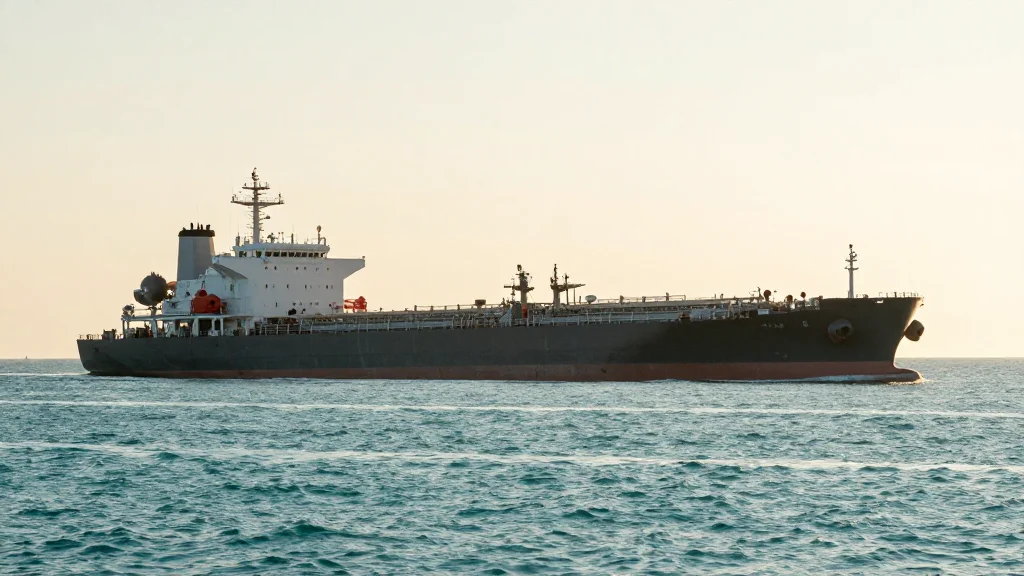
Kuwait Declares Force Majeure on Crude Shipments After US Seizes Iranian Vessel

Why It Matters
The force majeure by Kuwait, the world’s fifth‑largest oil exporter, directly curtails the supply of Gulf crude that underpins global oil pricing. With the Strait of Hormuz—a chokepoint for roughly 20% of worldwide oil—closed, the market faces a supply shock that can sustain high prices, erode airline profitability, and strain economies dependent on cheap energy. Moreover, the simultaneous disruption of fertilizer shipments threatens to lift food prices at a time when many low‑income households are already grappling with inflation, potentially igniting a broader food security crisis. For investors and policymakers, the episode underscores the geopolitical fragility of energy supply chains. It highlights how a single naval action can cascade through commodity markets, affecting everything from jet fuel to wheat, and forces a re‑evaluation of risk management strategies across the commodities spectrum.
Key Takeaways
- •Kuwait Petroleum Corp declared force majeure on crude and refined product shipments after US seized Iranian vessel TOUSKA.
- •The seizure shut the Strait of Hormuz, which carries ~25% of global oil and ~33% of seaborne fertilizer.
- •Kuwait’s crude output fell to early‑1990s levels; officials say production can be ramped up within months.
- •Energy Secretary Chris Wright warned gasoline prices may not fall below $3 per gallon until next year.
- •FAO warns prolonged strait closure could trigger a global food ‘catastrophe’ affecting vulnerable regions.
Pulse Analysis
Kuwait’s force‑majeure move is a textbook example of how geopolitical risk translates into contractual risk in the commodities world. By invoking the clause, KPC shields itself from breach penalties but also signals to the market that Gulf supply is now a scarce commodity. Historically, similar force‑majeure declarations—such as during the 1990‑91 Gulf War—triggered sharp price spikes and prompted a scramble for alternative supply, notably from West Africa and the North Sea. This time, however, the backdrop of a double blockade and heightened U.S.-Iran tensions adds a layer of strategic uncertainty that could keep oil prices elevated longer than a typical supply shock.
The broader impact on food markets is equally concerning. Fertilizer, a key input for staple crops, is heavily dependent on shipments through Hormuz. With fertilizer prices already climbing due to the war, any prolonged disruption could push agricultural production costs higher, feeding into consumer food prices. The Al Jazeera interview with Matin Qaim highlights the human cost: rising food prices disproportionately affect low‑income populations in Africa and Asia, potentially reversing recent gains in food security. Investors should therefore monitor not only oil price trajectories but also fertilizer futures and grain market spreads as leading indicators of the secondary shock.
Looking forward, the market’s reaction will hinge on diplomatic developments. If the U.S. and Iran reach a cease‑fire or a negotiated reopening of the strait, we could see a rapid de‑escalation and a corresponding dip in oil and fertilizer prices. Conversely, a protracted standoff would likely cement a new high‑price equilibrium, prompting refiners to secure longer‑term contracts at premium rates and encouraging governments to reassess strategic petroleum reserves. In either scenario, the episode reinforces the need for diversified supply chains and robust risk‑mitigation frameworks in the commodities sector.
Kuwait Declares Force Majeure on Crude Shipments After US Seizes Iranian Vessel
Comments
Want to join the conversation?
Loading comments...