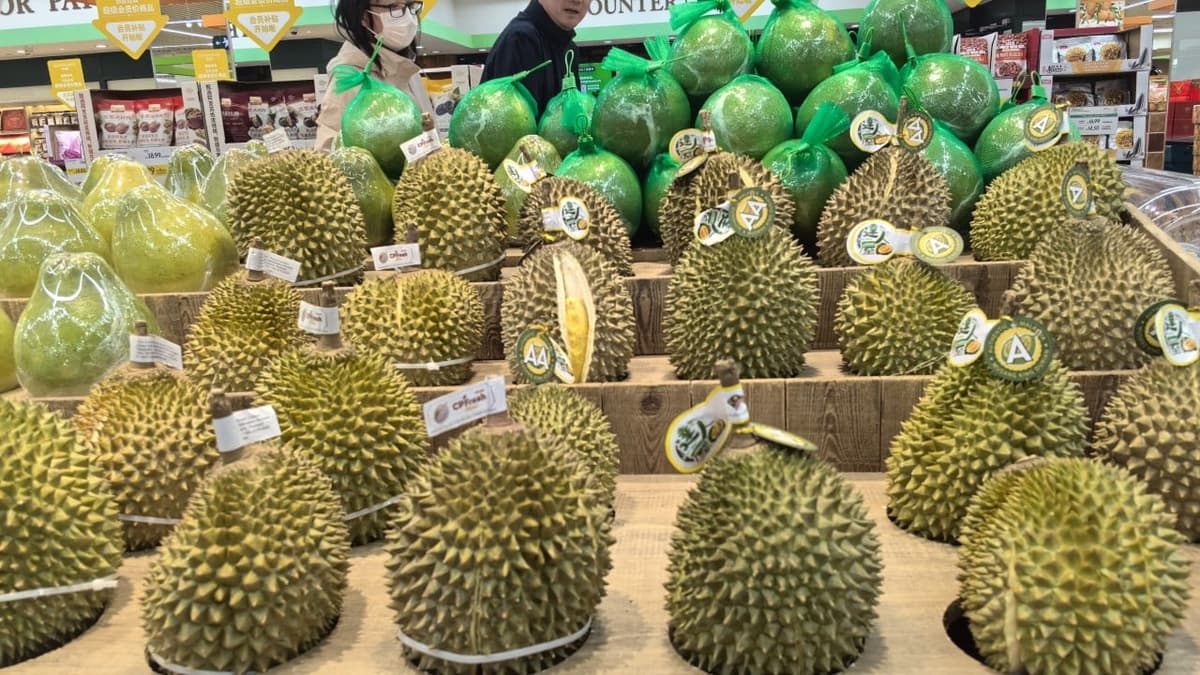
Malaysia’s Durian Growers in ‘Survival Mode’ as Early Glut and Iran War Hit Export Trade
Why It Matters
The situation exposes the fragility of Malaysia’s high‑value agricultural export strategy and signals potential revenue erosion unless cost pressures are mitigated and new markets are cultivated.
Key Takeaways
- •Early harvest doubled supply, driving Musang King price from $18 to $5/kg.
- •Logistics costs could consume up to 50% of export revenue this season.
- •Malaysia's premium durian model faces higher cost pressure than volume‑focused rivals.
- •Diversification into frozen, processed durian and new markets urged to restore resilience.
Pulse Analysis
China has become the world’s largest durian consumer, importing roughly $7 billion worth of the fruit in 2024. Malaysia leveraged this demand by branding Musang King as a premium, fresh product that commands a price premium and requires a tightly managed cold‑chain to reach Chinese shoppers within 48‑72 hours. This high‑value approach succeeded when logistics were stable, but an unusually early harvest this year flooded the market just as global freight rates spiked, eroding price points and squeezing margins.
The Iran‑related fuel shock has driven air‑freight and trucking costs upward, inflating the logistics share of export revenue from the usual 20% to potentially half of total earnings. Unlike Thailand, which ships larger volumes at lower cost, Malaysia’s emphasis on quality means any increase in transport expense directly dents profitability. Exporters now face a stark choice: absorb the higher costs, risk passing them to price‑sensitive Chinese buyers, or shift to slower, cheaper frozen shipments that dilute the premium brand promise.
Analysts suggest that resilience will depend on diversification. Expanding into frozen and processed durian—such as paste, ice cream, or flavorings—could lower reliance on rapid fresh shipments and open new revenue streams in markets like the Middle East and Europe. Simultaneously, broadening the export basket beyond China would mitigate concentration risk. Government assistance, perhaps in the form of fuel subsidies or logistics incentives, could provide short‑term relief, but long‑term competitiveness will hinge on balancing quality with cost efficiency and market breadth.
Malaysia’s durian growers in ‘survival mode’ as early glut and Iran war hit export trade
Comments
Want to join the conversation?
Loading comments...