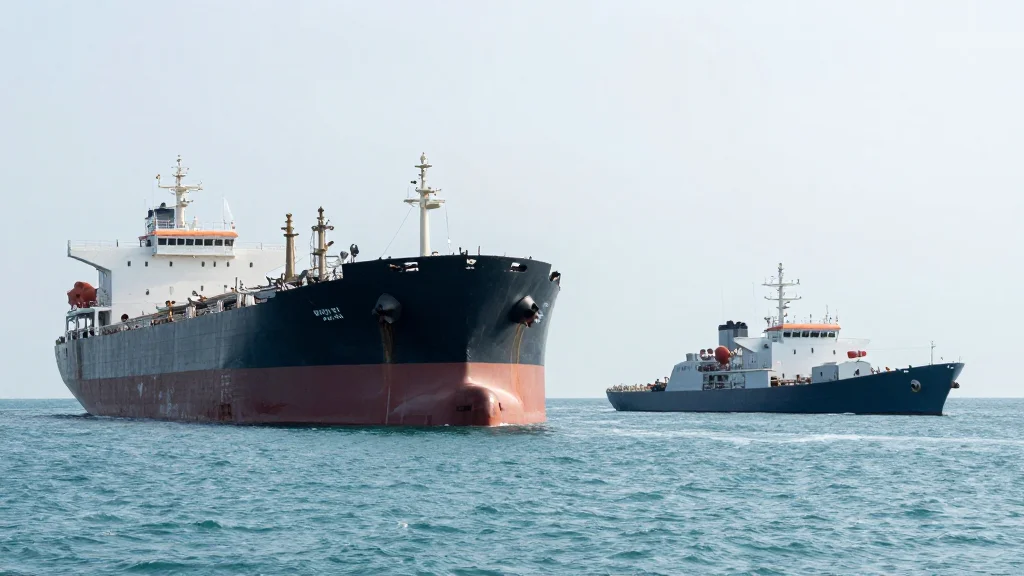
Middle East Blockade Tightens Oil Supply, Spurring Global Fuel Price Spikes

Companies Mentioned
Why It Matters
The blockade of Iranian oil exports represents a rare, large‑scale supply shock to the world’s most traded commodity. By constraining crude flow at the Strait of Hormuz—a chokepoint that handles roughly a fifth of global oil shipments—prices at the pump can rise sharply even in distant markets like the Caribbean. For oil‑importing economies such as India, higher crude costs feed directly into inflation, eroding real wages and prompting policy responses from central banks. Moreover, sustained price spikes could accelerate the shift toward alternative energy sources, reshaping investment flows in the energy sector. Beyond economics, the episode underscores how geopolitical flashpoints can quickly translate into commodity market turbulence. Investors, policymakers, and businesses must monitor diplomatic developments closely, as any escalation or de‑escalation will reverberate through supply chains, trade balances, and consumer price indices worldwide.
Key Takeaways
- •U.S. naval blockade of Iranian ports restricts crude exports, creating on‑shore storage headroom of ~30 million barrels.
- •Petrojam raises Jamaican gasoline prices by 4.50 JMD per litre, to $1.22 USD per litre for 90‑octane.
- •Jamaican taxi driver’s daily fuel cost jumps from $22.6 USD to $32.3 USD, weekly bill exceeds $129 USD.
- •Analysts warn that sustained supply constraints could push benchmark crude above $100 USD per barrel, heightening inflation risk for import‑dependent economies.
- •Potential for alternative off‑load routes or illicit smuggling as Iran seeks to circumvent the blockade.
Pulse Analysis
The current supply shock is atypical in its geographic focus yet classic in its market impact: a chokepoint disruption that reverberates through the entire oil value chain. Historically, closures of the Strait of Hormuz have triggered short‑lived price spikes, but the combination of a hard naval blockade and Iran’s willingness to use floating storage suggests a more protracted imbalance. This could force refiners to tap strategic reserves, driving up forward curves and prompting hedgers to lock in higher prices, thereby cementing a new price floor.
For emerging markets, the transmission mechanism is clear. Higher crude costs translate into steeper diesel and gasoline prices, which in turn lift transportation and food costs—a direct hit to inflation. India’s central bank, already navigating a delicate balance between growth and price stability, may find its policy levers constrained if oil prices breach the $100‑per‑barrel mark. The ripple effect could also accelerate fiscal pressures on governments that subsidize fuel, prompting a re‑evaluation of subsidy regimes.
Strategically, the blockade tests the resilience of global supply chains. While the U.S. aims to pressure Tehran into negotiations, the risk of a prolonged standoff could incentivize oil‑importing nations to diversify supply sources, potentially boosting demand for alternative exporters such as the United States, Canada, and Brazil. In the longer term, sustained price volatility may hasten investment in renewable energy and storage solutions, reshaping the competitive landscape of the energy sector.
Middle East blockade tightens oil supply, spurring global fuel price spikes
Comments
Want to join the conversation?
Loading comments...