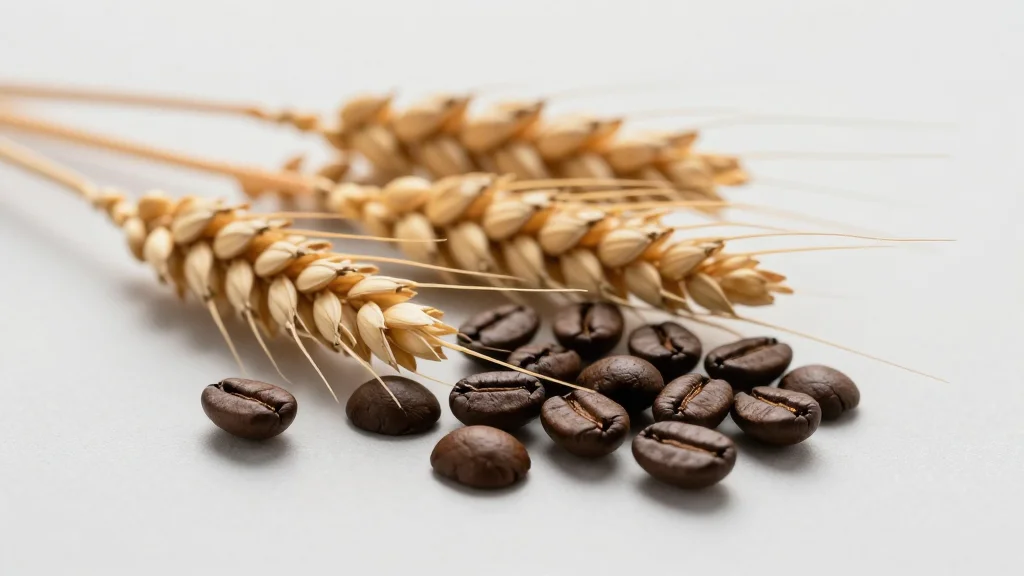
Middle East Conflict Drives Food Prices Higher, Sparks Wheat, Rice and Coffee Volatility

Companies Mentioned
Why It Matters
Higher food prices erode real incomes, especially in low‑income economies that spend a larger share of household budgets on staples. The combined effect of geopolitical tension and climate‑related supply risks threatens to push more people into food insecurity, amplifying humanitarian needs and pressuring policymakers to consider strategic reserves or trade interventions. For investors, the volatility creates both risk and opportunity: wheat and rice futures may see heightened trading volumes, while coffee derivatives could experience sharp price swings as weather forecasts evolve. The situation also highlights the interconnectedness of energy and food markets. Elevated oil prices raise fertilizer and transportation costs, feeding back into grain and oilseed prices. Simultaneously, climate variability in key coffee regions adds a layer of uncertainty that can affect commodity‑linked currencies and emerging‑market balance sheets. Understanding these linkages is essential for governments, NGOs, and investors navigating a landscape where a single regional conflict can reverberate through global food systems.
Key Takeaways
- •Food inflation rose 5% in the two months after the Strait of Hormuz closure, with grain prices up 3%
- •Oil and meal prices surged 10% as crude oil breached $100 per barrel
- •UN WFP warns an extra 45 million people could face acute hunger if high oil prices persist
- •Robusta coffee prices rose on London exchange amid drought concerns in Vietnam
- •Brazil projects an 18% increase in total coffee output for 2026, boosting arabica supply
Pulse Analysis
The current price dynamics illustrate a classic case of supply‑side shock amplified by energy market turbulence. Historically, commodity price spikes tied to geopolitical events—such as the 2008 food crisis—were driven by outright export bans or transport chokepoints. This time, the Strait of Hormuz closure primarily inflates input costs rather than directly halting grain shipments, which explains the more contained 5% food price rise versus the 15% surge after Ukraine’s invasion. However, the risk of a prolonged closure could quickly shift the balance, especially if fertilizer supplies become constrained.
Coffee markets are a microcosm of climate‑risk exposure. Vietnam’s robusta sector is already feeling the strain of uneven rains, while Brazil’s projected harvest boom offers a temporary price buffer for arabica. Yet, the looming El Niño threat reintroduces a wildcard that could reverse Brazil’s advantage, echoing past episodes where unexpected weather events sent coffee futures into overdrive. Traders are likely to hedge more aggressively, increasing volatility in both ICE and CME coffee contracts.
For policymakers, the dual challenge is clear: mitigate short‑term price spikes through strategic reserves and targeted subsidies, while investing in climate‑resilient agricultural practices to reduce long‑term vulnerability. Investors should watch for policy signals from major grain exporters and for weather‑model updates from agencies like Vaisala, as these will shape the next wave of price movements across wheat, rice, and coffee.
Middle East Conflict Drives Food Prices Higher, Sparks Wheat, Rice and Coffee Volatility
Comments
Want to join the conversation?
Loading comments...