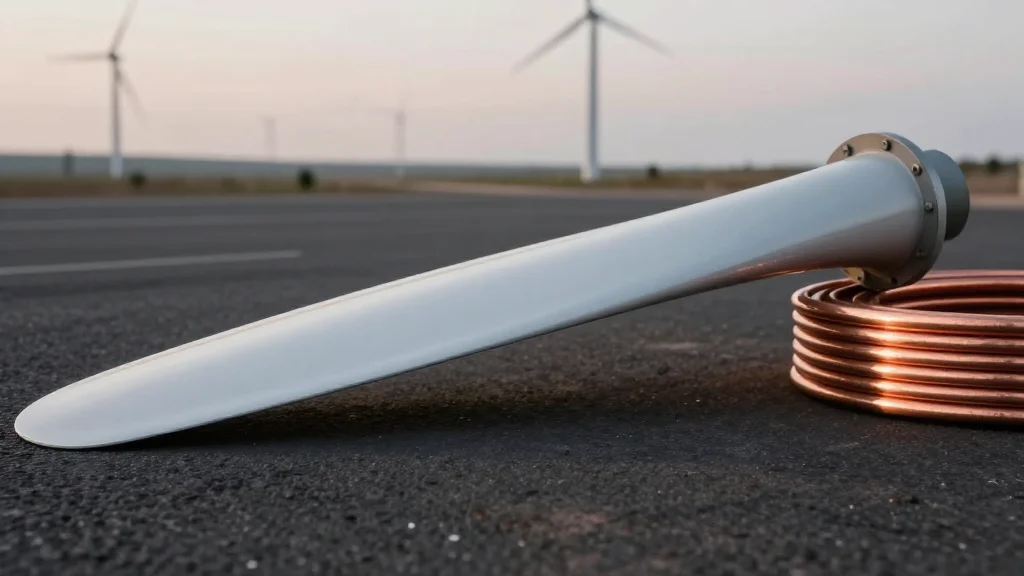
Nordex Secures 255 MW of German Wind Turbine Orders, Boosting Steel and Copper Demand

Companies Mentioned
Why It Matters
The Nordex order book illustrates how renewable‑energy expansion is becoming a major driver of demand for base‑metal commodities. Steel producers and copper miners stand to benefit from the sustained procurement of turbine components, while supply‑chain bottlenecks could pressure prices if capacity does not keep pace. Moreover, the inclusion of long‑term service contracts creates a recurring demand stream, deepening the link between renewable‑energy projects and commodity markets. For investors and policymakers, the development signals that Europe’s push toward decarbonization is translating into tangible industrial activity. Tracking turbine order volumes offers an early indicator of future commodity consumption, helping market participants anticipate shifts in supply dynamics and price trends across steel, copper, aluminum and composite material sectors.
Key Takeaways
- •Nordex secured 255 MW of wind‑turbine orders in Germany during Q2.
- •The contracts cover 14 projects and 39 turbines (19 N163/6.X, 11 N175/6.X, 9 N149).
- •A 35 MW community wind farm for Rheine‑Catenhorn includes five N163/6.X turbines.
- •Construction and commissioning are slated for summer 2027 onward.
- •Estimated commodity impact: ~306,000 tonnes of steel and 7,650 tonnes of copper.
Pulse Analysis
Nordex's latest order book is a micro‑cosm of the broader shift in European energy policy toward onshore wind. Historically, the wind‑turbine sector has been a modest consumer of steel and copper, but as turbine sizes grow and hub heights increase, the material intensity per megawatt rises. Nordex's N163/6.X model, with a 164‑meter hub height, exemplifies this trend, requiring longer tower sections and more copper in its generators. Consequently, manufacturers of high‑strength steel and refined copper are likely to see a modest but steady uplift in demand, especially if other OEMs follow Nordex's lead.
From a market‑structure perspective, the long‑term service agreements embedded in the contracts create a quasi‑subscription model for parts and maintenance. This reduces the volatility of commodity demand that typically accompanies one‑off construction projects, offering a more predictable revenue stream for both turbine makers and raw‑material suppliers. It also incentivizes OEMs to secure supply contracts with steel mills and copper producers well in advance, potentially locking in prices and mitigating exposure to commodity price swings.
Looking forward, the real test will be whether the German government can sustain its auction cadence and whether supply‑chain constraints—particularly in high‑grade steel and copper cathodes—can be alleviated. If capacity constraints persist, we could see a feedback loop where higher commodity prices feed into turbine pricing, potentially slowing project economics. Conversely, a smooth supply pipeline could accelerate the rollout of wind capacity, reinforcing the virtuous cycle of renewable‑energy growth and commodity demand. Stakeholders should monitor upcoming German wind‑energy auctions, Nordex's delivery milestones, and the pricing trends of steel and copper over the next 12‑18 months.
Nordex Secures 255 MW of German Wind Turbine Orders, Boosting Steel and Copper Demand
Comments
Want to join the conversation?
Loading comments...