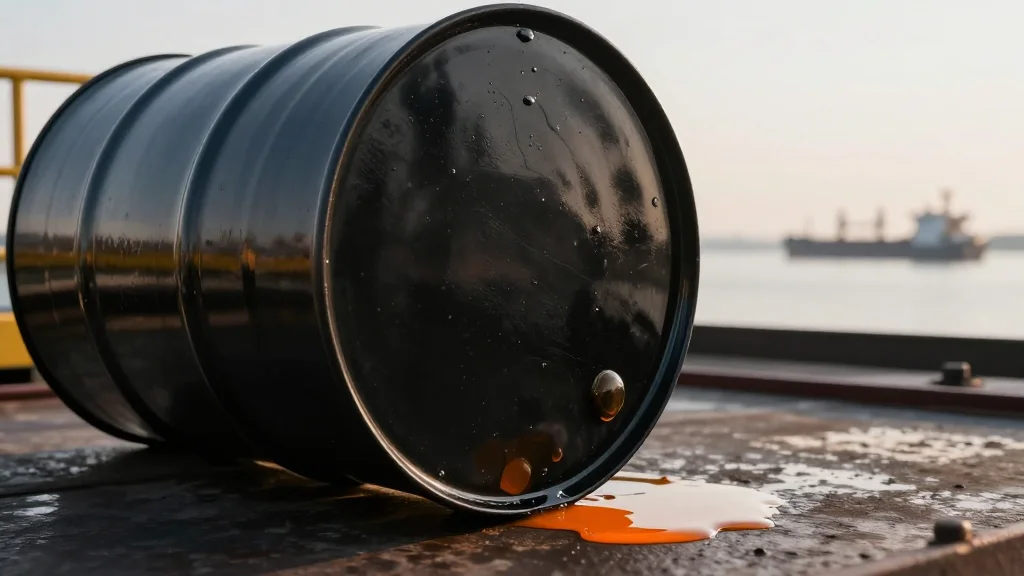
Oil Outage Labelled ‘Biggest in History’ Sends Prices and Nerves Higher
Why It Matters
The outage threatens global oil availability, driving prices toward levels that could curtail demand and strain economies. It also heightens geopolitical risk, forcing markets and policymakers to reassess energy security strategies.
Key Takeaways
- •Six million barrels per day offline due to Hormuz closure
- •Brent and WTI prices breach $109 and $112 per barrel
- •Emergency reserves depleting, risking global supply shortages
- •Refiners shift to US and North Sea crude sources
- •OPEC+ raises output modestly; Saudi price record high
Pulse Analysis
The shutdown of the Strait of Hormuz has created what analysts call the largest oil outage in modern history, removing roughly six million barrels per day from the global market. This chokepoint, which normally transports about 20 percent of world oil, now sits largely idle after Iranian attacks following the February U.S.-Israel strike. The immediate effect is a sharp contraction in available supply, forcing emergency strategic reserves to be tapped and accelerating the drawdown of already thin global inventories. The disruption underscores the vulnerability of a system still heavily dependent on narrow maritime corridors.
Oil benchmarks reacted instantly, with Brent climbing to just above $109 a barrel and WTI breaching $112, marking the steepest single‑day gains since the 2020 pandemic shock. The price surge has prompted refiners in Europe and Asia to scramble for alternative feedstocks, turning to U.S. sweet crude and North Sea grades despite premium differentials. OPEC+ responded with a modest 206,000‑barrel‑per‑day output increase for May, while Saudi Arabia lifted its Arab Light price to a record $19.50 per barrel for Asian buyers. These moves aim to temper volatility but may only provide temporary relief.
Beyond the immediate market shock, sustained oil prices above $110 risk pushing global oil spending toward the 5.5 percent of GDP threshold that economists warn could trigger demand destruction. Policymakers in the United States and Europe now face heightened pressure to secure alternative energy routes and accelerate the transition to lower‑carbon fuels. Meanwhile, the geopolitical calculus intensifies as Tehran and Washington trade threats over the strait, while regional actors such as Pakistan explore diplomatic pathways to de‑escalate. Unless the Hormuz corridor reopens and inventories rebuild, the energy sector may endure prolonged volatility and tighter margins.
Oil outage labelled ‘biggest in history’ sends prices and nerves higher
Comments
Want to join the conversation?
Loading comments...